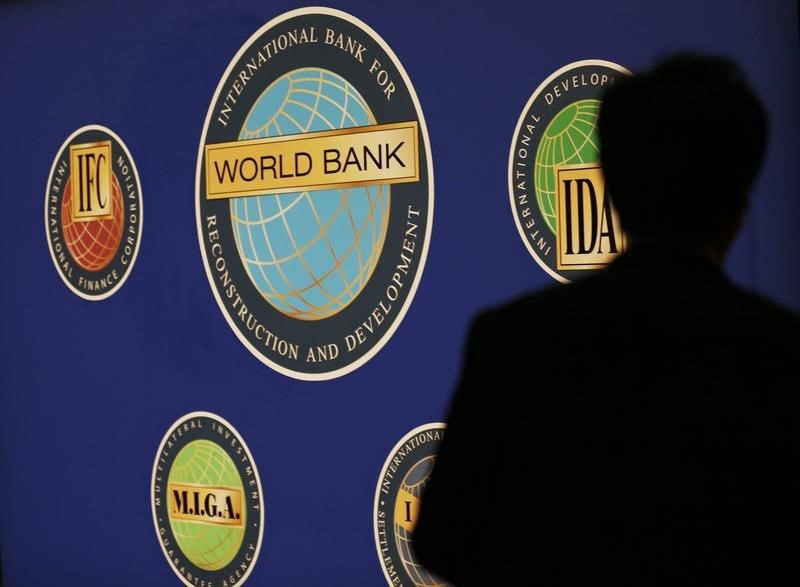
World Bank chief economist Indermit Gill will retire at the end of August, and the bank will begin searching for a successor. The memo highlights Gill’s work on debt transparency, sustainability, and restructuring for low- and middle-income countries, along with research on climate resilience and public finance. The article is primarily a personnel update with limited direct market impact.
This is a clean governance rotation, not a macro shock, but the second-order effect is that the institution’s policy signaling may get less assertive on debt transparency and climate-linked financing over the next 6-12 months while a new chief economist establishes credibility. That matters for frontier and EM credit because Bank commentary often feeds rating-agency narratives and bilateral lender behavior before it hits official policy. The likely market impact is subtle: a small reduction in headline-driven support for concessional financing themes, with local duration and hard-currency spreads more sensitive than equities. For the listed AI names, the article itself is not a catalyst; the relevant edge is that investor attention is being pulled toward AI leadership, which can keep dispersion high within the group. NVDA remains the highest-quality expression because it captures the broadest share of incremental AI capex and has the best fundamental support if enterprise spend stays sticky. SMCI and APP are more sentiment-driven and can outperform sharply on momentum, but they also carry much higher drawdown risk if the market rotates away from crowded AI beta or if guidance credibility weakens. The contrarian read is that the AI trade is becoming reflexive, while the governance/newsflow here is actually mildly negative for sovereign-risk assets in the margin. If the World Bank becomes quieter on debt restructuring or climate resilience, the market may have to re-price a slightly higher risk premium for smaller EMs with weak fiscal trajectories. That creates a cross-asset setup where AI longs are still intact, but EM external debt should be watched for underperformance on any follow-on commentary that signals a more technocratic, less activist policy stance.
AI-powered research, real-time alerts, and portfolio analytics for institutional investors.
Request DemoOverall Sentiment
neutral
Sentiment Score
0.05
Ticker Sentiment
