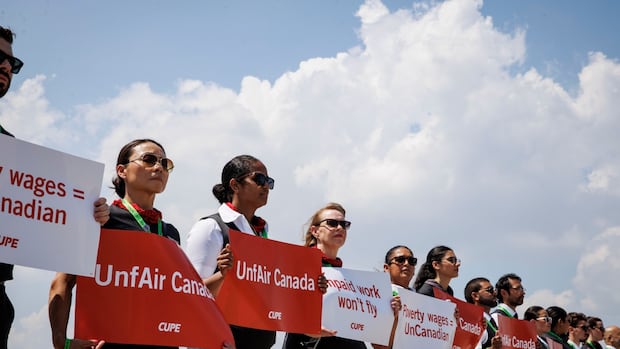
Air Canada flight attendants overwhelmingly rejected a proposed wage offer, with 99.1% voting against a deal that included up to a 12% salary increase for junior staff. The Canadian Union of Public Employees (CUPE) confirmed the dispute will now proceed to mediation and, if necessary, binding arbitration, ensuring no immediate impact on flight operations as a strike or lockout is precluded. CUPE also criticized federal government intervention for influencing the negotiation process.
Air Canada faces continued labor uncertainty following the overwhelming rejection of its tentative wage agreement by 99.1% of its flight attendants. The proposed deal, which included a 12% salary increase for junior staff and an 8% increase for senior members, was deemed insufficient by the Canadian Union of Public Employees (CUPE), which argues the resulting wages would remain below the federal minimum. Crucially for investors, the immediate operational risk has been neutralized, as both parties have committed to a process of mediation and, if necessary, binding arbitration, explicitly precluding any strike or lockout. While this ensures no disruption to flight schedules, the situation points to persistent underlying friction and suggests that the final arbitrated wage settlement could be higher than the rejected offer, potentially creating upward pressure on the airline's future operating costs. The union's public criticism of federal government intervention also introduces a political dimension, highlighting a contentious labor relations environment.
AI-powered research, real-time alerts, and portfolio analytics for institutional investors.
Request DemoOverall Sentiment
moderately negative
Sentiment Score
-0.35
