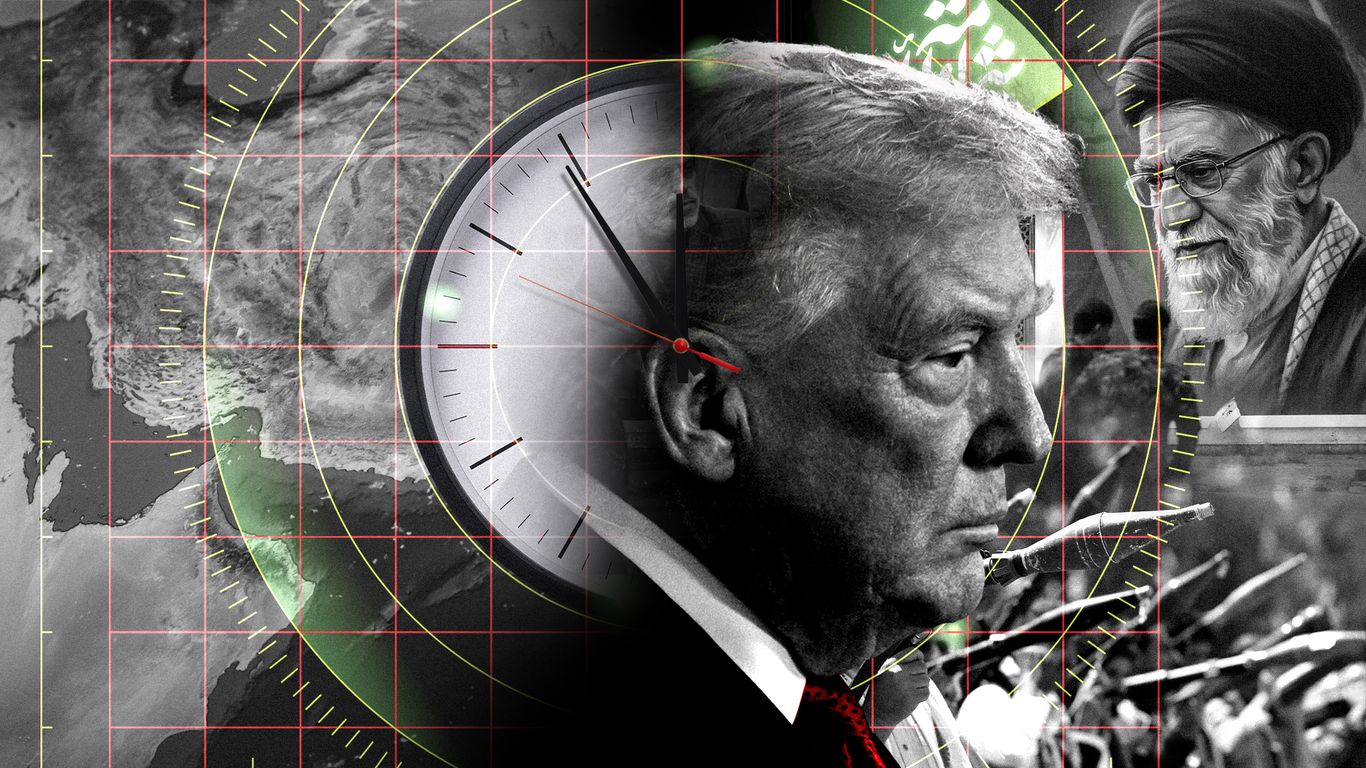
8pm ET deadline for President Trump to order strikes on Iran's infrastructure (bridges, power plants) creates acute tail-risk that could trigger a market-wide shock. If carried out, expect oil prices to spike (estimated +5–15% intraday), a flight-to-safety rally in Treasuries and gold, and equity drawdowns (potentially -2–5% U.S. on peak risk-off); if delayed, volatility will remain elevated into the extension window. Hedge energy exposure, increase cash/hedges for equity downside, and monitor Gulf and Israeli signals closely over the next 24–48 hours.
The immediate market impulse will be a liquidity squeeze rather than a permanent supply shock — think a 10–30% move in Brent/WTI within 48–72 hours if energy transit or Gulf infrastructure is credibly threatened, followed by mean reversion over 60–90 days as spare capacity (Saudi, UAE, US shale) and SPR releases respond. Credit and insurance spreads will widen asymmetrically: Gulf sovereign CDS and marine hull/PI insurance will reprice first, elevating freight rates by an incremental 5–15% on key routes even if crude flows resume.
Second-order winners include short-duration, high-cash-flow energy producers (US shale) that can ramp in weeks, and defense primes positioned to win emergency procurement — the trade is time-sensitive because orders and appropriations move on an emergency timeline of weeks-to-months. Conversely, airlines, cruise operators, and EM corporates levered to trade through the Strait or to Gulf liquidity will face immediate revenue shocks and widening funding costs; expect 30–150bp moves in USD funding spreads for smaller EM borrowers.
Catalysts to watch on a tight clock: any interruption of tanker insurance (Lloyd’s notices), visible re-routing around the Cape of Good Hope, or cyber attacks on Gulf terminals — each would extend the oil-price shock beyond the initial 72 hours. The main reversal path is diplomatic de-escalation plus coordinated SPR sales and explicit production pledges; that's the highest-probability mean-reversion mechanism within 30–90 days, which argues for short-dated asymmetric option structures rather than outright directional carry positions.
Tail risk remains non-linear: escalation to wide-area infrastructure targeting or a prolonged Strait closure would make the shock structural, justifying longer-duration commodity and defense exposure. Position sizing should be dynamic — size for convexity, not direction: small, high-gamma option exposures for short windows, larger delta exposure only if evidence of sustained supply disruption appears (re-routed cargo manifests, extended insurance blacklists, formal embargoes).
AI-powered research, real-time alerts, and portfolio analytics for institutional investors.
Request DemoOverall Sentiment
strongly negative
Sentiment Score
-0.80
