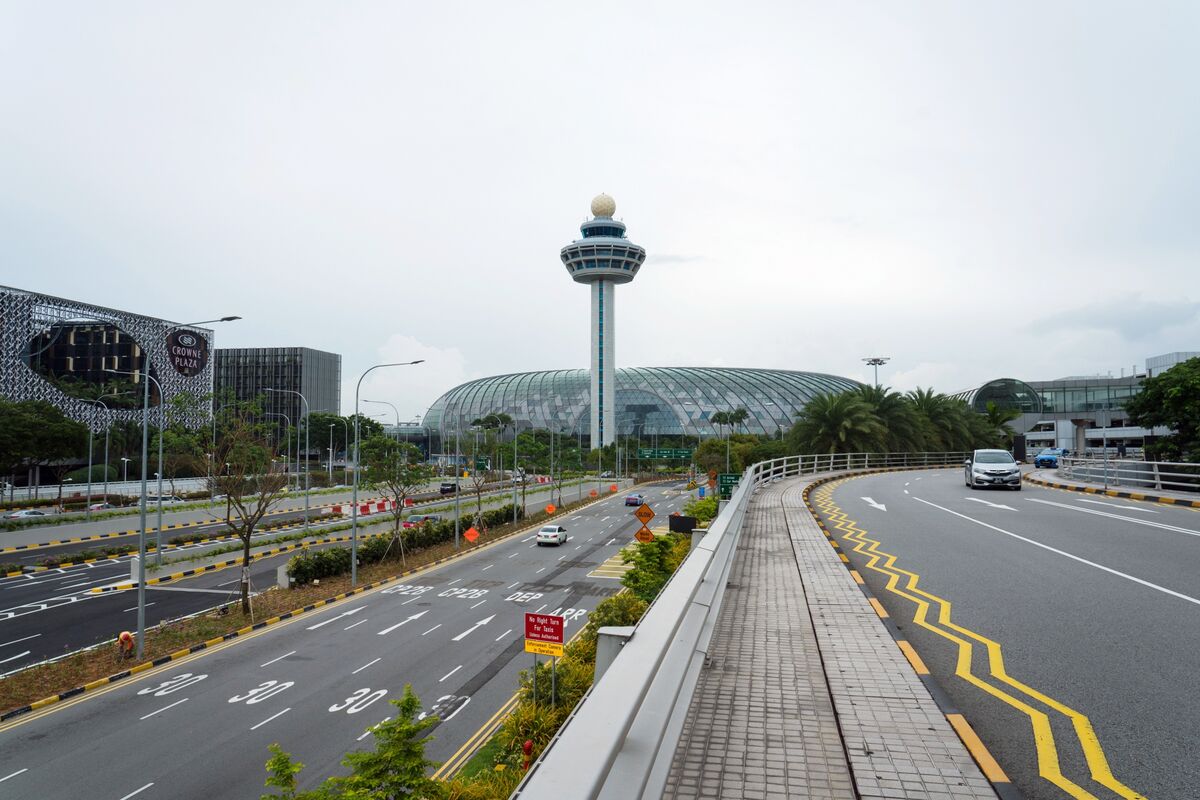
Singapore disposed of a 250-kilogram (551 lb) World War II aerial bomb at a Changi East construction site near Changi Airport. Police said the explosive was too dangerous to move and was disposed of early Thursday within the Terminal 5 development area. Publicly accessible areas were not affected, so no expected impact to airport operations or public access.
Large civilian megaprojects routinely face asymmetric supply-chain and insurance shocks from low-probability legacy risks; when discovered late these risks compress contractor headroom (margins and schedule float) and shift quantifiable risk from owners to insurers and O&M contractors. A localized stoppage that consumes 2–6% of a construction schedule typically translates into 1–3% incremental capex on a multi-year program and a 100–300 basis‑point NPV haircut to projected IRR via delayed revenue.
Second-order competition effects matter: even a transient deferral of incremental hub capacity creates a window for rival hubs and long‑haul carriers to arbitrage frequency and yield — a six‑month capacity gap in a regional hub can reallocate ~1–3% of long‑haul lift across the Asia–Europe/US network, pressuring yields for carriers depending on transfer traffic. For suppliers, the shock amplifies demand for remediation, security systems and contingency construction crews for 3–12 months, but reduces new project bidding appetite until latent‑risk surveys are complete.
Near term (days–weeks) the main market moves will be idiosyncratic: select contractors see stop‑work claims and insurers adjust pricing; over 3–12 months the macro effect is marginal — higher insurance loading on large civil tenders and incremental capex for remediation. Catalysts to monitor that would reverse or accelerate the trades are (1) discovery of additional latent hazards across the region, (2) formal changes to permitting/survey requirements, and (3) material insurance repricing or government underwriting interventions.
AI-powered research, real-time alerts, and portfolio analytics for institutional investors.
Request DemoOverall Sentiment
neutral
Sentiment Score
0.00
