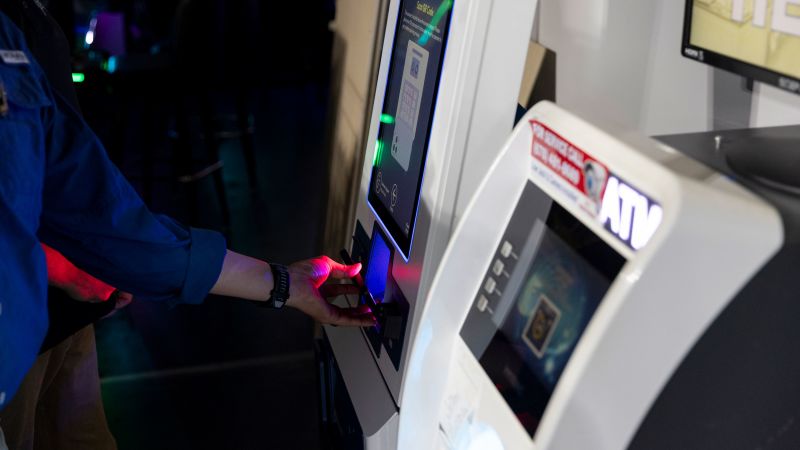
A CNN investigation highlights the widespread use of crypto ATMs in facilitating fraud, with Americans reportedly losing approximately $240 million to scams in the first half of the year, as these machines enable rapid, untraceable transfers of funds beyond U.S. law enforcement reach. While crypto ATM operators dispute profiting from illicit activity and cite low overall illicit transaction percentages, law enforcement investigations suggest significantly higher fraud rates for specific companies. The difficulty in recovering scammed funds is prompting states to implement transaction limits, yet crypto ATM companies are actively lobbying against stricter regulations, signaling an escalating regulatory battle that could impact the broader cryptocurrency industry and its perceived integrity.
Crypto ATMs are increasingly implicated in widespread fraud, with Americans reportedly losing approximately $240 million to scams in the first half of this year. These machines facilitate rapid, untraceable transfers of funds globally, often bypassing U.S. law enforcement and enabling scammers to exploit victims' lack of knowledge about cryptocurrency. The ease of transferring large sums, compared to traditional methods like gift cards, exacerbates the financial impact on victims.
While crypto ATM companies, such as CoinFlip, dispute allegations of profiting from illicit activity and cite analytics suggesting only 1.2% of cash-to-crypto transactions were illicit in 2023, law enforcement investigations present a stark contrast. For instance, the DC attorney general alleged that over 90% of deposits in one company's ATMs stemmed from fraud over several months, highlighting a significant discrepancy in reported fraud rates and raising questions about operational oversight.
The regulatory landscape is becoming more contentious, with over a dozen states implementing laws, including daily transaction limits, to curb these scams. However, crypto ATM companies are actively lobbying against stricter regulations, even pushing their own model legislation with fewer protections, as seen in Missouri. This ongoing legislative battle, coupled with relaxed federal oversight under the previous administration, suggests prolonged regulatory uncertainty and potential for varied state-level enforcement.
The difficulty in recovering scammed funds, largely due to transfers to cryptocurrency exchanges outside U.S. jurisdiction, underscores the systemic challenges. This situation poses significant reputational and operational risks for companies involved in the crypto ATM sector and could impact broader investor confidence in the integrity of digital asset infrastructure.
AI-powered research, real-time alerts, and portfolio analytics for institutional investors.
Request DemoOverall Sentiment
strongly negative
Sentiment Score
-0.80
