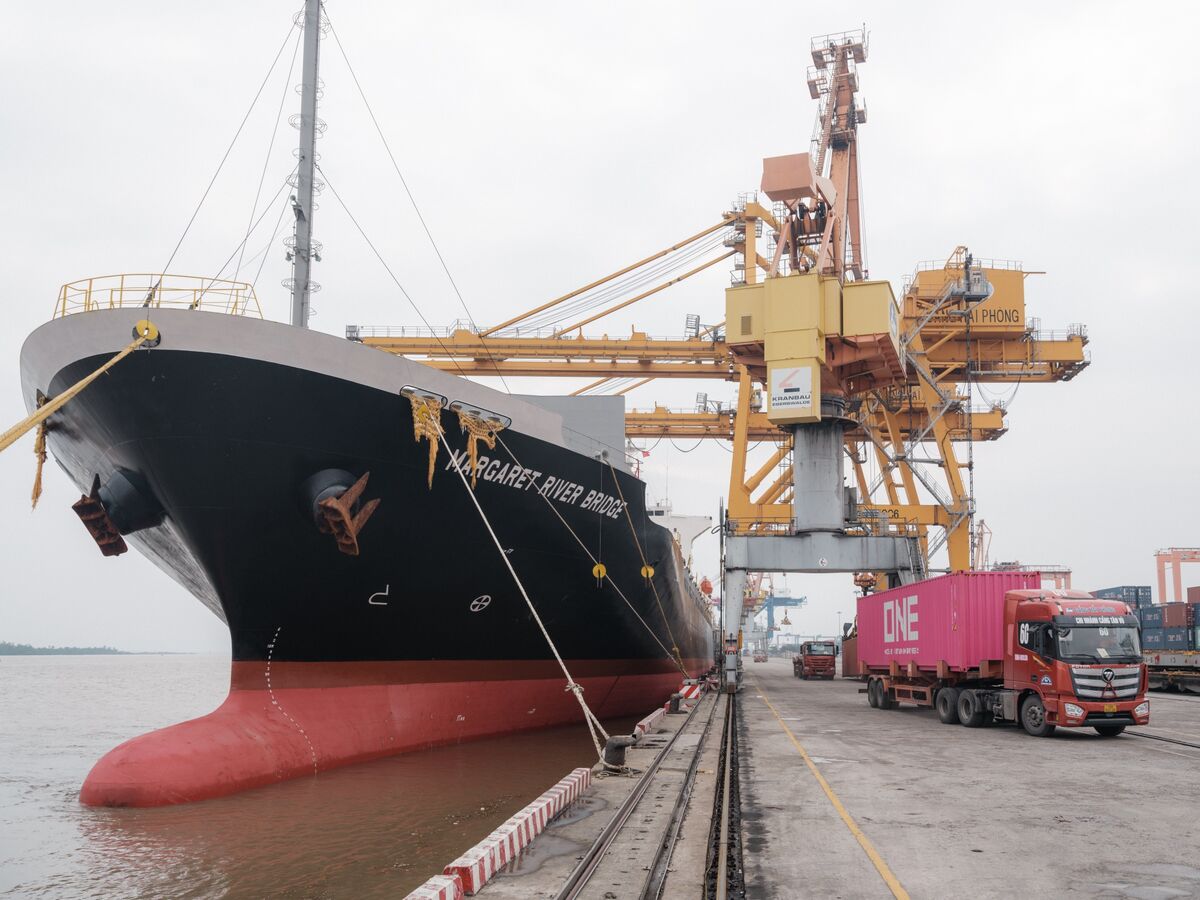
President Trump announced a trade deal with Vietnam, stating the US would impose a 20% tariff on Vietnamese exports, a 40% levy on transshipped goods, and Vietnam would drop all US import tariffs. However, Vietnam's government subsequently clarified that negotiators are still finalizing the details, creating significant uncertainty for businesses and investors regarding the actual terms and implementation of the agreement.
A significant disconnect has emerged between U.S. and Vietnamese announcements regarding a new trade agreement, creating considerable uncertainty for investors. While the U.S. President declared a deal featuring a 20% U.S. tariff on Vietnamese exports, a punitive 40% levy on transshipped goods, and the elimination of Vietnamese tariffs on U.S. imports, officials in Vietnam have clarified that negotiations are still in progress to finalize these details. This lack of a confirmed, mutual agreement makes it difficult to assess the true impact on bilateral trade flows and corporate supply chains. The proposed 20% tariff represents a material new headwind for Vietnam's export-oriented economy, while the 40% transshipment levy specifically targets companies that may have shifted production to Vietnam to circumvent other trade barriers, signaling a more aggressive U.S. stance on tariff engineering.
AI-powered research, real-time alerts, and portfolio analytics for institutional investors.
Request DemoOverall Sentiment
mixed
Sentiment Score
-0.10
