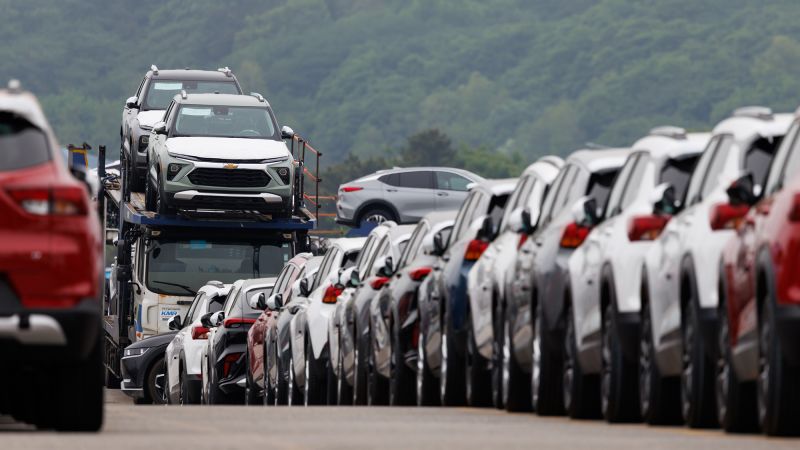
General Motors reported a $1.1 billion impact from tariffs in Q2, contributing to a 21% decline in net income, and projects full-year tariff costs of $4-5 billion. Despite this, GM maintained its full-year adjusted operating income guidance of $10-12.5 billion and has no immediate plans to hike prices, as the auto industry has largely absorbed costs due to existing inventory from before tariffs. Competitor Stellantis also reported significant tariff-related costs, leading to production pauses and a 10% Q2 US sales drop, underscoring the broader impact of the 25% tariffs on imported vehicles and parts across the sector.
The imposition of tariffs has created a significant financial headwind for the automotive sector, as evidenced by General Motors reporting a $1.1 billion cost in the second quarter, which was the primary driver of a 21% decline in its net income. The company anticipates this impact to escalate to between $4 billion and $5 billion for the full year, a material drag on profitability. Despite this, GM has maintained its full-year adjusted operating income guidance of $10 billion to $12.5 billion, signaling that these costs were anticipated. The industry's ability to absorb these initial costs without significant consumer price hikes, which are forecast to rise only 0.5% to 1%, is largely attributed to a temporary buffer from a backlog of vehicles and parts produced before the 25% tariffs were enacted. This is not an isolated issue, as competitor Stellantis also reported a €300 million tariff impact in the first half, which led to production disruptions and a 10% drop in its Q2 US sales. The structural vulnerability is clear, given that nearly 36% of GM's North American production is in Canada and Mexico and even US-built cars rely heavily on imported parts, making margin pressure a persistent theme.
AI-powered research, real-time alerts, and portfolio analytics for institutional investors.
Overall Sentiment
moderately negative
Sentiment Score
-0.50
Ticker Sentiment
