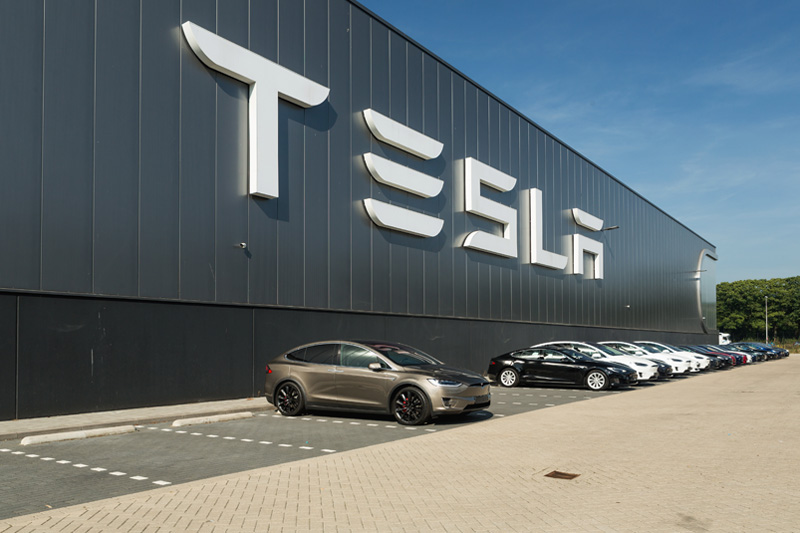
GLJ Research reiterated a Sell rating on Tesla with a $24.86 price target, well below the current share price near $386, and modeled Q1 2026 revenue of $20.442B versus $22.081B consensus. The firm also expects a 16.1% gross margin, $0.29 non-GAAP EPS, and negative free cash flow of $2.517B, all below Street estimates, alongside a $213M GAAP operating loss. Full-year 2026 revenue is projected at $83.4B, about 30% below the $119.5B consensus, reinforcing a bearish outlook despite continued debate over robotaxi optionality.
The setup is less about a single quarter miss and more about a credibility reset: when a high-beta equity is priced for software-like compounding, even modest disappointment in margins, cash burn, or unit growth can re-rate the entire narrative. The key second-order issue is that Tesla’s valuation has been implicitly supported by optionality in autonomy and robotics; if the market starts discounting those segments as non-contributory for another 12-24 months, the multiple compresses faster than any near-term earnings decline. That makes the stock vulnerable to a “nothing works yet” regime where every catalyst becomes a funding source for skepticism rather than upside.
The more interesting knock-on effect is competitive. A softer Tesla demand backdrop tends to improve relative share for legacy OEMs and suppliers because EV pricing pressure eases and procurement shifts back toward hybrids and ICE-adjacent platforms. That helps F and GM first, but the cleaner expression may be BWA, where the market can monetize a mixed powertrain transition without needing heroic EV adoption assumptions; suppliers often outperform when OEM narratives de-rate, because their end-market exposure is diversified and expectations are lower.
Near term, the biggest catalyst risk is not just earnings; it is whether management language forces analysts to cut 2026-2027 estimates again. If guidance implies lower fleet growth or weaker cash conversion, the stock can gap down and then continue grinding lower for weeks as systematic and momentum holders de-risk. The contrarian case is that sentiment is already very bearish, so any stabilization in gross margin or FCF could trigger a violent relief rally; but absent a clear inflection in deliveries or autonomy monetization, that rally would likely be mechanically driven and fade within days to a few weeks.
The tradeable asymmetry is that downside remains more durable than upside because the valuation still embeds extreme terminal value assumptions. In that context, the best risk/reward is to express a bearish view through defined-risk options rather than outright shorting the equity, since a headline-driven squeeze remains possible if management leans on robotaxi progress. For the broader auto basket, a relative-value long in lower-expectation names is more attractive than an outright sector short, because Tesla weakness can coincide with improved capital flows into cheaper beneficiaries.
AI-powered research, real-time alerts, and portfolio analytics for institutional investors.
Request TrialOverall Sentiment
strongly negative
Sentiment Score
-0.68
Ticker Sentiment
