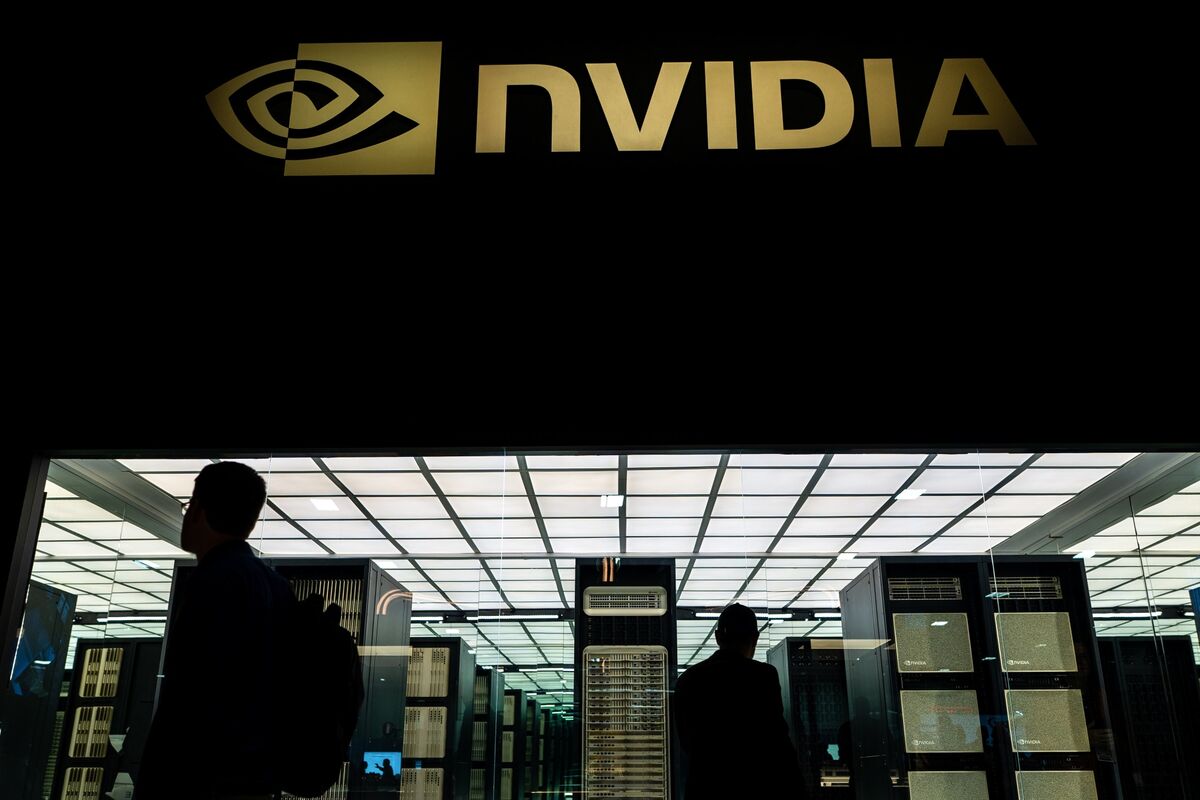
The US administration is poised to permit Nvidia to export its H200 AI chips to China, a decision that would allow the company to recover business it lost under prior export restrictions and potentially restore 'billions' in sales. The move follows weeks of deliberation by President Trump and advisors and a private meeting between CEO Jensen Huang and the president, underscoring the political and regulatory dimensions of high-end AI chip exports and the potential near-term revenue and competitive implications for Nvidia.
Market structure: Allowing H200 exports materially restores NVDA’s TAM in China and strengthens its pricing power for high-end datacenter GPUs; expect NVDA to recapture an incremental $2–5bn revenue run-rate within 4 quarters if Chinese cloud orders accelerate. Direct beneficiaries: NVDA, Chinese cloud AI leaders (BABA, BIDU, TCEHY OTC); losers: AMD/INTC in high-end GPU share and smaller AI chip challengers. Short-term supply scarcity for H200s will keep ASPs firm and elevate order-backlogs, tightening GPU supply/demand into H2 2026.
Risk assessment: Tail risks include a reversal of the license (low probability but high impact), tighter secondary US restrictions on software/firmware, and TSMC capacity or yield constraints delaying shipments; these could remove $2–4bn of forward sales. Immediate market reaction (days) will be price discovery; short-term (weeks/months) bookings and shipments matter; long-term (2–5 years) risk is Chinese indigenization eroding share. Hidden dependencies: TSMC wafer allocation, export-license renewal cadence, and Chinese data‑center power/buildout timelines.
Trade implications: Tactical: initiate a core long NVDA equity position (2–4% portfolio) and hedge execution risk with a Jan 2026 call spread (buy 600/900 call spread sized to 0.5–1% portfolio) to capture upside while limiting premium. Pair trade: long NVDA / short AMD (equal notional 0.5–1%) for relative exposure; use 3–6 month call spreads if IV is elevated. Rotate modestly into semicap suppliers (ASML exposure indirect) and Chinese cloud names (BABA, BIDU) on confirmed order announcements.
Contrarian angles: Consensus downplays regulatory reversal and valuation stretch; NVDA’s current multiple already prices near-perfect China recovery—if NVDA shares run >40% without confirmed FCF from China, position should be trimmed. Historical parallel: prior temporary trade easings produced revenue bumps but also spurred local competition; expect China to accelerate domestic silicon (risk of 5–10% share erosion over 3–5 years). Monitor order confirmations and BIS license language — absence of concrete booking visibility within 90 days is a sell signal.
AI-powered research, real-time alerts, and portfolio analytics for institutional investors.
Request DemoOverall Sentiment
moderately positive
Sentiment Score
0.55
Ticker Sentiment
