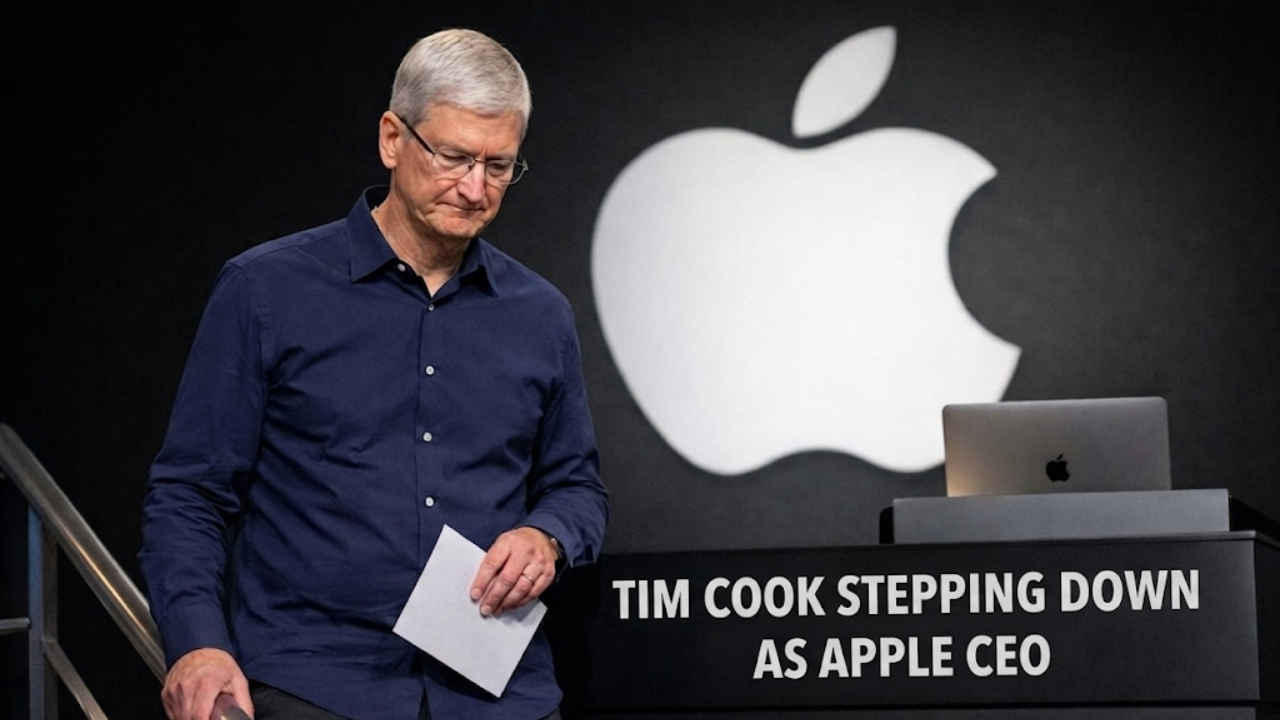
Tim Cook said Apple Maps was his biggest mistake, acknowledging it launched before it was ready, while also describing the Apple Watch’s life-saving user feedback as one of his proudest moments. The remarks came during an employee town hall tied to Cook’s planned CEO transition to John Ternus on September 1. The article is mainly a management and culture update with limited direct market impact.
The market should treat this as a governance transition, not a product headline. The key second-order issue is that Apple is trying to preserve a culture of operational humility while moving to a less proven leadership regime; that typically reduces the probability of catastrophic execution errors, but it can also slow bold product decisions just when hardware differentiation is being compressed. In the near term, the biggest implication for AAPL is not multiple expansion or contraction from the announcement itself, but a higher sensitivity to any sign that the transition disrupts cadence in iPhone, services, or AI productization over the next 2-4 quarters.
Cook’s framing around mistakes is actually constructive for bull cases because it signals an institutionalized willingness to absorb short-term pain for long-duration brand value. That matters because Apple’s recurring edge is not invention alone but industrial-scale quality control; if the new CEO internalizes that discipline, the base case is continuity. The risk is that investors underwrite Ternus as a clean-slate catalyst when the more likely outcome is a multi-year “no drama” handoff that preserves the franchise but does not accelerate growth meaningfully.
The Apple Maps anecdote is most relevant as a reminder that software/platform missteps can create reputational overhang even for dominant ecosystems. In a world where AI assistants, mapping, search, and on-device intelligence are converging, a single premature launch can impair user trust and partner economics for years. That makes Apple’s next major platform rollouts more important than the CEO change itself: the trade is on execution quality, not succession theater.
Contrarian view: the transition may be less risky than feared because Apple’s real moat is organizational depth, not founder charisma. If anything, a new CEO with product roots could re-rate dormant segments if capital allocation shifts toward more aggressive platform bundling or AI integration. The market is likely overpricing headline uncertainty and underpricing the possibility of a cleaner, more product-led narrative into the next iPhone cycle.
AI-powered research, real-time alerts, and portfolio analytics for institutional investors.
Request TrialOverall Sentiment
neutral
Sentiment Score
0.05
Ticker Sentiment
