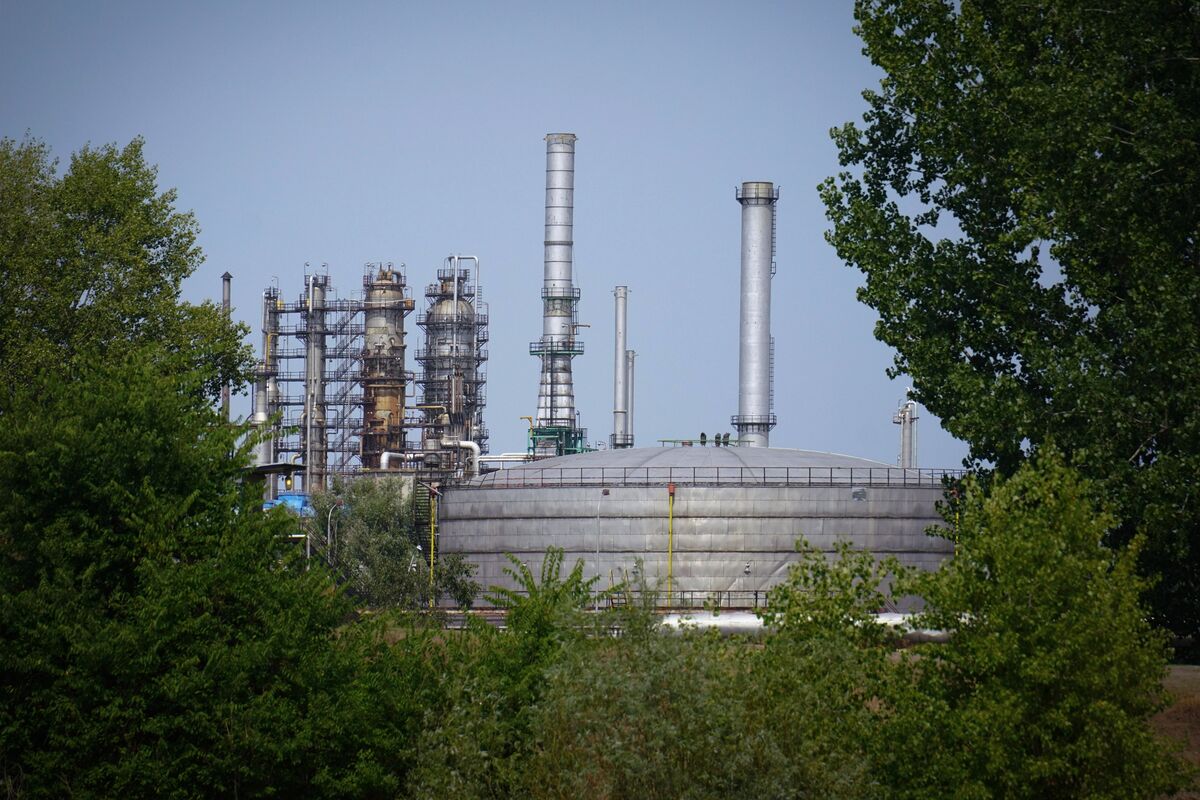
Hungarian Prime Minister Viktor Orban and his foreign minister are in Serbia to discuss energy cooperation and are exploring acquisition of sanctioned, Russian-owned refineries. The visit—including a meeting with Serbian President Aleksandar Vucic—comes as Serbia faces a potential fuel shortage after sanctions hit its sole refiner NIS, controlled by Russia's Gazprom PJSC, raising questions about regional energy security, enforcement of sanctions and potential cross-border asset deals.
Market structure: A Hungary-led bid for sanctioned Russian refinery assets is bullish for regional downstream players (MOL.BU, PKN.WA, OMV.VI) because it preserves crude feedstock flows and raises local refining utili zation; expect Central European diesel/gasoil cracks to widen 10–30% (roughly $3–$12/bbl regional premium) in a 1–3 month shock if NIS supply is disrupted. Winners also include European traders and barging/road haulers able to re-route product; losers are countries/refiners unable to source Russian barrels without regulatory relief and spot buyers in the Balkans facing short-term scarcity.
Risk assessment: Tail risks include EU legal/regulatory interdiction (asset seizure or forced divestiture) or escalation of sanctions that could cut Russian-supplied crude, producing a broader Brent spike of $5–$20/bbl and diesel dislocations lasting quarters. Immediate (days) — regional product volatility and FX swings; short-term (weeks–months) — M&A pricing and refining margins repricing; long-term (quarters–years) — consolidation that locks in Russian supply chains. Hidden dependencies: banking/payment workarounds, insurance, and transport chokepoints (refined product logistics) that can amplify shocks.
Trade implications: Tactical plays favor long refined-product exposure and selective regional refiners; use options to cap downside. Cross-asset: expect widening Serbia/Hungary sovereign spreads (5–50bp first order), HUF/RSD volatility versus EUR, and higher gasoil/ULSD vols; consider 1–3 month derivative hedges sized to NAV. Catalysts: EU/US rulings (next 2–8 weeks), winter demand (Nov–Feb), and any formal Hungarian/SERB asset transaction announcement.
Contrarian angles: The market may underprice the risk that a Hungarian purchase actually stabilizes flows and narrows cracks within 3–6 months, capping upside for gasoil; historical parallel — post‑2014 sanctions saw EU refiners reabsorb displaced Russian crude after months, not weeks. Unintended consequence: state-backed deals could trigger countermeasures or legal knock-on effects that create binary outcomes; structure trades to be asymmetric (limited-premium long options, CDS hedges).
AI-powered research, real-time alerts, and portfolio analytics for institutional investors.
Request DemoOverall Sentiment
neutral
Sentiment Score
-0.15
