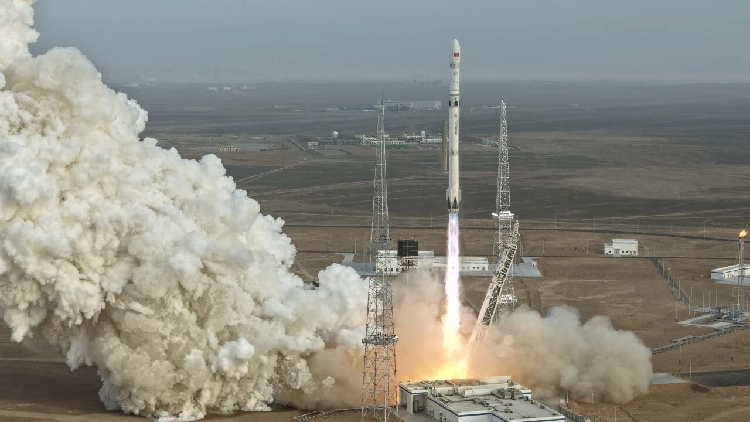
China's Long March-12A Y1 completed its maiden flight with the second stage reaching the planned orbit, but first-stage recovery failed and causes are under investigation. The liquid oxygen–methane rocket, designed for first-stage reuse, is ~70.4 m long with a launch mass of ~437 tonnes and stage/fairing diameters of 3.8 m/4.2 m; engineers said the flight yielded critical in-flight engineering data that will inform recovery-scheme optimization and further reusability verification.
Market structure: A failed first-stage recovery on China’s Long March-12A delays the near-term rollout of cost‑reducing reusable launch capacity, preserving pricing power for incumbent commercial launch providers and defense contractors. Winners near-term: state aerospace integrators (CASC) who receive follow‑on budgets to fix issues and Western defense primes (LMT, RTX, ETFs like ITA/XAR) that benefit from sustained high per‑launch pricing; losers: pure‑play small launcher equities that priced immediate global reusability competition (RKLB) and satellite startups dependent on rapidly falling launch costs. Cross-asset: expect modest upward pressure on defense equities (6–12 months), small FX/CNY knee‑jerk volatility <1–2%, and negligible commodity impact (natural gas demand effect <0.5% over 1–3 years).
Risk assessment: Tail risks include a major structural failure prompting a multi‑month program freeze or international regulatory tightening that curbs export of key components; probability low but impact high for suppliers tied to Chinese space exports. Immediate (days): information‑driven volatility; short (30–90 days): official investigation outcomes and corrective engineering; long (6–36 months): continued global shift to methane/LOX engines remains intact. Hidden dependencies: landing tech, heat‑shield suppliers, and domestic testing cadence; catalysts: official investigation report in 30–60 days or a successful reflight within 6 months.
Trade implications: Tactical allocations — establish a 1–2% long position in ITA or XAR (6–12 month horizon, target +15% relative) and buy a 1% notional 3–9 month call spread on LMT (capture defense procurement upside). Hedge/shorts — purchase 3‑month RKLB 25% OTM puts sized 0.5–1% notional to express downside if market reprices reusability timelines; pair trade: long ITA, short RKLB (equal notional) to capture relative safety. Options strategy: sell a covered call on MAXR (3–4% position) if launch cadence uncertainty persists; close positions if RKLB falls >20% or if China releases positive reusability fix within 60 days.
Contrarian angles: Markets may over‑discount China's capacity to iterate — historical precedent (SpaceX/ Falcon 9 early failures then market leadership) implies a rapid catch‑up is feasible, creating a 3–6 month buying window in Chinese supply‑chain plays and global launch vendors. Consensus underestimates state funding: if investigation yields fix within 60 days, expect a sharp rally in suppliers and a rerating of RKLB/ MAXR; conversely, protracted technical issues could accelerate Western vertical integration and win market share for ULA/Blue Origin partners over 12–36 months.
AI-powered research, real-time alerts, and portfolio analytics for institutional investors.
Request DemoOverall Sentiment
mixed
Sentiment Score
-0.10
