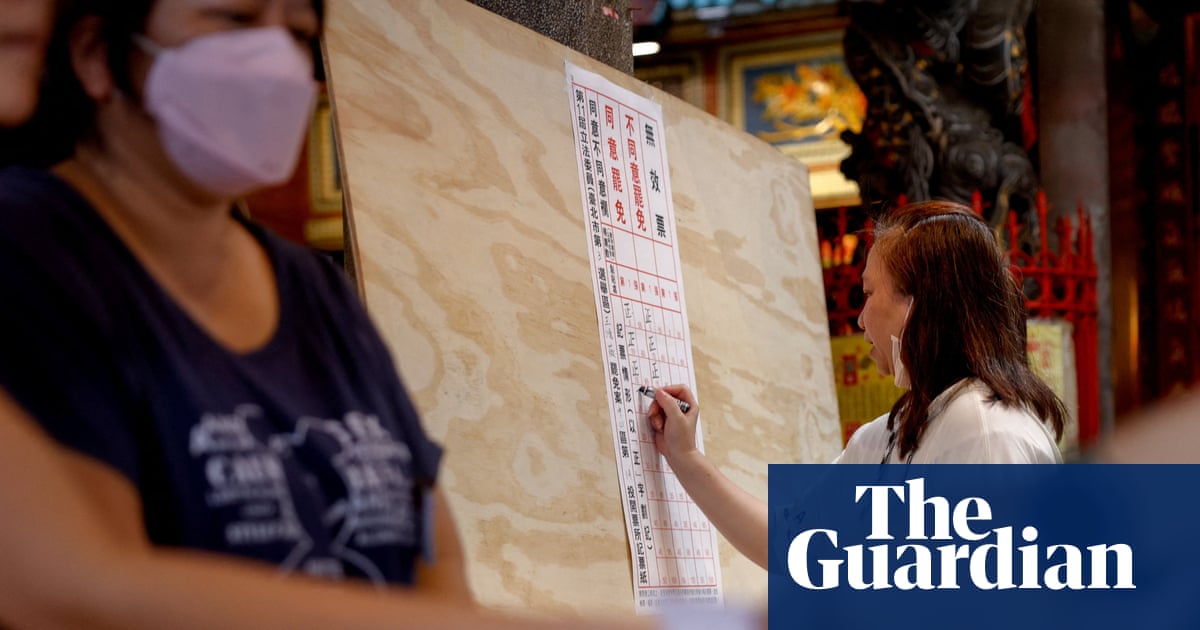
An unprecedented attempt to recall 24 opposition Kuomintang (KMT) legislators in Taiwan, backed by the ruling Democratic Progressive Party (DPP) to secure a parliamentary majority, failed as voters rejected all recall motions. This outcome ensures the KMT retains its legislative control, potentially emboldening the opposition and continuing to challenge President Lai Ching-te's agenda, including defense budgets. The result highlights Taiwan's deep internal political divisions and may be interpreted by Beijing as a sign of waning support for the DPP's 'China threat' rhetoric, though analysts caution it is unlikely to reduce cross-strait military and political pressure.
The failure of the unprecedented recall attempt against 24 opposition Kuomintang (KMT) legislators solidifies the political gridlock facing Taiwan's ruling Democratic Progressive Party (DPP). With the KMT retaining its legislative majority, President Lai Ching-te's agenda, including critical defense budgets, will continue to face significant obstruction. This outcome is likely to embolden the KMT opposition and highlights the limitations of the DPP's strategy of leveraging the 'China threat' narrative in domestic politics, as noted by analysts. From a geopolitical perspective, while Beijing might interpret the result as a sign that its 'peaceful unification' messaging resonates with some Taiwanese voters, it is critical to note that analysts do not expect a concurrent reduction in military or political pressure on the island. The event underscores deep internal political divisions and perpetuates a state of heightened cross-strait tension, creating a challenging environment for policy implementation and increasing overall sovereign risk.
AI-powered research, real-time alerts, and portfolio analytics for institutional investors.
Overall Sentiment
mildly negative
Sentiment Score
-0.25
Ticker Sentiment
