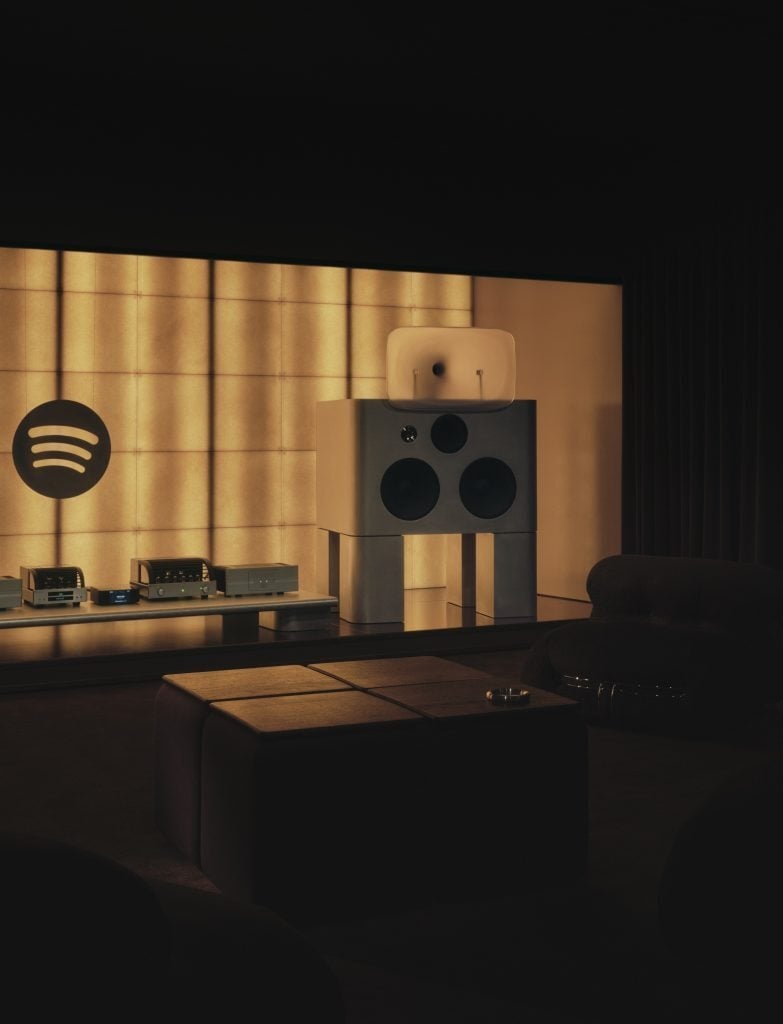
Spotify opened the Spotify Listening Lounge in London to showcase its new lossless audio offering for Premium subscribers, featuring a bespoke sound system engineered by Friendly Pressure and a launch event with UK artists Joy Crookes, Nao and Yazmin Lacey. The venue underscores a strategic push into premium-tier, location-based experiences that could support tiered monetization, raise subscriber expectations for high-fidelity streaming, and boost demand for studio-grade audio hardware and acoustically engineered venues.
The Listening Lounge is a deliberate product-to-experience funnel that creates a clear upsell vector: a premium, location-backed proof point that reduces friction for consumers to accept a price-differentiated hi‑res tier. From a modeling perspective, every 10m premium subscribers converting to a +$3/month lossless add-on implies roughly $360m in incremental recurring revenue — enough to move near-term operating leverage if conversion happens within 12–24 months and incremental hosting costs remain contained.
Second-order winners are outside the streaming P&L: makers of DACs, specialized audio codecs and high-end listening hardware (component suppliers and consumer electronics OEMs) stand to capture a measurable bump in ASPs and replacement cycles; venue operators and promoters can monetize exclusive programming and premium F&B/ticket bundles, creating a cross-sell flywheel back into Spotify’s ecosystem. Conversely, content licensing mechanics could become friction points — labels that haven’t delivered master-quality stems or that demand higher royalties on hi‑res tracks could blunt margin capture or delay rollout.
Key risks and catalysts are cadence-specific: near-term (days–weeks) PR and event metrics will drive sentiment; medium-term (3–12 months) conversion rates and reported ARPU expansion in quarterly results determine valuation re-rating; long-term (12–36 months) risks include faster competitive matching (Apple/YouTube), technological obsolescence of differentiation via improved low-bandwidth codecs, or increased CDN/royalty costs that erode margins. A plausible reversal is a 1) Apple-equivalent feature parity announcement within 3 months or 2) a label dispute restricting catalog availability — either would materially slow adoption and compress upside.
The market appears split: consensus underprices the hardware + venue monetization tail (an often-ignored revenue stream that compounds with ARPU), but overestimates the speed at which mass-market consumers will pay materially more for fidelity. That asymmetry favors directional exposure with defined downside protection rather than naked long-duration optionality.
AI-powered research, real-time alerts, and portfolio analytics for institutional investors.
Request DemoOverall Sentiment
mildly positive
Sentiment Score
0.25
Ticker Sentiment
