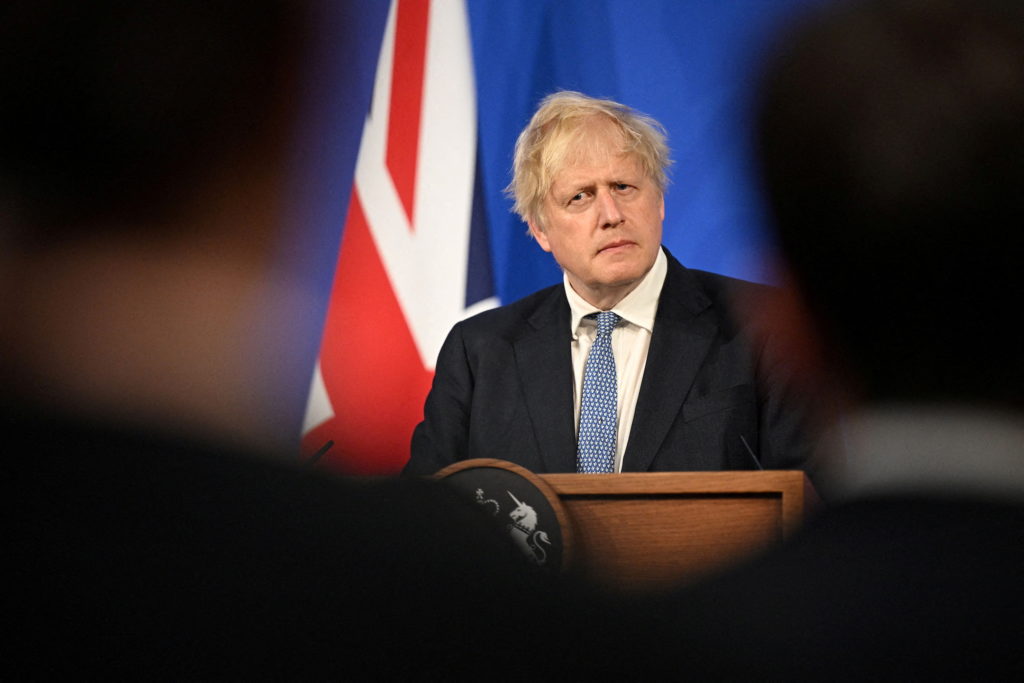
Former UK prime minister Boris Johnson urged immediate deployment of noncombat Western troops to peaceful regions of Ukraine to signal resolve against Russian aggression, arguing such a move would demonstrate support for Ukrainian sovereignty. The proposal, if adopted, would mark a major policy shift from current plans by a 'coalition of the willing' that envisions troops only after a ceasefire; the UK Ministry of Defense reiterated planning for a multinational, UK-led force to secure peace post-hostilities. Johnson attributed Russia's 2022 invasion to Western failures in Syria, Crimea and Afghanistan, while Western planners warn public troop deployments risk Russian escalation given Moscow's prior rejection of peacekeeping forces.
Market structure: A renewed push (even rhetorical) for deploying noncombat Western troops mechanically favors defense prime contractors (LMT, RTX, NOC, GD, BAES.L) and services/engineering firms (KBR, AECOM) that win logistics, base-building and ISR contracts; expect 6–18 month revenue tailwinds of +5–15% for service awards if policy signals firm. Energy and commodity markets face asymmetric upside — oil/gas and wheat see conditional risk premia (spot +3–8%) on escalation, while Russian assets and adjacent EM FX/R sovereign debt suffer immediate outflows.
Risk assessment: Tail risks include direct coalition casualties or Russian strikes on peacekeepers (low probability <15% but systemic impact), escalation to NATO-targeting sanctions, or domestic political reversals in UK/EU (40–60% chance of policy drift). Time horizons: days (news-led volatility, VIX spikes), weeks–months (procurement and budget signaling), 12–36 months (multi-year defense capex and supply-chain retooling). Hidden dependencies include semiconductor/titanium bottlenecks and US/UK defense budget approval cycles; catalysts are official deployment orders, US congressional funding votes, or a ceasefire agreement.
Trade implications: Favor modest, staged longs: 1–3% portfolio allocations to ITA (ETF) and selective primes (LMT, RTX) with 6–12 month horizons; hedge with 0.5–1% GLD exposure as tail protection. Use options to define risk: buy 3–6 month ITA or LMT 10–15% OTM calls (allocate 20–30% of equity leg) around volatility spikes; consider pair trade long BAES.L vs short higher-beta UK domestic cyclicals if GBP weakened.
Contrarian angles: Consensus overweights pure weapons names; markets underprice services/engineering and base-logistics winners (KBR, AECOM) which historically capture >30% of post-conflict spend. The immediate rally in primes could be overdone — prefer staggered buys on 10–20% pullbacks and prioritize firms with backlog visibility and minimal Russian exposure. Watch for unintended consequences: political backlash that reallocates to social spending could compress expected upside by 30–50% if elections swing.
AI-powered research, real-time alerts, and portfolio analytics for institutional investors.
Request DemoOverall Sentiment
mildly negative
Sentiment Score
-0.25
