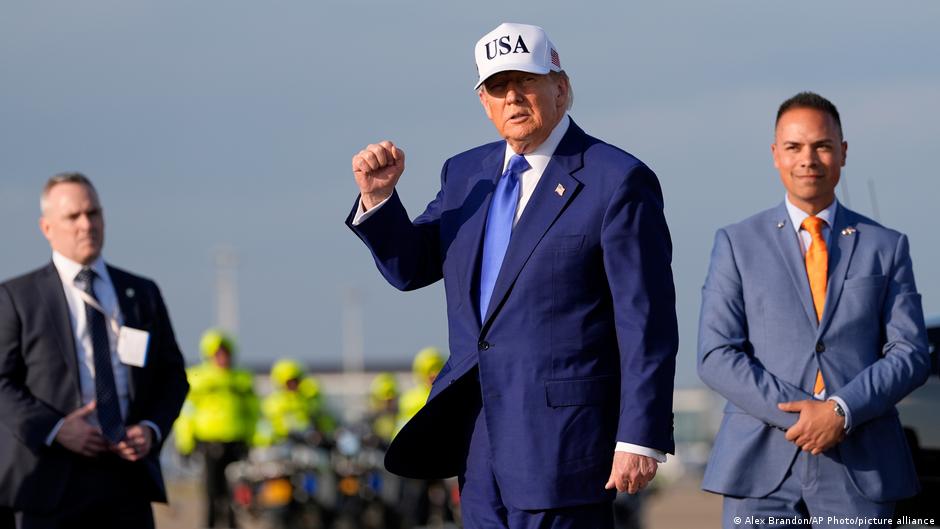
The NATO summit in The Hague is poised to approve a significant increase in defense spending, targeting 5% of GDP, largely driven by US President Donald Trump's long-standing demands. While this marks a 'tectonic shift' in European defense posture, prompted by Russia's war in Ukraine, Trump's ambiguous stance on NATO's Article 5 mutual defense clause introduces uncertainty regarding the alliance's future cohesion. Ukraine's role at the summit is notably diminished, underscoring evolving geopolitical priorities and potential implications for regional stability and defense sector investments.
The NATO summit in The Hague signals a pivotal shift in European fiscal and defense policy, centered on a proposed increase in member state defense spending to 5% of GDP. This substantial rise from the current 2% target is driven by persistent pressure from U.S. President Donald Trump and what European leaders term a "tectonic shift" in the security landscape following Russia's invasion of Ukraine. This commitment represents a significant long-term catalyst for the defense industry, with NATO's chief emphasizing the need to "win this new war of production." Germany has already detailed plans to add 10,000 troops and more than double its defense budget to €152.8 billion by 2029. However, this spending surge is juxtaposed with significant geopolitical uncertainty stemming from President Trump's ambiguous remarks on the U.S. commitment to the Article 5 mutual defense clause, which he stated "depends on your definition." This comment, despite reassurances from NATO's Secretary General, introduces a material risk to the alliance's cohesion. Concurrently, Ukraine's diminished role at the summit, with President Zelenskyy excluded from key leadership sessions, indicates a potential reprioritization of the alliance's agenda under U.S. influence.
AI-powered research, real-time alerts, and portfolio analytics for institutional investors.
Request DemoOverall Sentiment
Mixed
Sentiment Score
-0.10
