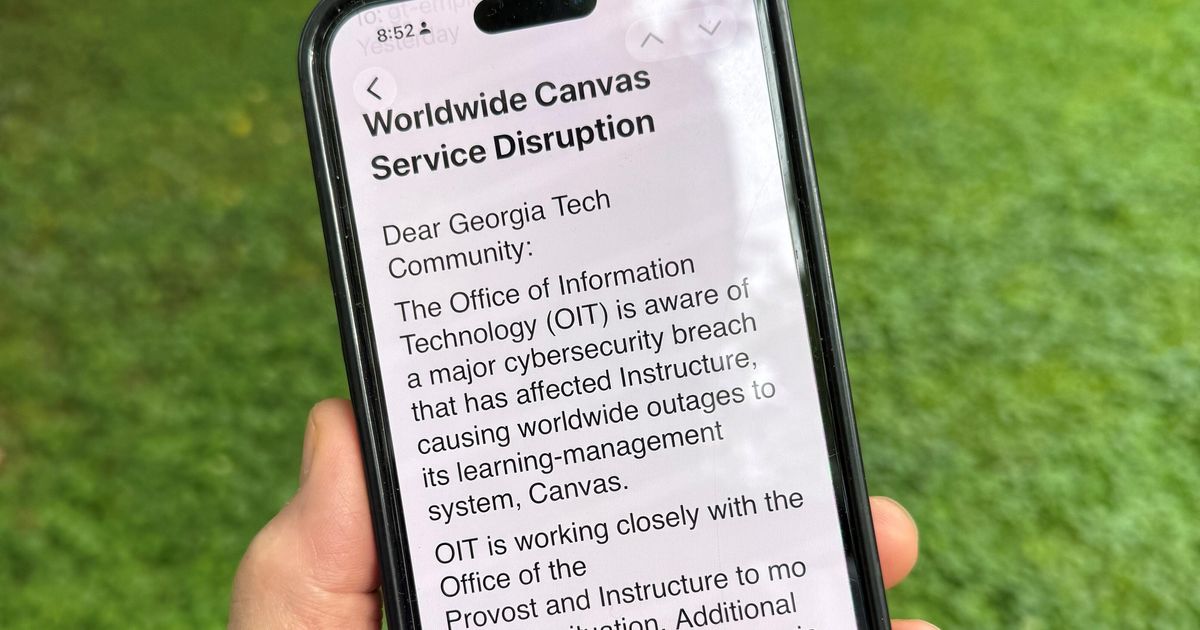
Instructure said it reached an agreement with hackers behind a breach that exposed names, email addresses, student IDs and messages, and that it received confirmation the leaked data was destroyed. The company did not disclose whether a ransom was paid, leaving uncertainty around the terms and the completeness of remediation. The incident disrupted Canvas classes and triggered ongoing forensic work with CrowdStrike and other vendors.
This is less a one-off incident than a pricing event for cyber-risk in education tech: the market should treat “remediation completed” claims as a temporary compression of headline risk, not a true erase of liability. The near-term beneficiary is the incident-response ecosystem, because every large breach that ends in a negotiated settlement raises the probability of follow-on consulting, forensics, hardening, and cyber-insurance claims across the customer base. That matters for vendors with breach-response adjacency, but it also raises the discount rate on software firms that store regulated student data and rely on high-trust procurement cycles. The second-order damage is to retention and renewal dynamics. School districts and universities are sticky, but not inert: a visible outage plus data exposure can turn into longer renewal scrutiny, mandatory security questionnaires, and slower procurement over the next 2-4 quarters. That is especially relevant where product differentiation is weak and switching costs are more political than technical; even if no competitor is named here, a breach often becomes an excuse for CIOs to rebid adjacent learning and identity workflows, compressing vendor leverage. For CrowdStrike, this is a modest reputational tailwind at the margin, but not a direct earnings catalyst. The more important angle is that repeated education-sector breaches reinforce the narrative that endpoint, identity, and incident-response spend is non-discretionary, which should support budget allocation even if seat growth slows elsewhere. The key risk is that the “data destroyed” claim proves false and follow-on extortion resurfaces in weeks or months; that would extend legal and PR overhang and could force larger customer concessions than the market currently expects. Consensus may be overpricing the immediacy of the resolution and underpricing the persistence of trust erosion. The right lens is not whether the data is gone today, but whether procurement teams now assume every LMS and K-12 platform needs more controls, more logging, and more backup workflows. That shifts spend toward security vendors and away from pure software multiples, while the software victim itself faces a slower normalization path than the headline suggests.
AI-powered research, real-time alerts, and portfolio analytics for institutional investors.
Request DemoOverall Sentiment
moderately negative
Sentiment Score
-0.45
Ticker Sentiment
