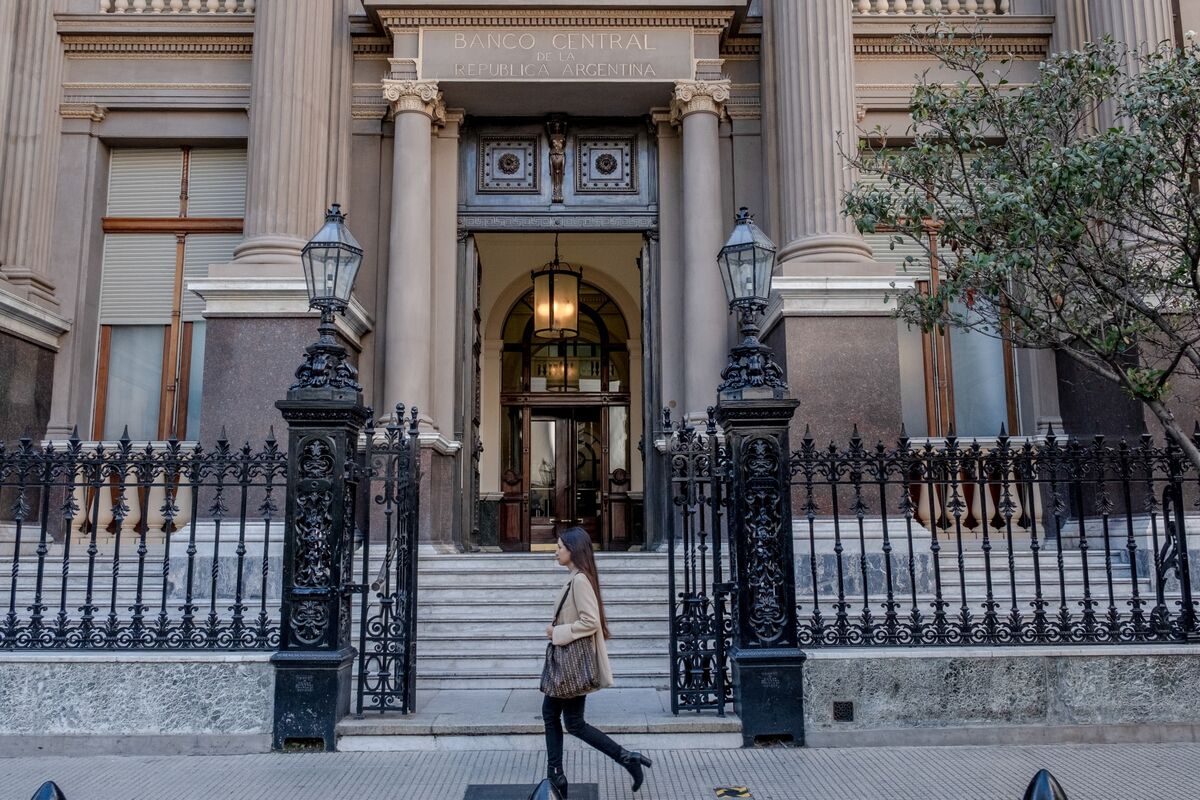
Argentina's government, despite prior pledges of a free-floating currency, intervened in the market to influence the peso's value, selling $409 million in futures contracts on April 30. This action, representing nearly 14% of the total open interest in the local A3 futures market, contradicts commitments made to the International Monetary Fund. The central bank also lowered implied rates and facilitated cheaper Treasury financings in an effort to stabilize the market ahead of key debt auctions.
Argentina's government has actively intervened in the currency market, a significant policy reversal that contradicts its pledge made a month prior for a free-floating peso and stands in contrast to commitments with the International Monetary Fund. The central bank's sale of $409 million in futures contracts on April 30, representing nearly 14% of the total open interest in the local A3 futures market, confirms direct intervention. This action, coupled with measures to lower implied rates and facilitate cheaper Treasury financings, was aimed at stabilizing the market ahead of key debt auctions. Despite the stated objective of stabilization, this intervention has been met with strongly negative sentiment and an uncertain tone, suggesting it may undermine policy credibility and potentially introduce further market unpredictability. The high market impact score underscores the significance of this move for investors focused on emerging markets, currency, and monetary policy developments.
AI-powered research, real-time alerts, and portfolio analytics for institutional investors.
Request DemoOverall Sentiment
strongly negative
Sentiment Score
-0.65
