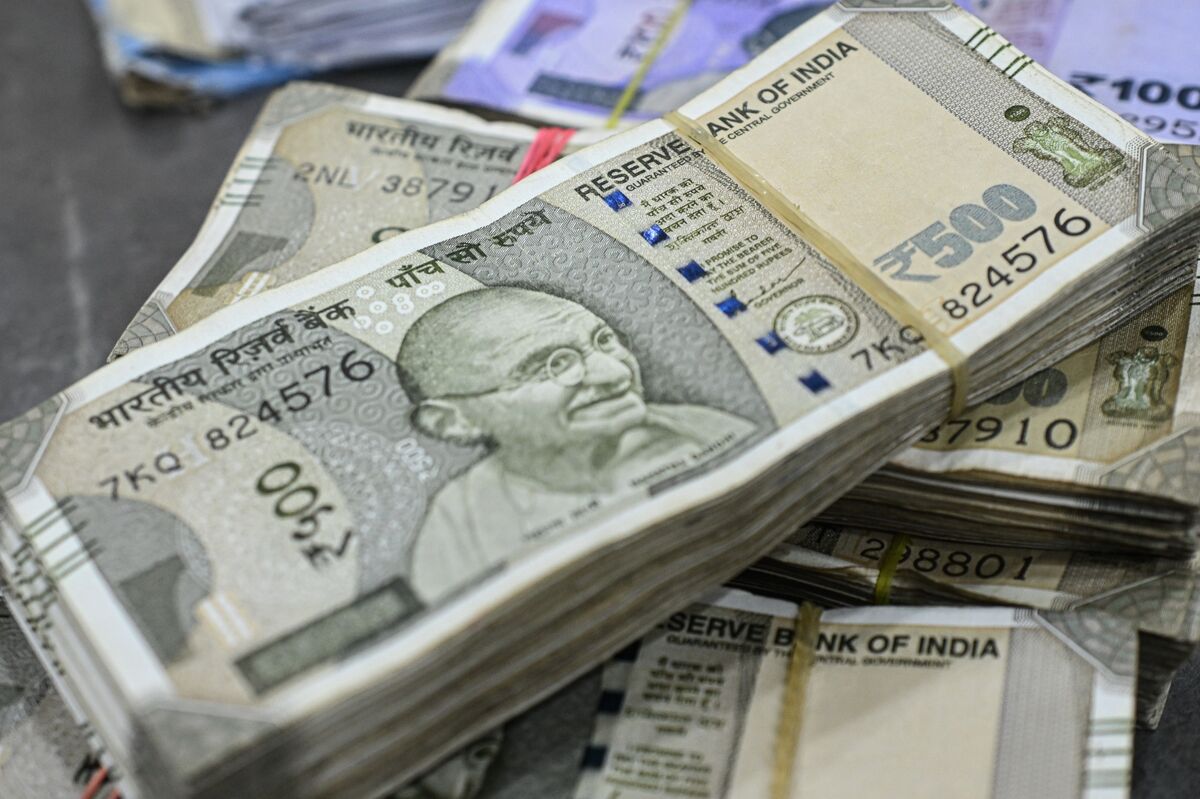
The Indian rupee tested a fresh all-time low at 89.9538 per dollar as delays in finalizing a trade deal with the US — including talks to lower a punitive tariff — weakened sentiment and raised the risk of the currency slipping to the psychological 90 level. Market participants said the Reserve Bank of India intermittently sold dollars around the 89.90 mark to pare losses, highlighting active FX intervention pressure and potential volatility for emerging-market assets if the trade impasse persists.
Market structure: A weaker INR to ~90/USD redistributes economic rents toward exporters (IT services, pharmaceuticals, select textiles) while penalizing heavy importers (oil & gas refiners, airlines, consumer discretionary reliant on imported inputs). Corporates with USD revenue (INFY, WIT, SUNPHARMA) see margin upside of ~200–400bps on 5–7% depreciation, while importers face equivalent margin compression and higher working capital needs. FX market technicals point to faster mean reversion risk because RBI has intervened near 89.90, indicating a defensive liquidity buffer.
Risk assessment: Short-term (days–weeks) the main tail is a disorderly slide >90 that triggers larger FPI outflows, a ~50–100bp move up in 10y sovereign yields and tighter domestic liquidity; medium-term (3–12 months) higher imported inflation could force RBI normalization that compresses equity multiples. Hidden dependencies include corporate USD debt and unhedged FX exposures in midcaps and banks; a collateral second-order is rising NPAs if real rates spike. Key catalysts: US-India tariff deal outcome (30–90 days), crude moves, and Fed policy shifts.
Trade implications: Tactical long exposure to exporters and FX-hedged USD positions; implement USDINR 3-month calls (strike 90) or NDF buys sized to cover FX risk. Rotate out of import-intensive sectors (airlines, refiners) and own gold as tail hedge. Deploy options to monetize elevated realized vol (buy USDINR calls, sell time spreads on INDA) with strict stop-loss discipline tied to 88.5–90 thresholds.
Contrarian angles: Consensus assumes sustained depreciation; this may be overstated because RBI reserves (~$500–600bn) and previous episodes (2013 taper tantrum) show central bank capacity to cap moves quickly. Many large exporters are already hedged — immediate earnings beat may be muted — so direct equity re-rating is not guaranteed. Beware crowded trades: long INFY vs short INDA could compress if flows reverse rapidly.
AI-powered research, real-time alerts, and portfolio analytics for institutional investors.
Request DemoOverall Sentiment
moderately negative
Sentiment Score
-0.45
