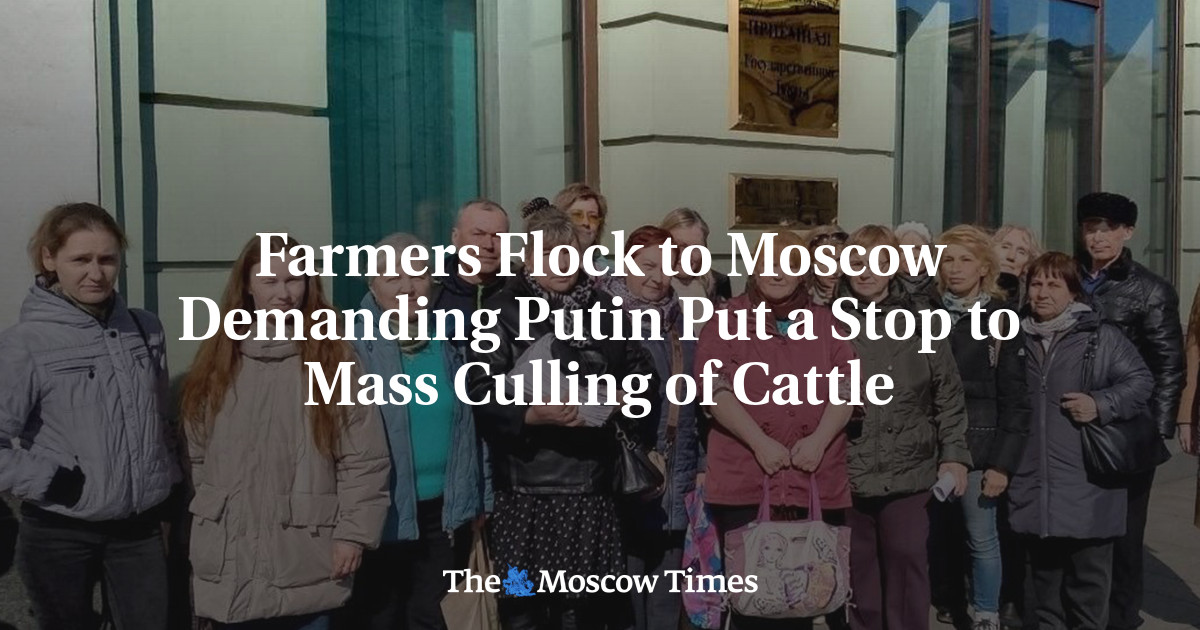
More than 90,000 head of cattle have been culled across at least nine Russian regions since February, with farmers estimating direct losses of 1.59 billion rubles (~$19.5M) plus an additional 368.2 million rubles (~$4.5M). Authorities blame rabies and pasteurellosis (Novosibirsk calling it an "unusual mutated form"), while the USDA foreign service flagged the scale as consistent with a possible unconfirmed foot-and-mouth outbreak; farmers allege animals were slaughtered without testing and have lodged a 31,000+ signature petition in Moscow. Monitor regional meat supply, potential trade/policy fallout (calls to withdraw from the WTO) and risks of regulatory or legal investigations, though near-term market impact appears limited to the agricultural sector.
The direct sanitary event is likely to produce asymmetric, time-staggered supply shocks: an immediate drop in regional feed demand and processing throughput followed by a multi-year rebuilding cycle that raises feed and breeding-animal demand. Expect price action to bifurcate — short-term weakness in feed commodities in affected corridors (weeks–months) but structurally firmer protein and feed demand over 2–4 years as herds are replaced and biosecurity spending rises.
Politically driven culls and opaque diagnostics materially raise regulatory tail risk: trading partners may impose precautionary bans or require enhanced certification, creating windows for third-country exporters to capture displaced volumes while also elevating counterparty and NPL risk for local lenders. The state response (compensation, investigations, tighter sanitary regimes) is the primary catalyst that will determine whether market dislocations normalize quickly or harden into lasting protectionism; watch fiscal transfers and legal actions over the next 1–3 months.
Non-obvious winners are diagnostic/vaccine makers and established global meat processors positioned to absorb diverted demand; losers are small regional integrators, local feed mills, and credit-exposed rural banks whose loan books are concentrated in affected areas. The optionality is binary: confirmation of a high-consequence transboundary disease flips the trade book (global price upside, export bans), whereas a governance/overreach outcome favors demand diversion and vendor consolidation across proteins and animal-health suppliers.
AI-powered research, real-time alerts, and portfolio analytics for institutional investors.
Request DemoOverall Sentiment
moderately negative
Sentiment Score
-0.45
