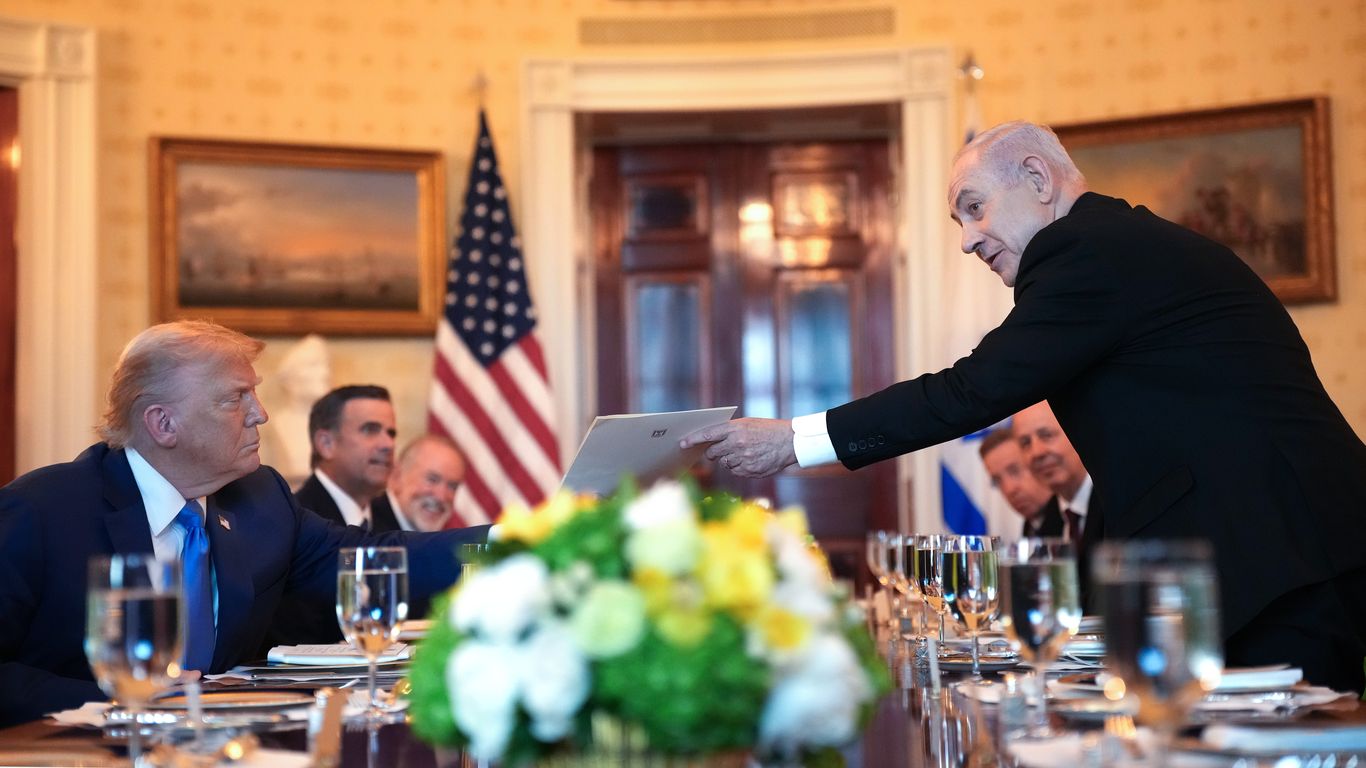
President Trump expressed optimism regarding a potential 60-day ceasefire in Gaza between Israel and Hamas, which would include the release of 10 living and 18 deceased hostages, with U.S. envoy Steve Witkoff heading to Doha to join ongoing mediated talks. Concurrently, Trump announced an impending U.S. meeting with Iran, expected 'in the next week or so,' to discuss a nuclear deal, marking the first such engagement since the recent 12-day conflict between Israel and Iran.
Recent diplomatic activity signals a potential reduction in Middle Eastern geopolitical tensions, driven by two key U.S.-led initiatives. Firstly, negotiations in Doha for a 60-day ceasefire between Israel and Hamas, which includes the release of 10 living and 18 deceased hostages, are being actively supported by the U.S. with envoy Steve Witkoff joining the talks. The optimistic tone from President Trump underpins the moderately positive sentiment signal associated with this development. Secondly, and perhaps more significantly for commodity markets, the U.S. is set to hold a nuclear meeting with Iran within the next week. This meeting is notable as the first direct engagement since the recent 12-day conflict between Israel and Iran, with President Trump explicitly stating he believes Iran wants to 'make peace.' The combination of these efforts points to a concerted push to de-escalate regional conflicts, which is reflected in the moderate market impact score and suggests a potential unwinding of the geopolitical risk premium currently priced into assets like crude oil.
AI-powered research, real-time alerts, and portfolio analytics for institutional investors.
Request DemoOverall Sentiment
moderately positive
Sentiment Score
0.60
