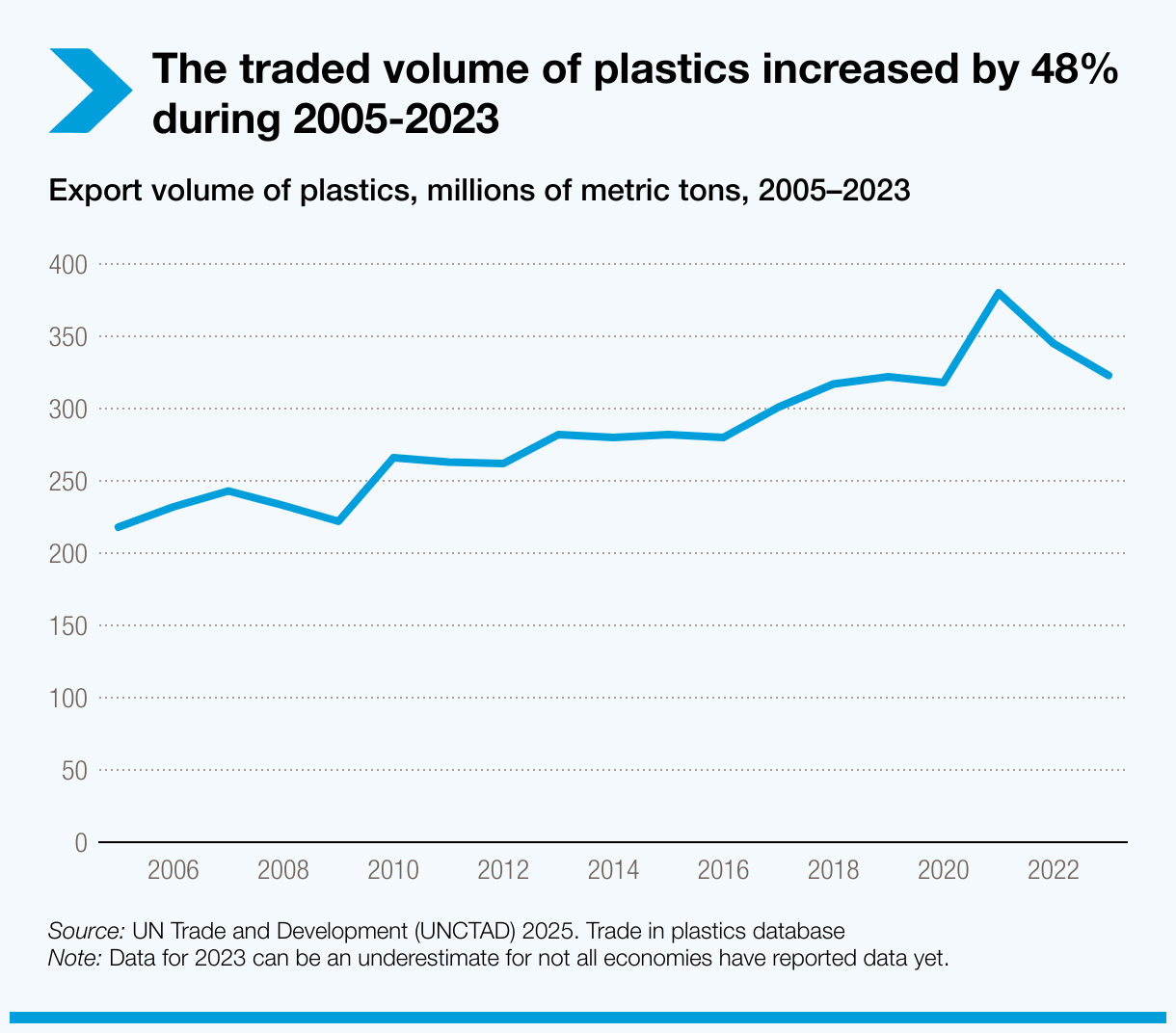
The global plastic trade, valued at over $1.1 trillion in 2023, faces a systemic crisis as 75% of all plastic produced becomes waste, driven partly by significantly lower average Most Favored Nation (MFN) tariffs on plastics (7.2%) compared to natural substitutes (14.4%). This tariff disparity artificially cheapens fossil fuel-based plastics, hindering the growth of the $485 billion market for sustainable alternatives. The absence of a comprehensive international treaty and fragmented national regulations necessitates that the upcoming Global Plastics Treaty aligns trade policies to support sustainable solutions and circular economy investments, positioning trade as a key part of the solution.
The global plastics economy, valued at over $1.1 trillion in trade for 2023, is operating under a structurally flawed and unsustainable paradigm. A key distortion stems from trade policy, where average Most Favored Nation (MFN) tariffs on plastic products stand at 7.2%, significantly lower than the 14.4% average tariff applied to natural, sustainable substitutes. This tariff disparity artificially suppresses the cost of fossil fuel-based plastics, which account for 98% of all plastics, and directly hinders the competitiveness of the $485 billion market for alternatives. The environmental and economic consequences are severe, with 75% of all plastic ever produced now classified as waste, creating a systemic crisis that disproportionately impacts developing nations. The current regulatory environment is fragmented, characterized by unaligned non-tariff measures that increase compliance costs and impede the growth of sustainable trade. The upcoming Global Plastics Treaty negotiations are therefore a critical inflection point, presenting the first opportunity for a comprehensive, multilateral framework to address the entire plastics lifecycle and align global trade policy with environmental sustainability.
AI-powered research, real-time alerts, and portfolio analytics for institutional investors.
Overall Sentiment
strongly negative
Sentiment Score
-0.65
