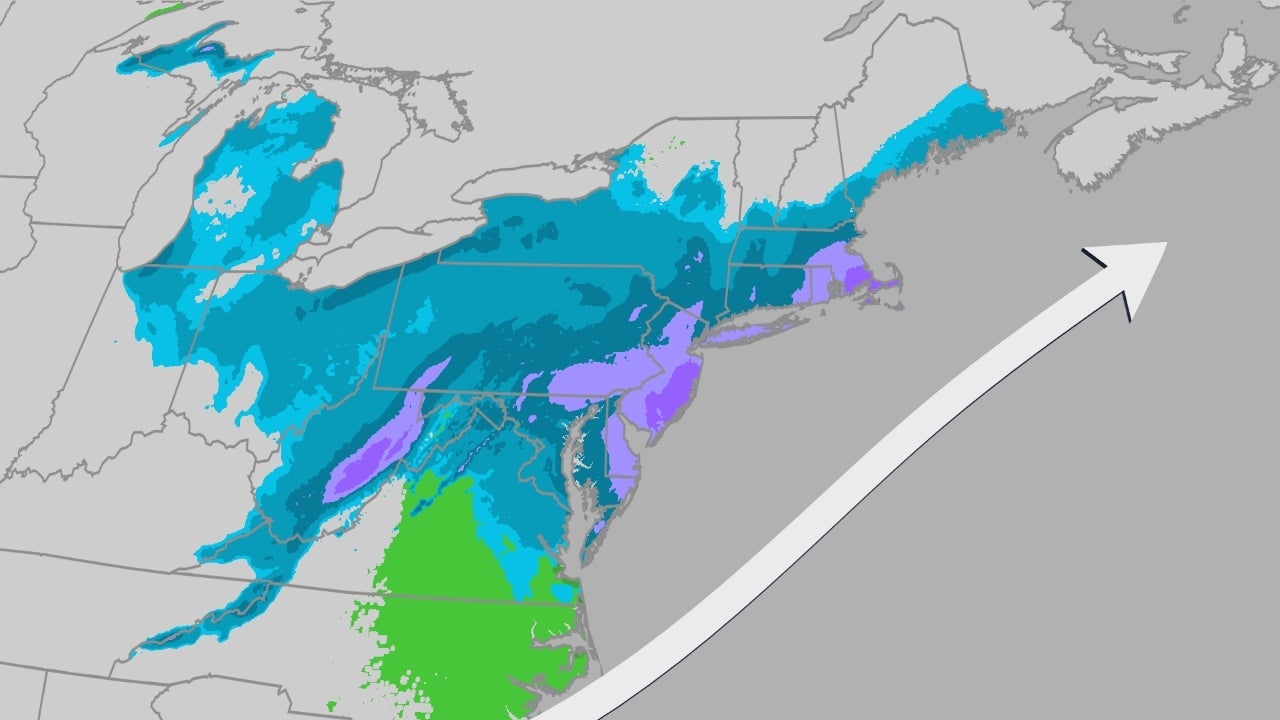
A nor'easter is expected to develop late Saturday into Monday off the U.S. East Coast, with low pressure likely forming offshore between the Delmarva Peninsula and the Carolinas and possibly intensifying rapidly into a "bomb cyclone." The current trend favors a track closer to the coast, raising the risk of coastal flooding, gusts over 40 mph from coastal Virginia to eastern Massachusetts, heavy snowfall (6+ inches from New Jersey to Massachusetts; 12+ inches in parts of the northern Appalachians), power outages and hazardous travel; significant local impacts remain contingent on the exact track and strength of the storm.
Market structure: Near-term winners are energy suppliers (spot natural gas and local pipeline city-gates), home-repair retailers (HD, LOW) and coastal surge-protection contractors; losers are passenger carriers (AAL, DAL, UAL), regional ports/terminals and short-haul truckers due to cancelled flights, container delays and road closures. If the low tracks close to shore and deepens (“bomb cyclone”), expect 6–12+ inch localized snow bands and 40+ mph gusts that can cut power and concentrate insured losses regionally, shifting pricing power to wholesalers of fuel and emergency services for 1–4 weeks.
Risk assessment: Tail risk includes a high-intensity landfall scenario producing >$1–5bn insured losses in a concentrated NE corridor, causing short-term equity drawdowns in P&C insurers (TRV, ALL) and spiking catastrophe reinsurance spreads; alternative tail is the low remaining offshore, leaving minimal market moves. Time horizons: immediate (48–72h) for operational disruption and front-month energy/airline volatility, short-term (2–8 weeks) for repair demand and logistics backlogs, medium (1–3 quarters) for insurance loss recognition and capex on resiliency.
Trade implications: Direct plays: buy short-dated front-month NG exposure (calls or call-spreads) to capture a potential 3–10% heating-demand bump; buy 1–2% tactical long in HD/LOW with a 1–3 month horizon for repair spend. Short 2–5% sized airline exposure via weekly puts (AAL, UAL) if forecasts move onshore; smaller-size, options-defined risk recommended. Rotate +2–3% overweight into regulated utilities (DUK, EXC) for insulation against outages and higher winter generation margins, and underweight logistics (XPO, UPS) for 2–4 weeks.
Contrarian angles: Consensus prices minimal impact when storm is offshore; what’s missed is concentrated basis moves in regional gas hubs (Algonquin, Transco Zone 6) — not captured by Henry Hub futures — creating transient arbitrage opportunities between city-gate basis and HH futures. Also, repair/retrofit cyclical winners (CAT, DE) can see outsized parts demand 4–12 weeks post-event; insurance-sector overreaction is possible if initial loss estimates are conservative and later revised down, creating a mean-reversion long opportunity.
AI-powered research, real-time alerts, and portfolio analytics for institutional investors.
Request DemoOverall Sentiment
mildly negative
Sentiment Score
-0.25
