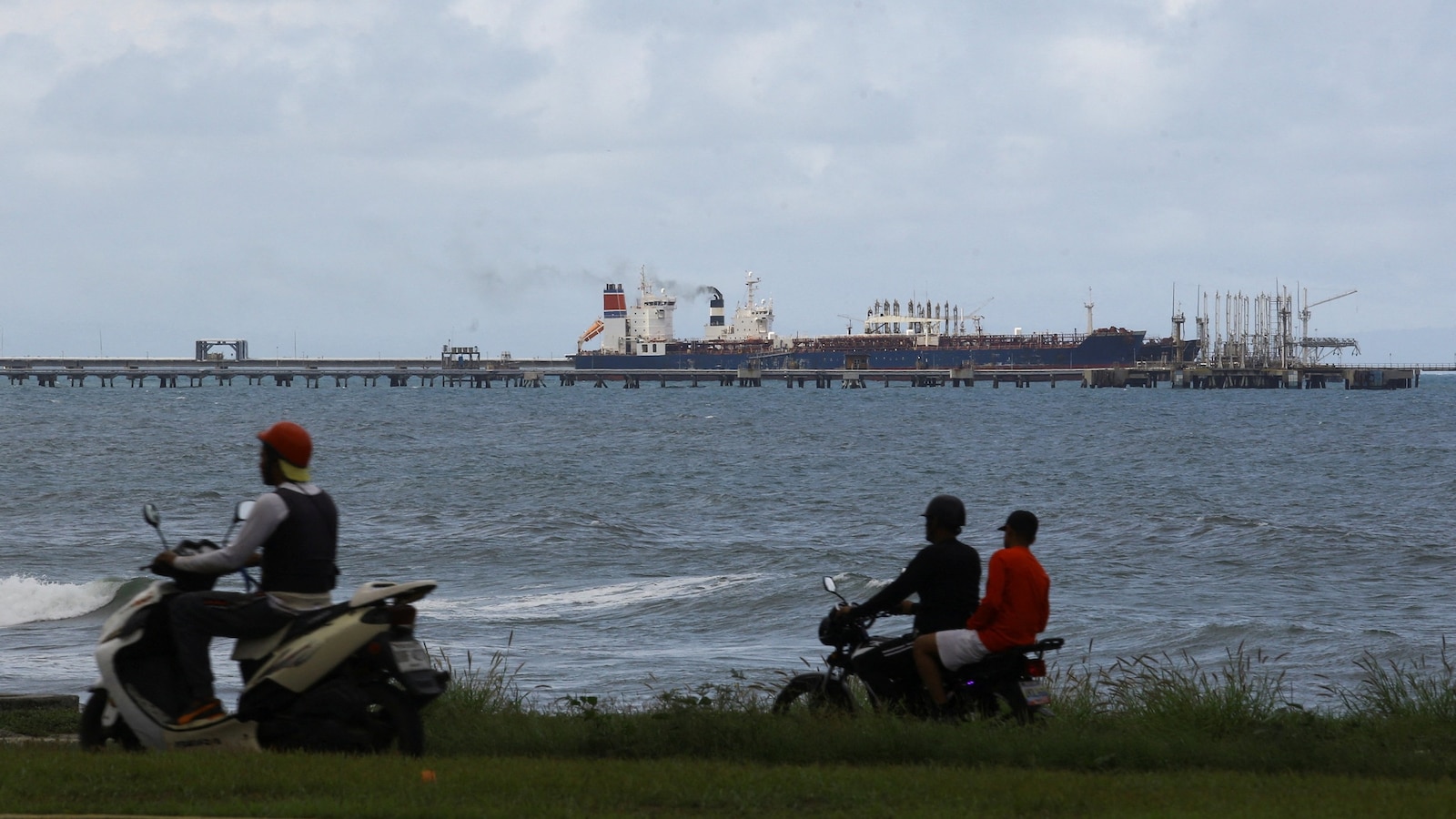
The U.S. maintains a quarantine on Venezuelan oil while the administration expects “dramatic interest” from Western oil companies should access be permitted; currently only Chevron operates in-country under a special U.S. license. Venezuela, which holds the world’s largest proven oil reserves, is producing at roughly 18% capacity with decrepit equipment and its crude reportedly selling at a steep discount (~40–50 cents on the dollar); U.S. sanctions enforcement (including seizure of sanctioned vessels) will remain until oil revenues demonstrably benefit the Venezuelan people, implying potential investment upside for Western oil majors but significant political and enforcement risk before market access expands.
Market structure: Western supermajors (Chevron CVX, Exxon XOM) and global oilfield services (Schlumberger SLB, Halliburton HAL) are the clear potential winners if sanctions/licensing allow re-entry; state-backed intermediaries and Iran/China-linked trading networks would be displaced. Realistic incremental supply is modest in the near term (200–500 kb/d within 6–12 months from rehabilitated fields) but could reach 1.0–1.5 mb/d over 2–5 years if major CAPEX flows in, implying downward pressure on Brent of roughly $3–8/bbl versus current baseline under a full recovery scenario.
Risk assessment: Tail risks include aggressive US enforcement (ship seizures), military involvement, or Maduro-era sabotage/nationalization that would destroy asset economics; any of these could wipe out equity value in-country within days. Timing sensitivity: near-term (0–90 days) driven by licensing and maritime enforcement; medium-term (3–12 months) by contractual negotiations and insurance; long-term (1–5 years) by CAPEX cycles, debt claims and diluent/refinery bottlenecks. Key hidden dependencies are availability of diluent, export tanker insurance, and legal exposure to PDVSA creditors.
Trade implications: Tactical: establish a 2–3% long position in CVX and 1% in SLB/HAL, funded by a 1–2% short in high-cost US shale (XOP) to hedge breakeven risk; use a 6–12 month CVX call spread to cap downside (buy Jul/Dec 2026 ATM call, sell ~+15–20% strike). Macro: sell long-dated Brent/HO forward spreads (flatten curve) size 1–2% notional if US licensing signals appear within 60 days. Entry: stagger 30/60/90 days — add on formal US license or oil-price move >+$5/bbl.
Contrarian angles: Consensus underestimates operational timelines, insurance/legal frictions and requisite diluent/refinery capacity — production gains likely slower and costlier than markets expect, so initial rally could be overdone. Historical parallel: post-conflict Iraq shows multi-year recovery despite large reserves; unintended consequences include OPEC+ reaction to defend price or protracted litigation seizing cashflows, which would favor services over upstream ownership.
AI-powered research, real-time alerts, and portfolio analytics for institutional investors.
Request DemoOverall Sentiment
neutral
Sentiment Score
0.10
Ticker Sentiment
