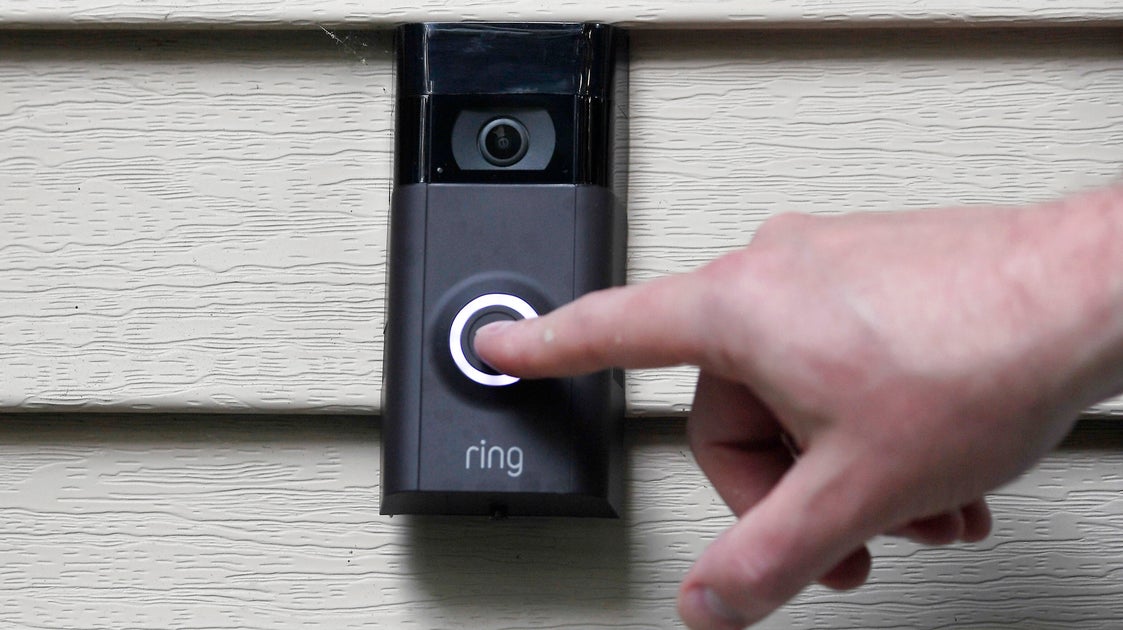
Ring's Super Bowl commercial for a new feature called "Search Party," which directs neighborhood cameras to search for visual matches and claims it has found "more than a dog a day," prompted notable social-media backlash labeling the concept "terrifying," "creepy" and "dystopian." The reaction highlights short-term reputational risk and potential privacy/regulatory scrutiny for the home-security company; no revenue or earnings figures were reported and HuffPost has reached out to Ring for comment. Absent escalating regulatory action or material user churn, the story is primarily a branding and privacy issue rather than an immediate market-moving development.
Market structure: Consumer backlash to Ring’s “Search Party” raises demand risk for consumer-focused, camera-first vendors (ARLO, cheap private-label OEMs) and conversely benefits subscription/managed-security providers (ALRM, professional installers) and enterprise cybersecurity vendors (PANW, FTNT). Pricing power will shift toward services and edge-privacy features (on-device matching) where vendors can charge recurring fees; expect 3–8% margin premium for subscription-led models over next 12–24 months. Cross-asset: tech equity volatility may tick up 5–10% in the near term, small upside for USD safe-haven flows and 25–50bp compression in high-yield spreads if consumer spending on discretionary IoT drops materially.
Risk assessment: Tail risks include regulatory action (FTC/state-level bans or privacy fines up to mid-double-digit % of revenue for repeat offenders) and a high-profile GDPR/CCPA class action that could force product rollbacks; probability 5–15% over 12 months but >30% revenue impact for pure-consumer camera players. Immediate risk (days): social media-driven sales dips of 5–15%; short-term (weeks–months): potential congressional inquiries or FTC guidance; long-term (quarters–years): structural shift to on-device CV and subscription models. Hidden dependencies: third-party CV/ML vendors, law-enforcement APIs, and cloud-cost escalations that can compress margins once subscription pricing is capped.
Trade implications: Favor cybersecurity and managed-service exposure: establish tactical long positions in PANW (2% AUM via 3–6 month call-spreads) and BUG ETF (1–2% AUM) to capture re-rating if regulatory/consumer fear boosts security spend. Short/avoid pure consumer camera equities: initiate 1–2% short of ARLO via 6‑month puts (20% OTM) or direct short if available, and implement pair trade long ALRM (1–2% AUM) vs short ARLO to capture rotation to subscription models. Time entries within next 2–6 weeks; set stop-losses at 20% adverse move and profit-take at +30%.
Contrarian angles: The market may be underestimating the upside for edge-compute and semiconductor players (NVDA, AMD, QCOM) that enable private on-device matching — a regulatory-driven pivot could boost CAPEX for premium chips by 10–20% over 12–24 months. The social backlash is likely overdone short-term (comparable to early Facebook privacy sell-offs where fundamentals recovered); watch for mispricings in small-cap security integrators and software-only vendors who can scale subscriptions quickly. Unintended consequence: strong privacy regulation could create moat for firms that already store data on-device or use zero-knowledge proofs, so screen for companies with these architectures when adding exposure.
AI-powered research, real-time alerts, and portfolio analytics for institutional investors.
Request DemoOverall Sentiment
moderately negative
Sentiment Score
-0.35
