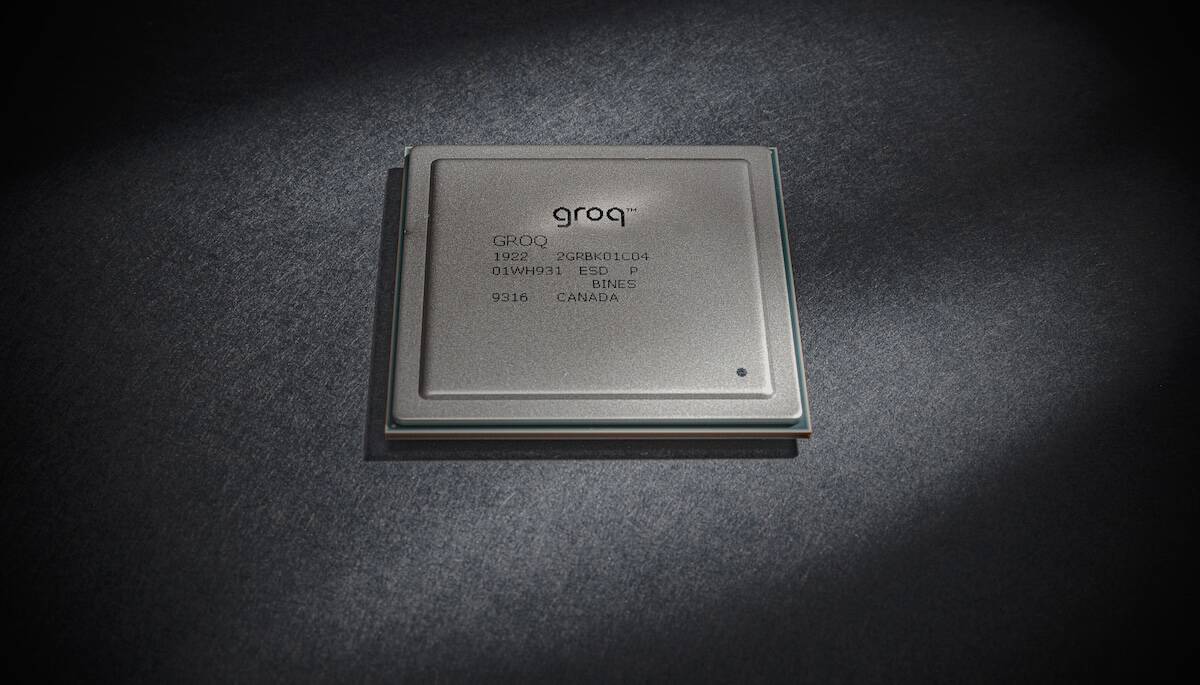
Nvidia agreed to pay roughly $20 billion to non‑exclusively license Groq’s IP (language processing units and libraries) and hired key executives and much of its engineering team, while Groq will technically remain an independent company. The write‑up argues the strategic rationale is less about SRAM or foundry access and more about Groq’s data‑flow, inference‑optimized architecture and potential for speculative decoding, noting Groq’s LPUs have only ~230 MB SRAM (requiring hundreds of LPUs to run large LLMs) and that the move could invite antitrust scrutiny; Nvidia’s strong cash flow (reported ~$23B in operating cash flow last quarter) makes the price affordable even if the long‑term commercial fit is speculative.
Market structure: Nvidia (NVDA) is the clear near-term winner — the deal accelerates proprietary inference IP and talent capture, increasing NVDA’s pricing power for inference clouds and OEM accelerator bundles. HBM suppliers (Samsung, SK Hynix) and TSMC (TSM) also benefit from sustained demand; pure-play inference chip rivals and Groq itself (de facto gutted) are losers. Expect NVDA to expand share in cloud inference within 6–18 months, compressing margin pools for smaller ASIC vendors.
Risk assessment: Primary tail risks are a US/EU antitrust action (probability ~15–25% within 12–24 months) and integration/talent flight causing delayed commercialization (6–12 months). Secondary risks: a rapid HBM supply increase or cheaper GDDR solutions that lower NVDA’s SKU pricing power, and foundry bottlenecks delaying Rubin-era rollouts. Catalysts to watch: DOJ/EC filings, NVDA earnings guidance, TSMC capacity announcements, and HBM price moves.
Trade implications: Tactical: NVDA’s buy should be sized modestly (2–4% portfolio) given regulatory tail risk; hedge with near-term puts. Relative-value: favor TSM (advanced packaging moat) over GlobalFoundries (GFS) which likely loses design wins — a 6–18 month pair trade. Options: use 9–12 month call spreads on NVDA to capture architecture upside while capping capital at risk.
Contrarian angles: Consensus overestimates SRAM novelty and underestimates integration/regulatory drag; the market may be underpricing a multi-quarter execution gap even as it overprices monopoly durability. Historical parallels: large strategic acqui‑hires (e.g., Google/DeepMind) delivered technology edge but invited scrutiny and long integration timelines. Unintended consequence: aggressive NVDA dominance could accelerate open-source hardware or cloud-provider countermeasures, creating new entrants over 2–4 years.
AI-powered research, real-time alerts, and portfolio analytics for institutional investors.
Request DemoOverall Sentiment
mixed
Sentiment Score
-0.10
Ticker Sentiment
