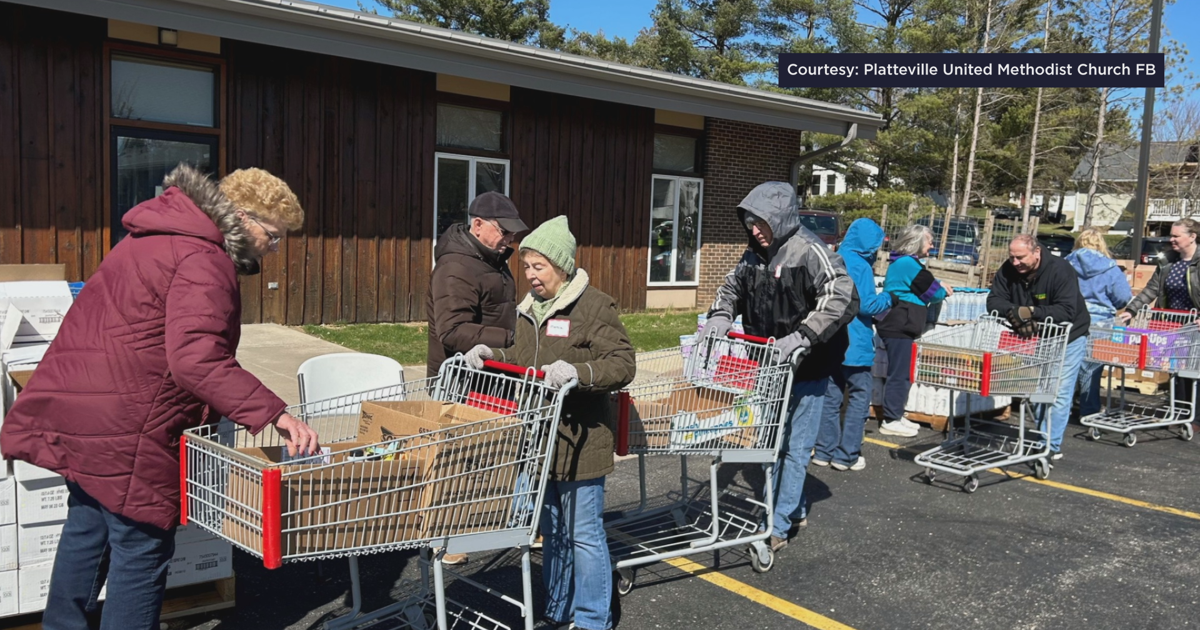
Ruby's Pantry announced it is permanently closing after operating more than 100 locations across WI, IA and MN; the Platteville United Methodist Church site served roughly 200–400 people per month. Local leaders say the shutdown is sudden and will disrupt food access ahead of a holiday; alternative resources listed include Second Harvest mobile pantry (next event Apr 17), the Platteville Food Pantry (second/fourth Thursdays), UW–Platteville Pioneer Provisions, River Bend Food Bank in Dubuque, and a weekly community closet. The church committee plans to seek ways to continue food distribution without Ruby's Pantry.
This closure is a localized demand displacement event with high information density: small, concentrated reductions in free-food supply tend to show up as outsized percentage increases in paid staple purchases at nearby discount and convenience retailers within 1–6 weeks. Mechanically, a 1–3% increment in foot traffic concentrated on low-margin staple SKUs can translate into a 2–5% sales uplift for operators with tight assortment and strong private‑label penetration, because frequency rises more than basket size initially.
On the supply side, regional food banks and wholesalers act as the shock absorbers; when one distributed program exits, others absorb volume but at the cost of inventory drawdown and higher emergency replenishment spending. That raises short-term spot buying for case-ready private‑label goods and logistics (short-haul trucking/palletized loads) for 2–12 weeks, and increases the probability of corporate CSR interventions from national grocers around seasonal demand windows as they manage PR and store-level capacity.
Tail risks and catalysts are asymmetric: cascade closures across multiple community programs would quickly force municipal or state intervention (policy/cash) within 1–3 months, which would compress any retail sales tailwind and reallocate supplier volumes back to noncommercial channels. The consensus reaction—treating these events as purely charitable—underestimates the profit capture by convenience and dollar‑format retailers and overestimates permanence; many closures are operationally reversible and therefore create only transient, tradable dislocations rather than durable secular shifts.
AI-powered research, real-time alerts, and portfolio analytics for institutional investors.
Request DemoOverall Sentiment
mildly negative
Sentiment Score
-0.35
