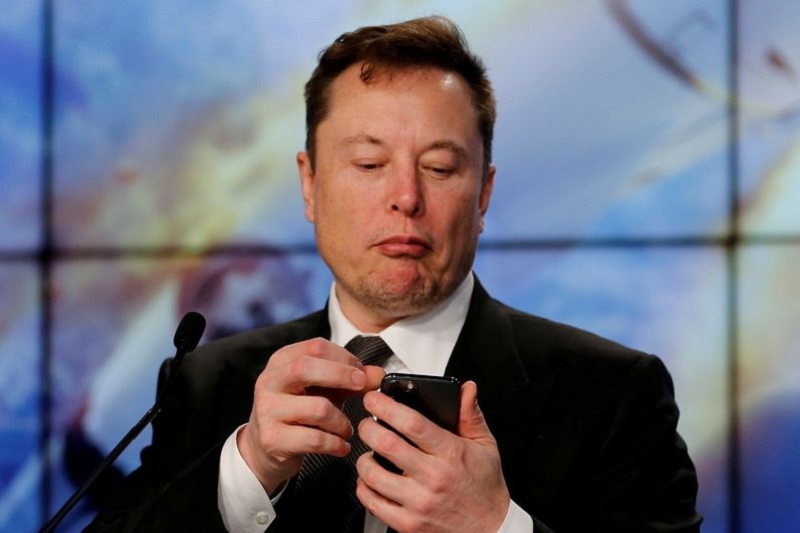
Tesla fell 3% on Monday and is down 8% over five trading days as the SpaceX IPO raises concerns about competition for investor capital and Elon Musk’s management attention. Analysts say Tesla’s premium valuation at about 195x forward earnings leaves the stock vulnerable as sales growth slows and investors gain a new public-market way to access Musk-led ventures. The article also highlights direct competition from Waymo and Chinese EV makers for Tesla’s future autonomy and robotics narrative.
The immediate loser is TSLA, but the more interesting effect is capital-substitution inside the retail/momentum complex. A new listed Musk proxy creates a cleaner way for investors to express the “founder premium,” which can compress TSLA’s scarcity value even if Tesla fundamentals do not change in the next quarter. That matters because TSLA’s valuation still requires belief in long-dated optionality; when that optionality is split across two securities, the market may pay less for each.
Second-order pressure falls on the EV ecosystem and adjacent suppliers, not just Tesla. If capital rotates toward a higher-conviction space platform, the marginal dollar of retail risk appetite leaves fewer buyers for TSLA’s multiple support, while Chinese EV names and Waymo-related autonomy narratives can gain relative credibility as the “execution” alternative to Tesla’s promise. For GOOGL, the competitive read-through is mildly negative only because Waymo becomes a more direct battleground in investor attention; operationally, it can benefit if Tesla’s autonomy story is de-rated.
The near-term risk is not a fundamental collapse but multiple compression over days to weeks, especially if Tesla delivers any soft demand commentary or missed delivery cadence. The reversal catalyst would be a credible Tesla-specific headline: faster robotaxi timing, a clear autonomous monetization milestone, or management signaling that capital allocation/attention remains unchanged. Absent that, the market can sustain a lower TSLA multiple simply by re-pricing Musk exposure as no longer scarce.
Contrarian view: the move may be overdone if investors assume a zero-sum fight for capital. In practice, a public SpaceX could expand the total Musk trade by attracting a different buyer base, while Tesla remains the liquid vehicle for autonomy and EV beta. That argues for relative-value, not outright bearishness: the trade is about TSLA de-rating versus a basket, not necessarily a broad Musk selloff.
AI-powered research, real-time alerts, and portfolio analytics for institutional investors.
Request DemoOverall Sentiment
mildly negative
Sentiment Score
-0.35
Ticker Sentiment
