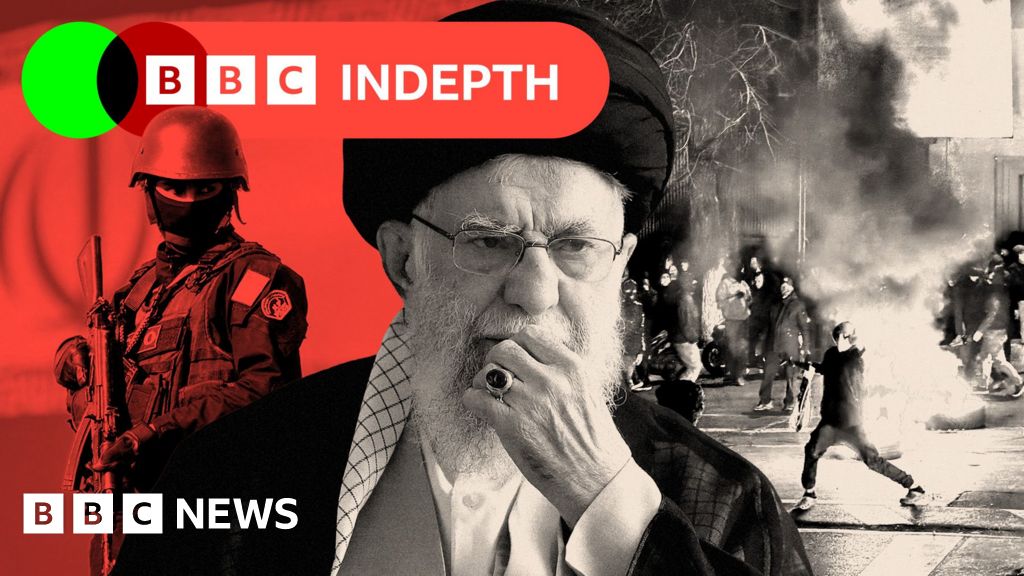
Iran faces a renewed political and economic crisis as nationwide protests over collapsing living standards and a plunging rial intensify amid a brutal security-force crackdown; Supreme Leader Ayatollah Khamenei is described as isolated and potentially vulnerable to foreign or domestic removal. The piece highlights sanctions-driven economic pain, chronic underinvestment in utilities despite the country’s vast natural gas reserves, and the likelihood that the Revolutionary Guard would attempt to assert control if a power vacuum emerged — all factors that raise regional geopolitical risk, potential disruptions to energy sentiment, and continued FX and emerging-market volatility.
Market structure: A decapitation or high-intensity Iran escalation is a net positive for oil producers, defense contractors and hard-assets and a negative for EM sovereigns, regional banks and airlines. A 0.5–1.5 mb/d hit to Gulf flows (plausible if Strait of Hormuz harassment intensifies) would likely lift Brent $10–30 within weeks, boosting XOM/CVX margins and energy ETFs (XLE) while widening EM sovereign spreads (EMB) by 100–300bps. USD and US Treasuries would rally in a risk-off move; gold should gain 5–15% as a safe haven.
Risk assessment: Tail risks include full regional war (low-probability, high-impact) pushing oil >$120 and global growth down, and broader sanctions or shipping-insurance pullbacks that impair trade finance; these could occur within days–months. Near-term (days) volatility spikes are most likely; medium-term (3–12 months) supply-chain and investment shifts (China/Russia filling Iranian gaps) can mute price shocks. Hidden dependencies: Chinese/Iraqi purchases of discounted Iranian oil, P&I insurer decisions and Red Sea/Suez route congestion are key second-order drivers.
Trade implications: Tactical hedges first: buy 1–2% notional VIX 1-month or VXX calls and allocate 1–2% to GLD/physical gold miners (GDX). Directional: establish 2–3% long positions in LMT, RTX and NOC (defense) and 2–3% long in XOM/CVX or XLE; pair these with a 2% short in EMB or EEM to express EM-risk widening. Use 3-month WTI/Brent call spreads (example strikes $75/$95) sized 1–2% to capture $10–30/bbl upside while capping premium outlay; trim if Brent falls below $65 for 2 consecutive weeks.
Contrarian angles: Consensus prices persistent disruption; history (2019–2020) shows quick spikes and reversion within 2–3 months if shipping/insurance adapt and alternative sellers step in. If regime decapitation leads to short-term chaos but long-term weakening of Iran’s proxy network, defense/energy rallies could be overdone—consider staggered adds and 8–12 week re-assessments. Unintended consequences include accelerated China-Iran energy deals (cap prices) that blunt oil upside and create call-option-like value in Russian oil names instead.
AI-powered research, real-time alerts, and portfolio analytics for institutional investors.
Request DemoOverall Sentiment
moderately negative
Sentiment Score
-0.60
