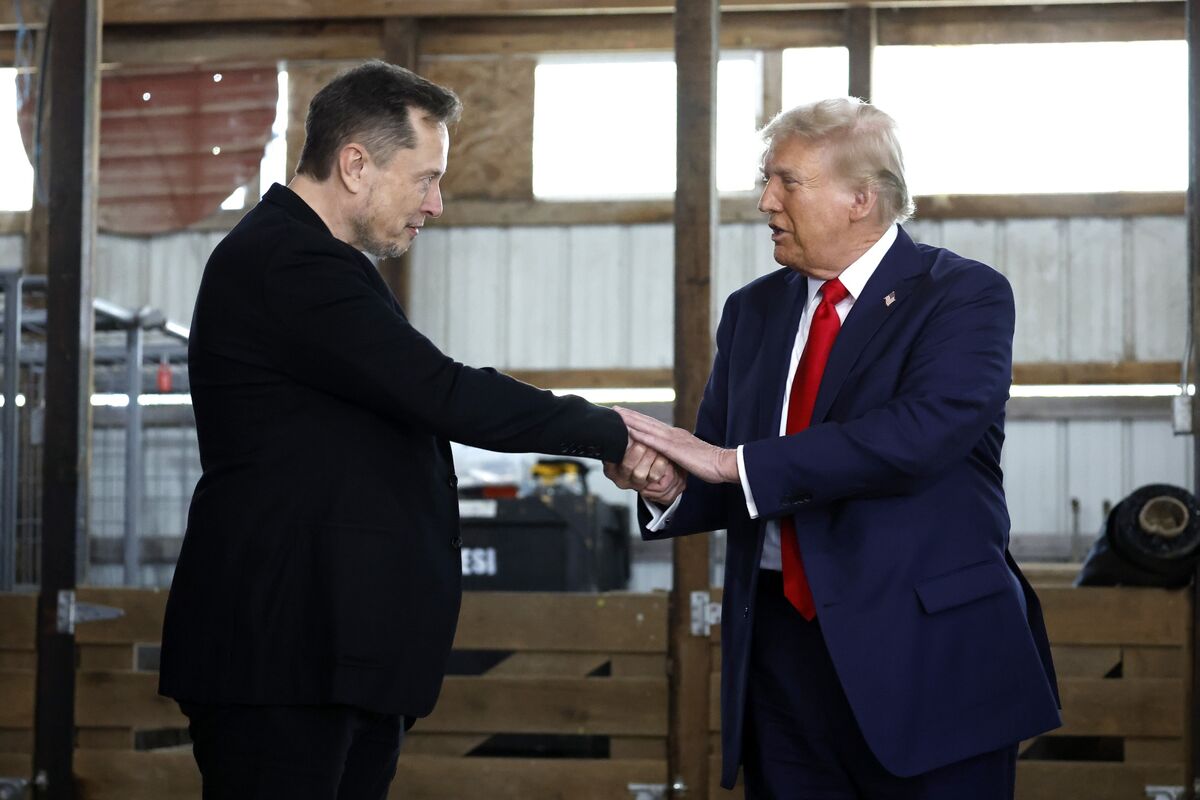
Donald Trump publicly denied intentions to target Elon Musk's companies, including their government subsidies, amid speculation of retribution stemming from a tax law dispute. Trump asserted on social media that he wants all U.S. businesses, including Musk's, to thrive, potentially assuaging investor concerns regarding political interference with significant corporate entities.
Donald Trump's social media post serves as a direct refutation of speculation that a future administration led by him would target Elon Musk's companies, specifically by revoking substantial U.S. government subsidies. This statement, while intended to be reassuring, highlights the perceived political risk associated with businesses heavily reliant on federal support. The denial aims to project a broad, pro-business agenda, stating a desire for all U.S. companies to "THRIVE." The event underscores how political dynamics and personal disputes can translate into perceived threats against major corporate entities, influencing investor sentiment. The mildly positive sentiment signal (0.35) reflects a temporary de-risking of this specific political headwind, though the underlying sensitivity of these firms to potential shifts in fiscal and regulatory policy remains a key consideration for the market.
AI-powered research, real-time alerts, and portfolio analytics for institutional investors.
Request DemoOverall Sentiment
mildly positive
Sentiment Score
0.35
