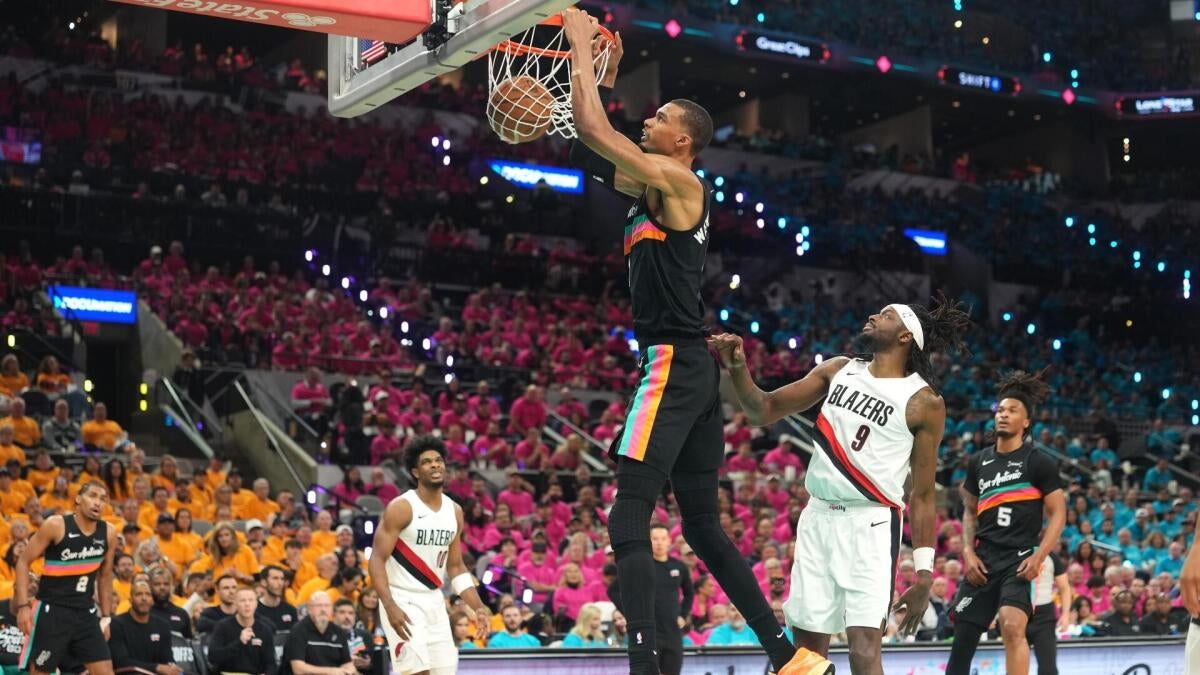
SportsLine's model projects the Timberwolves-Spurs Game 1 total to go Over 219.5, with a 222-point combined score in simulations and the Over hitting in 54% of outcomes. San Antonio is listed as a 9.5-point favorite with a -408 moneyline, while Minnesota's Anthony Edwards is questionable and Ayo Dosunmu is out. The article is primarily betting commentary and playoff preview content, with limited broader market relevance.
This is a near-term volatility event more than a pure basketball view: the marketable asset here is not the game itself but click-through and handle on a high-traffic betting affiliate link. That makes FUBO the cleanest second-order beneficiary among listed names, because playoff-intensity content tends to lift short-duration engagement, live-sports viewing minutes, and prop-betting adjacency without requiring a durable change in subscriber base. The key is that this is a flow story, not a fundamentals rerating: any lift should show up first in attention metrics and ad inventory fill, then only later in monetization. The base case is that the article drives a small but tradable spike in sports-betting sentiment, especially if pregame injury uncertainty creates late line movement and more social amplification. That favors platforms with high sports intent and low-friction streaming access; it is less helpful for broad media because the audience is already in-market and the incremental ad dollar is concentrated in the matchup window. The real second-order winner is volatility itself: late injury news around the star player can widen spreads and totals, which tends to increase option activity and same-game-parlay participation across the ecosystem. Contrarian angle: the most crowded reaction is probably “bet the Over and the favorite,” which may already be reflected in pricing and social sentiment. If the questionable player suits up, the more interesting trade is actually on pregame overreaction fading—books may shade too aggressively toward offense and public favorites, creating a better entry on the under or the underdog plus points after confirmation. For FUBO, the risk is that the event is too short-lived to matter unless it clusters with a broader playoff slate; one game does not move the operating narrative, only the weekly engagement tape. Catalyst timing is immediate: the next 24 hours around injury designation and lineup confirmation matter far more than the game outcome. If the questionable player is ruled in, expect the attention spike to compress; if ruled out, late-game uncertainty may extend the discussion window and support a slightly stronger near-term traffic bounce. Either way, this is best treated as a tactical trading catalyst, not a thesis-changing information set.
AI-powered research, real-time alerts, and portfolio analytics for institutional investors.
Request DemoOverall Sentiment
neutral
Sentiment Score
0.05
Ticker Sentiment
