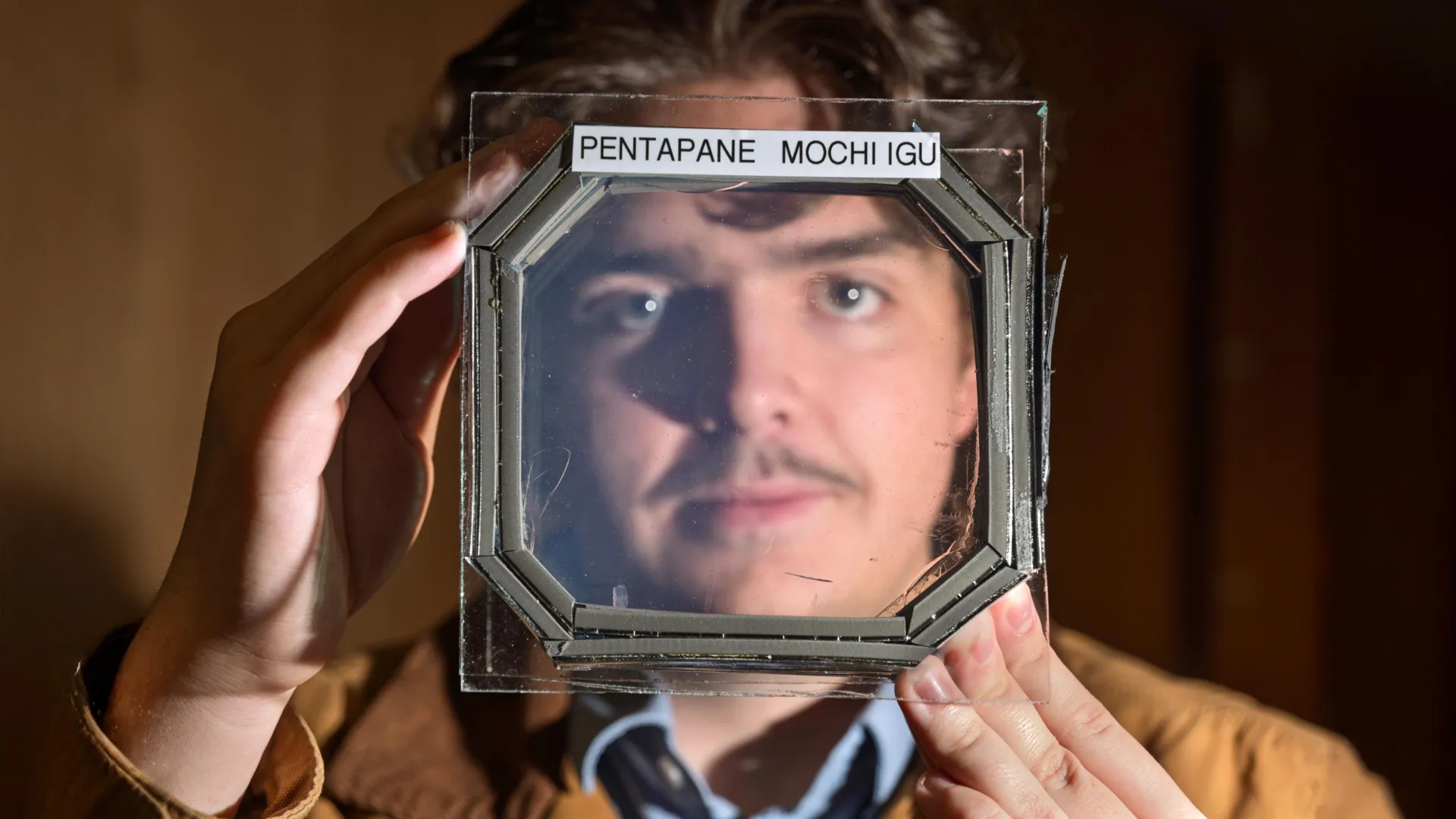
Researchers at the University of Colorado Boulder have developed MOCHI, a silicone-based mesoporous optically clear heat insulator that traps air in ultra-fine channels (air >90% of volume) to block heat transfer at the molecular scale while remaining nearly transparent (reflects ~0.2% of light); a 5 mm sheet provides remarkable thermal resistance. Published in Science (Dec. 11, 2025), the team says MOCHI could significantly reduce window-related energy losses—materially relevant given buildings account for roughly 40% of global energy use—and enable windows that double as low-cost solar-heat harvesters, but the product is still laboratory-scale with slow production and scaling/cost improvements required before commercial or market disruption can occur.
Physicists at the University of Colorado Boulder have developed MOCHI, a silicone-based mesoporous optically clear heat insulator reported in Science on Dec. 11, 2025; the material is >90% air by volume, reflects only ~0.2% of incoming light, and a 5 mm sheet is thermally robust enough to let a person safely hold a flame against it. The structure consists of ultra-fine, ordered air-filled channels that prevent gas molecules from freely colliding, producing strong thermal resistance while preserving near-complete visible transparency.
MOCHI directly targets window-related heat exchange, a meaningful lever given buildings account for roughly 40% of global energy consumption; researchers also highlight prospects to harvest solar heat for low-cost energy and water heating. Compared with aerogels, MOCHI's ordered pore architecture maintains clarity, which is a key differentiator for retrofit and new-construction glazing applications.
Commercialization remains the principal constraint: MOCHI exists only at laboratory scale, current production is slow, and researchers say more efficient manufacturing methods are required though feedstock components are relatively low-cost. Near-term market impact is therefore limited, but successful scaling, cost-per-square-meter data, and industry partnerships would be material catalysts for window manufacturers, retrofit markets, and ESG-focused building portfolios.
AI-powered research, real-time alerts, and portfolio analytics for institutional investors.
Request DemoOverall Sentiment
mildly positive
Sentiment Score
0.28
