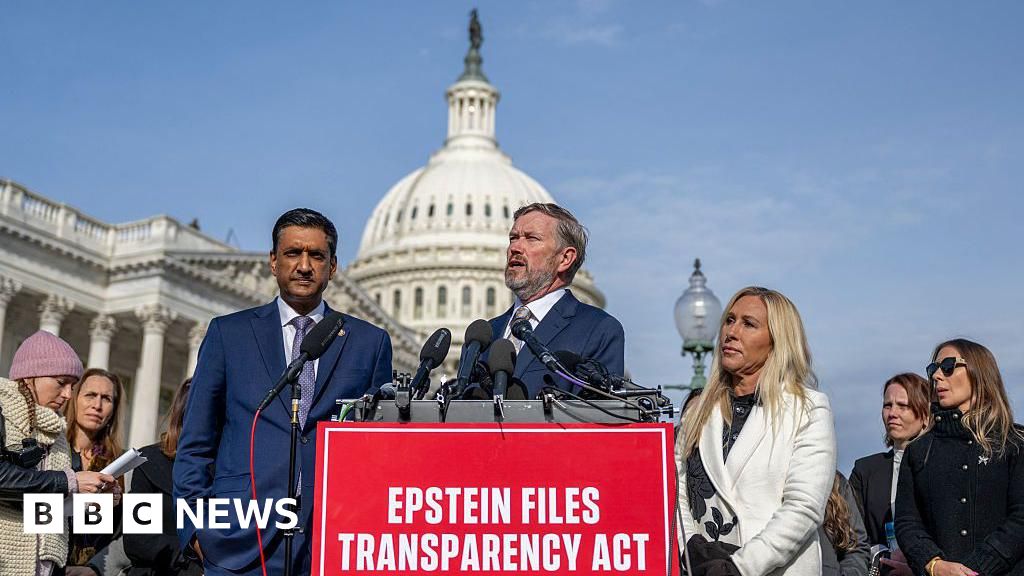
Congress overwhelmingly approved bipartisan legislation (House 427-1; Senate by unanimous consent) ordering the Justice Department to release within 30 days all unclassified records related to Jeffrey Epstein and Ghislaine Maxwell — including internal DOJ communications, flight logs and investigative materials — while permitting Attorney General Pam Bondi to withhold information that would jeopardize active probes or identify victims; the bill, driven by Republican Thomas Massie and Democrat Ro Khanna and backed publicly by other Republicans such as Marjorie Taylor Greene, now heads to President Trump after he unexpectedly reversed course and urged disclosure. The vote follows recent disclosures of more than 20,000 pages that referenced Mr. Trump, exposed fissures in Republican leadership and messaging, and could produce further politically sensitive material with reputational and campaign implications despite White House denials of wrongdoing.
Both chambers of Congress approved bipartisan legislation to compel the Department of Justice to release all unclassified records related to Jeffrey Epstein and Ghislaine Maxwell within 30 days of enactment, with the House voting 427-1 and the Senate advancing the measure by unanimous consent; Attorney General Pam Bondi is empowered to withhold material that would jeopardize active investigations or identify victims, and the mandated materials explicitly include internal DOJ communications, flight logs, and lists of people and entities connected to Epstein.
The vote follows recent disclosure of more than 20,000 pages that referenced President Trump and marks a notable reversal by Trump, who urged disclosure after previously opposing it; lawmakers from both parties—Republican Thomas Massie and Democrat Ro Khanna—sponsored the measure, while the episode has amplified visible rifts in Republican ranks (Speaker Mike Johnson and Marjorie Taylor Greene figure prominently) and produced one lone House dissent from Rep. Clay Higgins.
The article frames this as primarily a political and reputational event with potential campaign implications rather than an economic shock: sentiment is neutral and the assessed market impact score is low (0.12). However, the mandated 30‑day release window creates a concentrated period for politically sensitive revelations that could produce idiosyncratic volatility for any individuals or entities named, so investors should monitor disclosures and headline risk carefully and expect targeted, not broad, market moves.
AI-powered research, real-time alerts, and portfolio analytics for institutional investors.
Request DemoOverall Sentiment
neutral
Sentiment Score
0.00
