

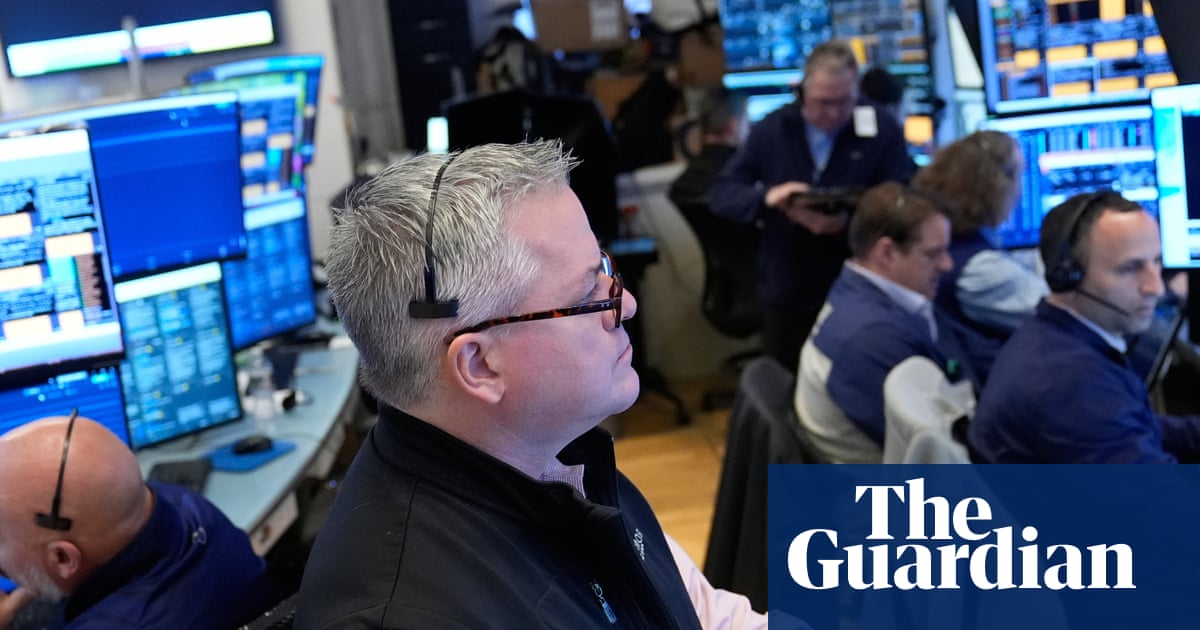
The S&P 500 hit a record 7,022.95, crossing 7,000 for the first time and rising 0.8%, while the Nasdaq climbed 1.6% to a new high of 24,016.02. Markets rallied on hopes the US-Israel war on Iran is nearing an end, with Trump saying the conflict is "very close to over" and the White House describing ceasefire talks as "productive and ongoing". Bank of America and Morgan Stanley also beat trading estimates, while Brent crude fell 10% after the ceasefire announcement and remains about 35% above pre-conflict levels.
The market is treating the de-escalation as if it removes a tail risk, but the bigger second-order effect is a sharp decline in volatility premium across equities, credit, and rates. That is mechanically supportive for banks and other balance-sheet-heavy financials because lower macro uncertainty tends to compress funding spreads, improve underwriting windows, and keep buybacks active; the trade is less about one quarter of trading strength than about a multi-week extension of risk appetite.
BAC and MS look like beneficiaries not just of stronger markets, but of a calmer client posture: if corporates are back to drawing lines and hedging less aggressively, fee mix can shift toward financing and advisory rather than pure event-driven trading. The better setup is for net interest sensitivity to become less important than capital return capacity, because a stable tape usually allows management teams to keep repurchasing stock into rising equity prices, which can amplify EPS momentum over the next 1-2 quarters.
The contrarian risk is that the market is front-running a durable peace that may still be highly contingent on the ceasefire mechanics and shipping security. If the Strait of Hormuz narrative reasserts itself or talks stall, the unwind could be violent: oil would likely gap higher first, but the more dangerous reaction is a vol spike that hits equity multiples before earnings estimates move. That makes this a good environment to own quality financials tactically, but not to chase broad beta after a large gap in risk sentiment.
Energy is the cleaner relative-value short here: a sustained rollback in geopolitical premium should pressure crude-linked baskets faster than it improves consumer or airline fundamentals, which typically lag by several weeks. The consensus is underestimating how quickly portfolio flows can rotate out of defensives and commodities into financials and growth once headline risk fades, but it is likely overestimating how durable the relief rally will be without actual deconfliction at the shipping chokepoint.
AI-powered research, real-time alerts, and portfolio analytics for institutional investors.
Request TrialOverall Sentiment
strongly positive
Sentiment Score
0.70
Ticker Sentiment
