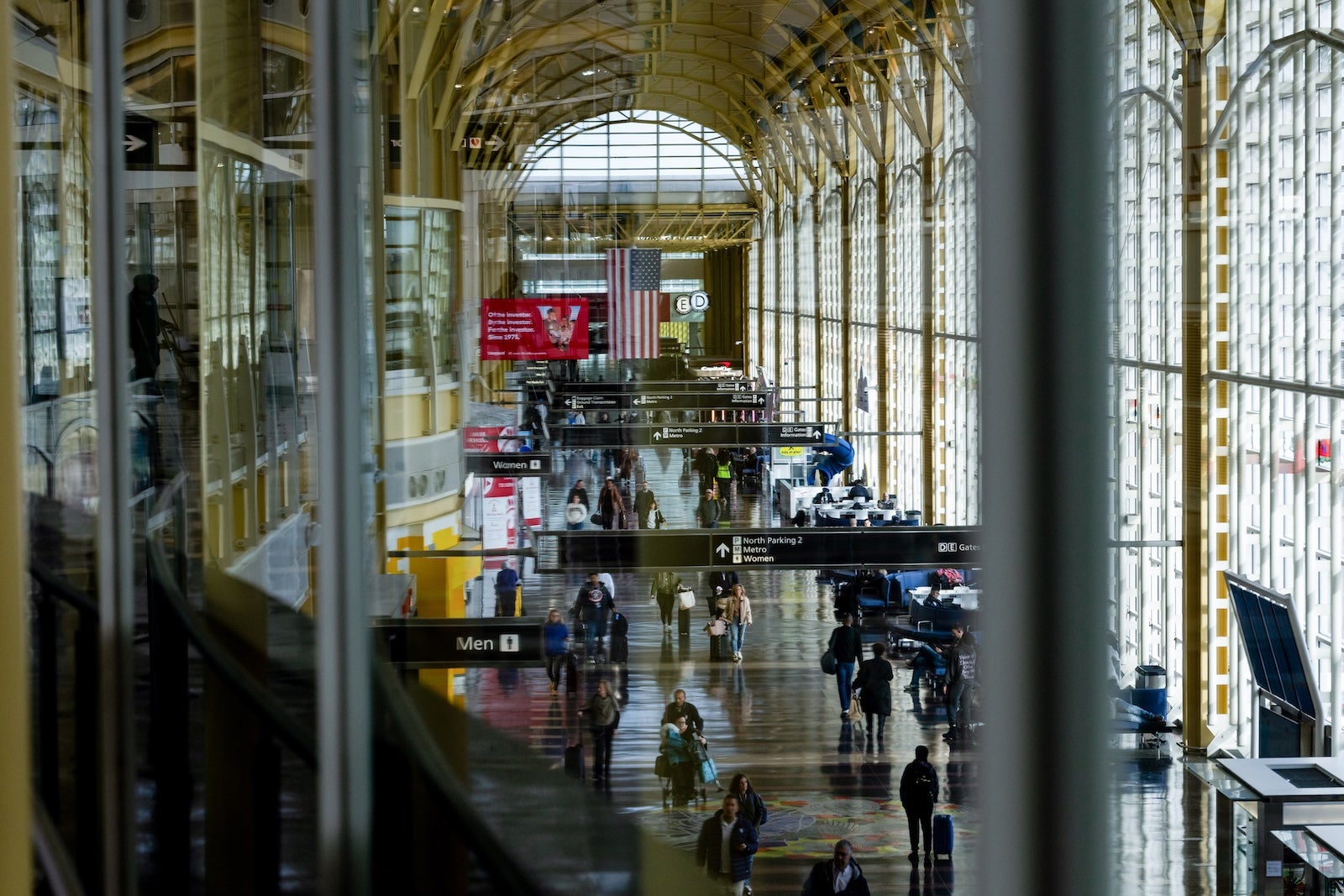
American Airlines will completely renovate its aging Admirals Club at Ronald Reagan Washington National Airport Concourse D, expanding the facility to 10,000 square feet and increasing capacity by roughly 50%; work is slated to begin in early 2026 with the current club closing temporarily early next year. The redesign aligns with broader lounge investments by the carrier (including recent Flagship/Admirals openings and planned CLT upgrades) and may shift short-term traffic to other DCA lounges and third-party credit-card facilities; membership pricing and card access details cited include annual Admirals Club membership at $850, Citi AAdvantage Executive card (annual fee $595) providing complimentary access, and the new Citi AAdvantage Globe card offering four annual accesses with a $350 fee.
Market Structure: American (AAL) upgrading its DCA Admirals Club is a targeted premium-product investment that should modestly boost ancillary revenue per premium traveler and co‑brand card economics (C, AXP, MA). Expect incremental membership/food & beverage revenue lift of low‑single-digit percentage points at the lounge level within 12–24 months, concentrated at a high‑yield airport where yield per seat is above system average.
Risk Assessment: Main tail risks are construction delays/cost overruns and an economic slowdown that cuts premium travel demand; either could erase any near‑term revenue benefit. Near term (days–weeks) market impact is minimal; medium term (3–12 months) watch card sign‑ups and lounge footfall; long term (1–3 years) benefits depend on successful roll‑out and cross‑sell with bank partners.
Trade Implications: Tactical longs in AAL and selective exposure to AXP/MA are sensible to play premium travel recovery and co‑brand leverage; use options to define downside because upside is tied to execution and travel volumes. Expect muted bond/FX moves; small positive credit sentiment for AAL if rollout demonstrates ROI, but sizable capex could pressure free cash flow in the near term.
Contrarian Angles: Consensus treats lounge upgrades as PR — the market may be underpricing recurring membership and co‑brand economics that compound across hubs if American keeps cadence of upgrades. Conversely, upgrades are capital intensive; if management prioritizes lounges over fleet or network investment during a downturn, margin compression is possible. Historic parallels: Delta/United lounge rollouts produced modest margin gains but only after multi‑year rollouts and card growth.
AI-powered research, real-time alerts, and portfolio analytics for institutional investors.
Request DemoOverall Sentiment
mildly positive
Sentiment Score
0.30
Ticker Sentiment
