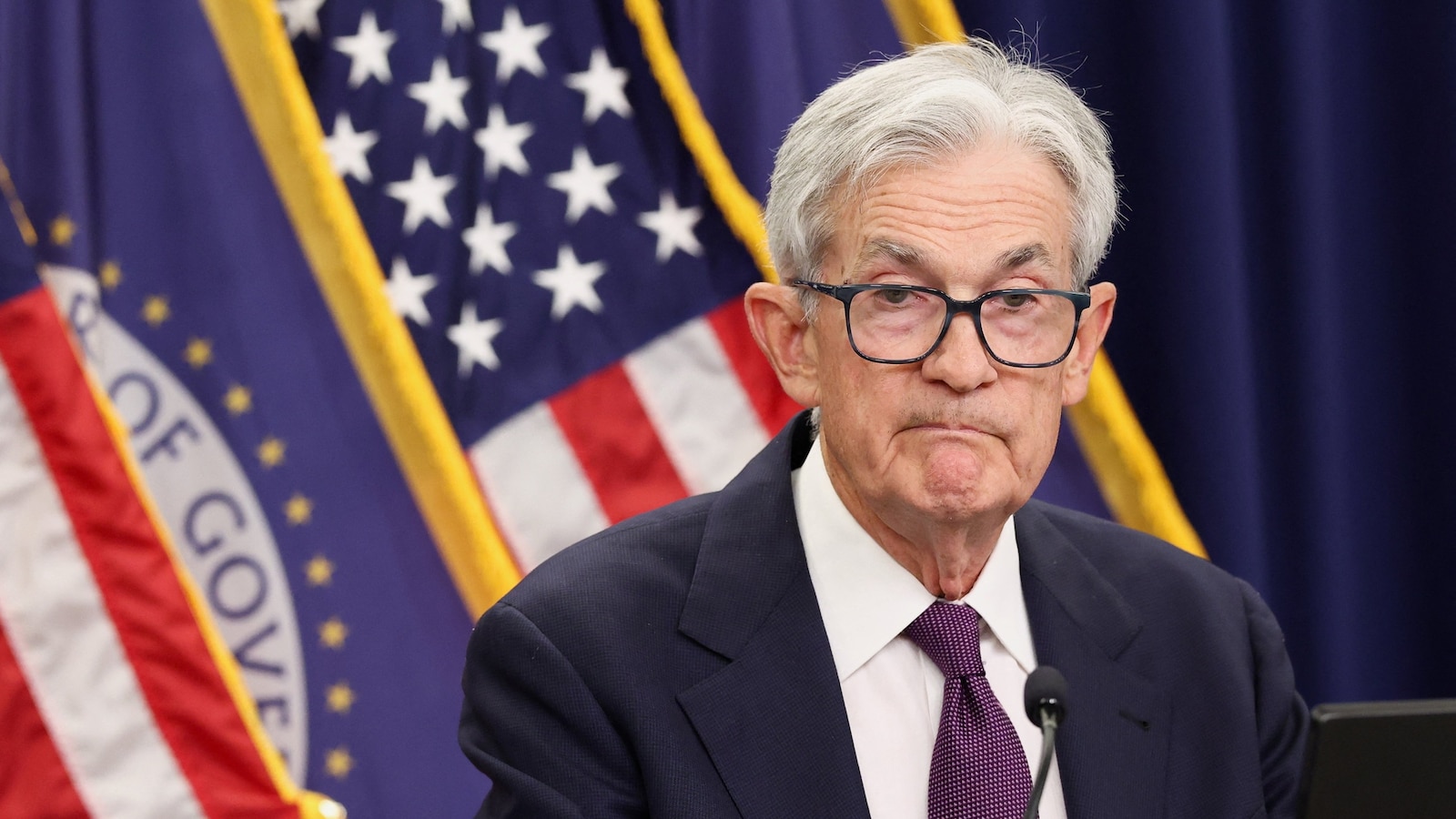
The Fed held its benchmark rate steady at 3.5%-3.75% for a third straight meeting, with one dissent from Stephen Miran who favored a 25 bp cut. Powell said he will remain on the Fed board beyond his chair term ending May 15 while legal investigations into the central bank's renovation continue, adding uncertainty to succession and policy continuity. The article highlights ongoing inflation pressures from higher oil prices and stagflation risks, with markets pricing roughly an 80% chance of no further rate change this year.
The market takeaway is not the headline governance drama; it is that the Fed’s reaction function is being pushed toward a more defensive posture just as growth is losing momentum. A chair who can potentially retain a vote for years materially reduces the odds of a sharp policy pivot toward easing under political pressure, which should keep the front end pinned higher for longer and flatten the curve if inflation data stays sticky. That is supportive for carry trades in short-duration credit, but less friendly to equity duration and rate-sensitive sectors that were implicitly pricing a faster easing cycle. The second-order effect is institutional: extending the chair’s influence into the board weakens the clean transition model markets usually assume and raises the probability of policy uncertainty becoming a recurring volatility input. Even if a successor is confirmed, a split authority structure can slow consensus and increase dispersion around meeting outcomes, which tends to lift implied vol in rates and compress multiples in long-duration growth. The political/legal overhang also increases the odds that each CPI/PCE release gets traded as a referendum on Fed independence rather than a pure macro print. The contrarian angle is that consensus may be overestimating the near-term yield reaction and underestimating the medium-term policy trap. If growth keeps deteriorating while inflation stays elevated, the Fed will likely remain boxed in longer than markets want, which is bearish for small caps, housing, and cyclical industrials, but not necessarily a clean bull case for banks either because flatter curves and slower loan growth offset higher-for-longer short rates. The real asymmetry is in volatility: any surprise on succession, legal process, or a hot inflation print can reprice policy odds quickly over days, while the underlying drag on real activity builds over months.
AI-powered research, real-time alerts, and portfolio analytics for institutional investors.
Overall Sentiment
neutral
Sentiment Score
-0.05
