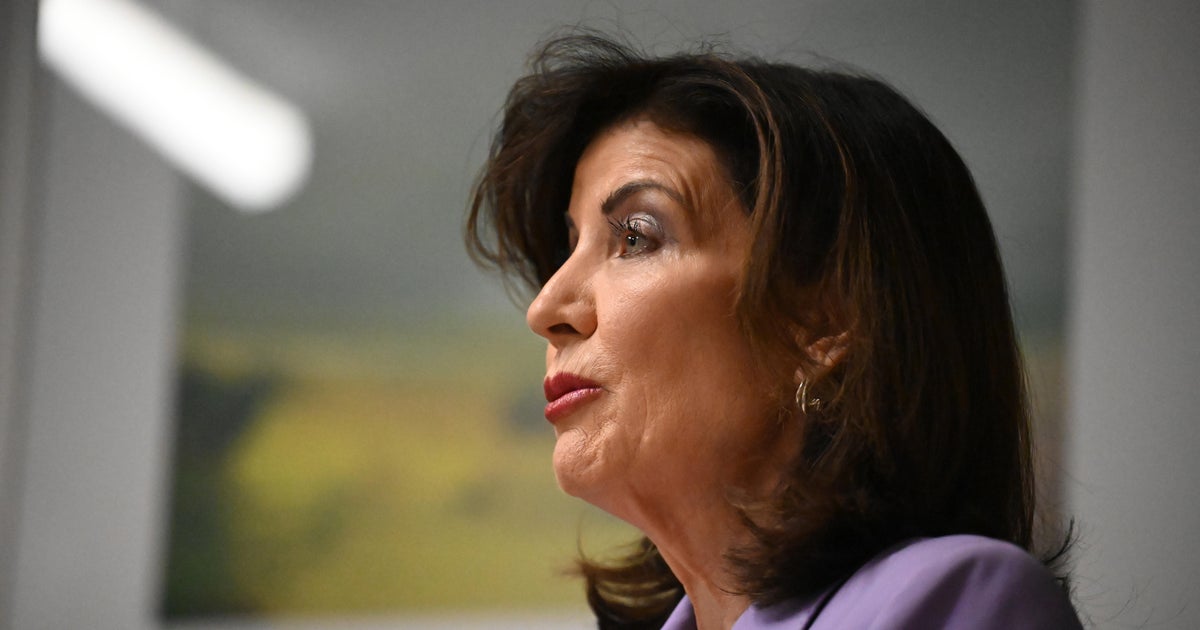
A potential Long Island Rail Road strike is emerging as a political liability for New York Gov. Kathy Hochul, recalling the 1994 LIRR strike that contributed to Gov. Mario Cuomo's reelection loss. The dispute is tied to broader union and budget tensions, including pension issues and competing claims over state spending priorities. The article suggests the disruption could weigh on Hochul with suburban voters and create an opening for Republican Bruce Blakeman, though the immediate market impact appears limited.
The immediate market read is not about the rail operator itself but about which side of the suburban voter equation becomes the scapegoat. A prolonged disruption raises the odds of a short-lived but visible shift in Long Island consumer confidence, which matters more for local small-cap retail, discretionary, and service names than for broad-state equities; the damage shows up first in weekend spending and commute-dependent business volumes, not in headline macro prints.
The bigger second-order effect is on Albany bargaining power. If labor sees that a transit strike can be weaponized into an election-year concession, it increases strike risk across other public-sector bargaining units over the next 3-9 months, making municipal payroll and pension cost growth a more persistent budget issue than markets currently price. That is a negative for any tax-sensitive, rate-sensitive New York exposures because it raises the probability of either higher local levies or lower discretionary spending capacity later in the fiscal year.
Politically, the near-term risk is that a narrow, high-turnout suburban backlash becomes a catalyst for a broader anti-incumbent narrative rather than a one-off labor story. The reversal condition is simple: a fast settlement with limited commuter pain probably neutralizes the event within days; a messy, multi-day strike or repeated service interruptions could keep the issue alive for weeks and make the governor’s union posture look inconsistent to both labor and suburban independents.
The contrarian angle is that the headline risk may be more punitive to Democratic positioning than to economic activity. Most investors will treat this as transient noise, but the real transmission is through voter sentiment and future negotiation behavior, which can compress the latitude for fiscal discipline. That suggests the trade is less about directional rail exposure and more about shorting the political beneficiaries of fiscal slippage and commuting friction in the region.
AI-powered research, real-time alerts, and portfolio analytics for institutional investors.
Request DemoOverall Sentiment
mildly negative
Sentiment Score
-0.20
