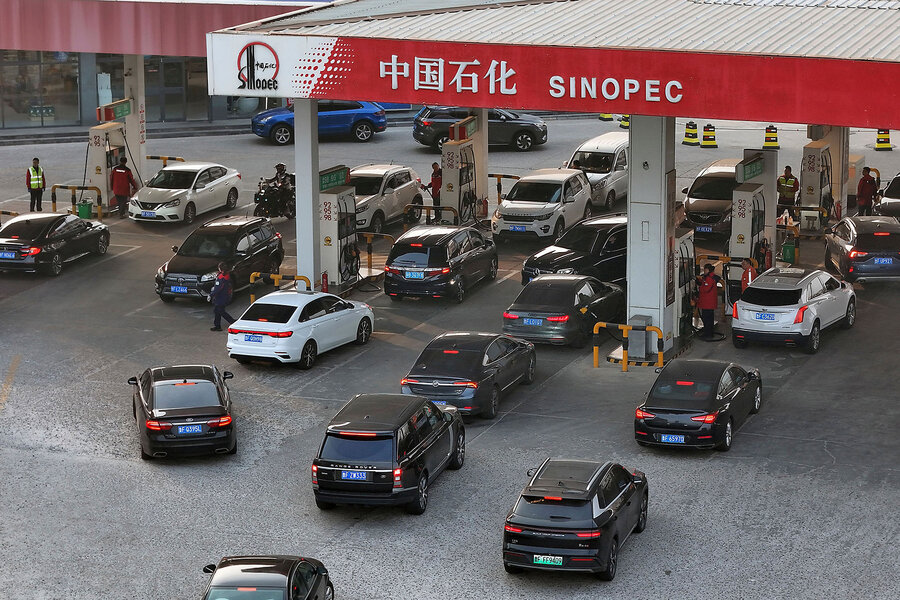
China holds roughly 1.3 billion barrels of oil reserves (start of 2026), which Gavekal Dragonomics estimates could last about two years even with a Strait of Hormuz closure; Beijing has also imposed temporary gasoline/diesel retail price controls (first since 2013). A mid-March ban on jet-fuel exports and a domestic pump-price rise of about $0.50 to ~$4.90/gal have tightened regional supplies (Australia bought ~33% of its jet fuel from China in 2025) and prompted local panic buying. Net effect: China is relatively insulated from the Iran-war oil shock, increasing its geopolitical leverage and likely accelerating Chinese exports and adoption of renewables, EVs and batteries—positive for Chinese clean-energy sectors but a short-term source of regional fuel stress.
Immediate market dislocations (days–weeks) will be driven by policy levers rather than raw supply fundamentals: governments with control over domestic flows can create local scarcity in refined products even when global crude remains fungible, producing regional crack dispersion and short-term arbitrage opportunities. Over the next 3–9 months expect refined-product spreads (jet, diesel) in Asia to trade wider vs. Brent and for tanker fixtures to re-route, sustaining higher time-charter rates until alternative supply lines are rebuilt or inventories normalize. Over 1–3 years the systemic effect is an acceleration of electrification and renewables adoption in import-dependent emerging markets that face repeated fuel shocks — this increases durable demand for batteries, PV, and EVs while amplifying China's pricing power in upstream assembly and module manufacturing. The key structural constraint that could blunt this edge is non-energy input bottlenecks (nickel, lithium hydroxide, copper) plus politically driven near-shoring in major consuming economies; those two forces create both upside for raw-material suppliers and downside for exposed component suppliers in regions losing market share.
AI-powered research, real-time alerts, and portfolio analytics for institutional investors.
Overall Sentiment
mildly positive
Sentiment Score
0.30
