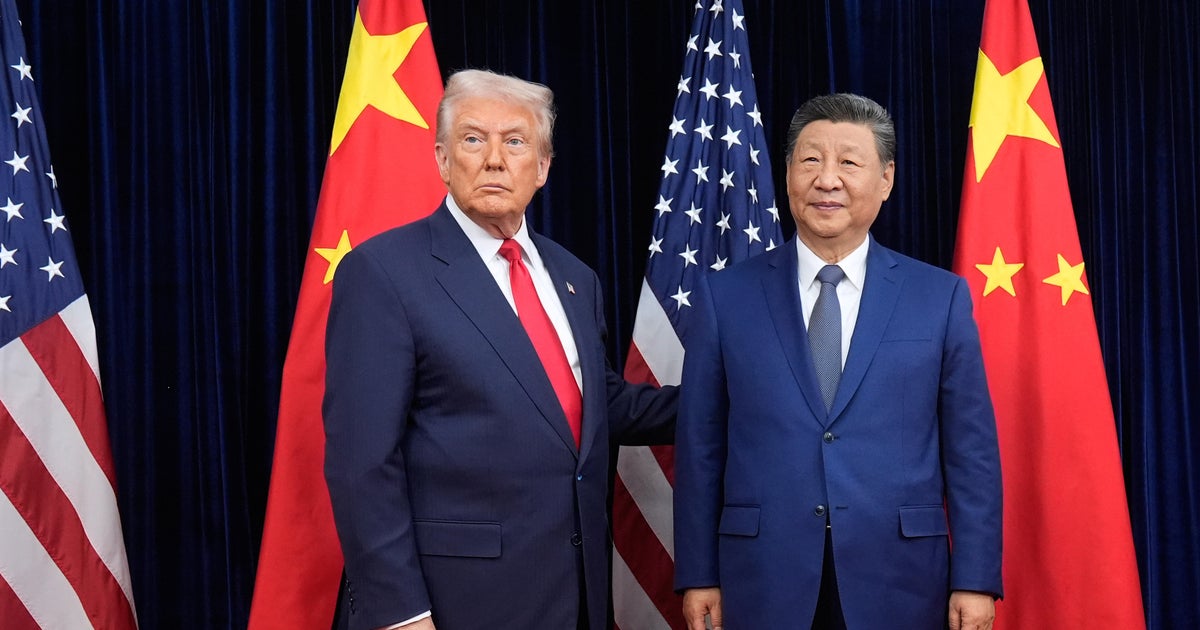
Trump heads to Beijing for a high-stakes summit with Xi, with trade, Iran, energy, and Taiwan all on the agenda. The article highlights continued geopolitical tension, including U.S. sanctions on China-based firms tied to Iran and ongoing uncertainty around tariffs, supply chains, and the Strait of Hormuz. While no immediate policy outcome is announced, the meeting could affect U.S.-China trade relations and broader Asia-Pacific risk sentiment.
The market is likely underpricing the asymmetry in how this summit can be framed publicly versus how little can actually be resolved. That creates a near-term “headline beta” setup for China-exposed large caps: any language on de-escalation, tariff pauses, or supply-chain cooperation can lift multiple expansion in AAPL, GS, and BLK even if the substantive deliverables are thin. The key second-order effect is that stabilization language itself lowers implied policy uncertainty, which tends to compress risk premia faster than it changes earnings estimates.
AAPL is the cleanest beneficiary because it sits at the intersection of China demand, hardware supply-chain continuity, and board-level investor sensitivity to tariff headlines. Even a small reduction in probability that tariffs or export controls widen can support sentiment on gross margin durability and inventory planning over the next 1-2 quarters. By contrast, BLK and GS benefit less from direct China economics than from a broader “risk-on” channel: lower geopolitical tail risk and improved cross-border capital flow expectations can support AUM multiples and underwriting appetite.
The contrarian miss is that the Iran/Taiwan angle may keep a persistent risk premium embedded in supply chains and semis even if the summit looks cordial. Taiwan is the real long-dated market issue: if rhetoric shifts toward ambiguity on weapons support or deterrence, the market may start repricing semiconductor supply-chain fragility rather than just headline risk. That is a months-to-years issue, not a same-day trade, but it argues against chasing a broad rally in anything with concentrated Taiwan exposure.
The downside catalyst is a failed optics-only meeting that still produces no concrete trade or sanctions relief. In that case, the market likely gives back the “deal premium” quickly, especially in names that rallied on policy hopes rather than fundamentals. The most interesting setup is a short-duration event trade with a defined exit after the summit, because the information decay on these meetings is usually faster than the market’s initial reaction.
AI-powered research, real-time alerts, and portfolio analytics for institutional investors.
Request DemoOverall Sentiment
neutral
Sentiment Score
-0.05
Ticker Sentiment
