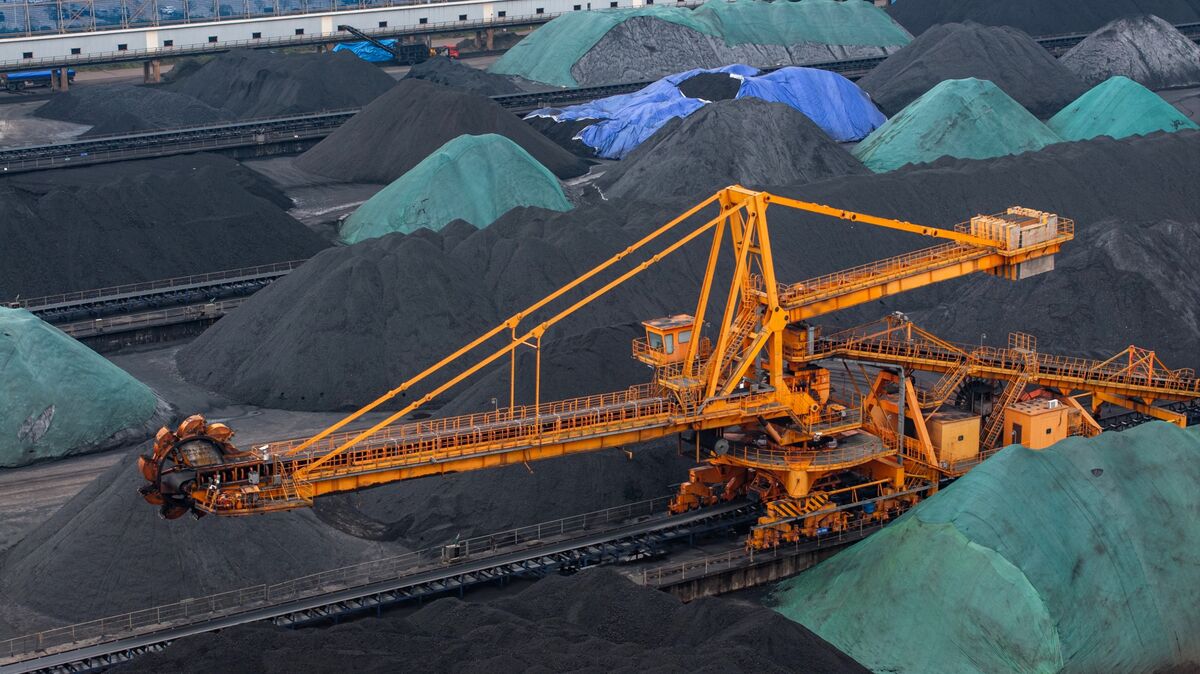
China's August industrial output saw significant year-on-year declines in coal and steel, marking the second and fourth consecutive monthly drops respectively, driven by tightening government production controls. This reduction, also observed in other construction materials like cement and glass, underscores the persistent impact of China's property crisis on industrial demand and has broader implications for global commodity markets.
China's industrial sector is exhibiting clear signs of contraction, with August data revealing a year-on-year drop in both coal and steel production for the second and fourth consecutive months, respectively. This downturn is a direct consequence of tightened government controls on output, a policy response likely linked to both environmental targets and managing oversupply. The weakness extends beyond primary metals, as production of other key construction materials, including cement and glass, also declined. These production cuts are intrinsically linked to the reverberating effects of China's protracted property crisis, which continues to suppress demand for industrial and construction inputs. The strongly negative sentiment score of -0.7 associated with this news underscores the market's concern over the health of China's economy and its role as a primary driver of global commodity consumption.
AI-powered research, real-time alerts, and portfolio analytics for institutional investors.
Request DemoOverall Sentiment
strongly negative
Sentiment Score
-0.70
Ticker Sentiment
