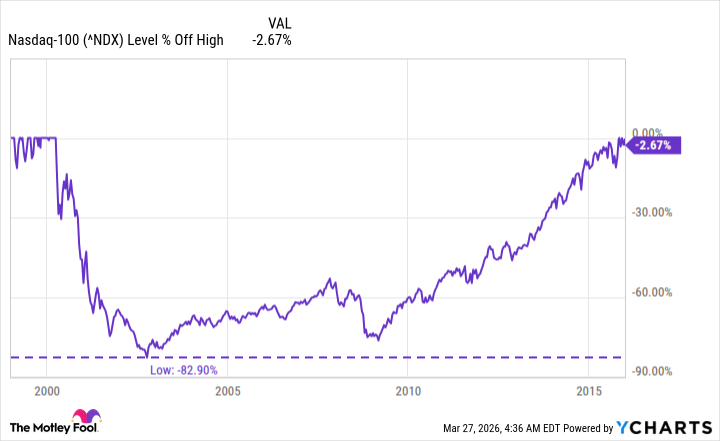
Nvidia is down ~17% from its 2025 high and the Roundhill Magnificent Seven ETF is down roughly the same (both briefly fell >20% in early 2025). Early AI darlings like SoundHound have plunged ~75% from 2025 highs. The article warns AI may be entering a bubble similar to the dot-com era and highlights Middle East conflict-driven energy price spikes and fertilizer supply issues that raise recession risk, recommending partial profit-taking.
The market is bifurcating: a handful of incumbents capture the bulk of AI infrastructure economics while a long tail of small-cap “AI” plays compete on narrative rather than differentiated moats. Estimates put NVIDIA-class accelerators at well over 70% share of high-performance training capacity; that creates durable upstream pricing power but also concentrates valuation risk into a few single names, amplifying index and ETF flows. Meanwhile, toolmakers and model service providers without durable gross margins are the first to reprice when liquidity tightens.
Geopolitical-driven energy and commodity shocks introduce a multi-quarter earnings shock that compounds a classic sentiment unwind. A persistent 10-20% energy price shock can translate into low-to-mid single-digit EPS downgrades for tech distributors via higher logistics and people-cost pass-throughs; if demand elasticity kicks in, we can see a 6–18 month trough in discretionary IT spend. Near-term catalysts to watch that would reverse this trend are: 1) quarter-over-quarter stabilization in data-center orders, 2) visible margin expansion at foundries, or 3) a rapid normalization in energy forward curves within 90 days.
The practical implication is to rotate from narrative beta into concentrated, durable exposures and convex protection. That means selectively harvesting gains in headline names, buying time-limited downside insurance on the largest concentration risks, and opportunistically shorting structurally unprofitable small-caps with stretched runways. Monitor ETF/prime-broker flow data and NVDA order-backlog commentary as high-frequency indicators — these will lead price; macro and energy windows will determine whether the reset is a correction or multi-year repricing.
AI-powered research, real-time alerts, and portfolio analytics for institutional investors.
Overall Sentiment
moderately negative
Sentiment Score
-0.45
Ticker Sentiment
