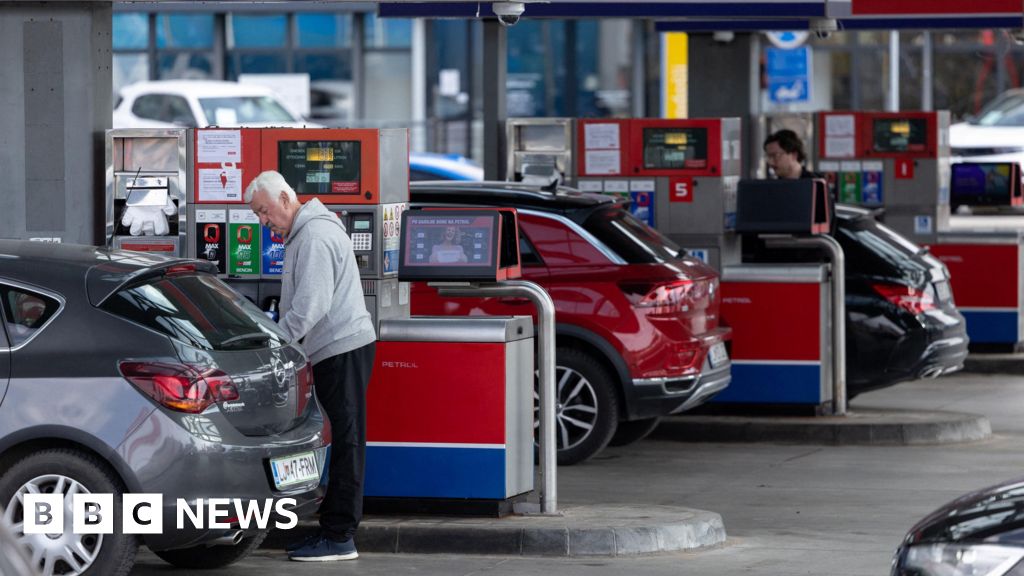
Slovenia became the first EU member to introduce fuel rationing, capping private motorists at 50 litres/day and businesses/farmers at 200 litres/day to address disruptions linked to US‑Israeli strikes on Iran and regional retaliation. The move follows regional retail limits (Hungary's MOL set a 30‑litre cap) and aims to curb cross‑border 'fuel tourism' driven by price gaps: Austria petrol ~€1.80 and diesel ~€2.00 vs Slovenia's regulated maxima €1.47 and €1.53 (the latter due to increase). Petrol stations are tasked with enforcing limits and encouraged to impose stricter rules on foreign drivers, creating localized shortages and queues but the government says national fuel stocks are sufficient.
The immediate market dynamic is an enforced local price-floor plus rationing that creates cross-border arbitrage and concentrated demand shocks at border stations. That raises short-term diesel/gasoline basis in Central Europe versus North Sea/Brent benchmarks as physical barrels get diverted to retail endpoints where price differentials persist; expect the regional diesel crack to be bid up relative to crude for the next 2–8 weeks while enforcement and administrative frictions sort out.
Second-order winners are owners of storage, short-haul logistics, and downstream retailers who can capture non-fuel spend from “fuel tourists” (food, convenience), while second-order losers include longer-haul trucking fleets and just-in-time manufacturing nodes that face disrupted diesel availability or queuing delays — think margin squeeze on regional transport-sensitive industrials over the coming months. The longer this pricing asymmetry persists, the greater the incentive for informal markets and cross-border regulatory retaliation, which increases political risk between neighbours and raises the chance of temporary export restrictions or stricter ID checks at pumps within 1–3 months.
The policy levers that would reverse the trade are: rapid harmonization of pump taxes/prices across the border (weeks), targeted cross-border restrictions on foreign licence plates by retailers (days), or large-scale shipments into regional terminals that relieve basis pressure (2–6 weeks). Monitoring key indicators — weekly CE refinery runs, ICE Gasoil vs Brent crack, and retail queueing evidence on social media — will provide 24–72 hour signals for trade adjustment.
AI-powered research, real-time alerts, and portfolio analytics for institutional investors.
Request DemoOverall Sentiment
neutral
Sentiment Score
-0.05
