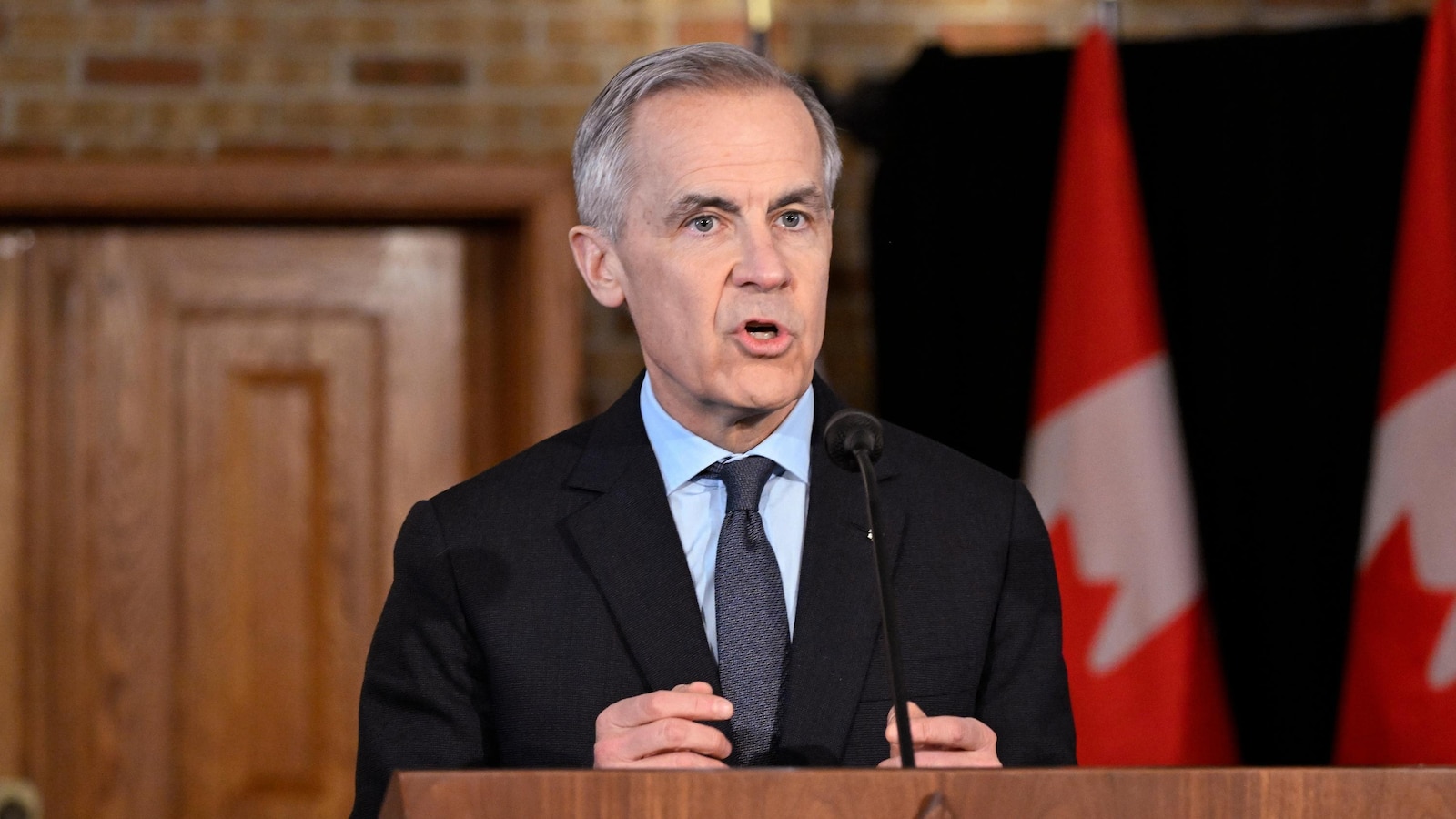
Canadian Prime Minister Mark Carney directly rebuked President Donald Trump after Trump said “Canada lives because of the United States,” following Carney’s high-profile Davos speech condemning coercion by great powers; Trump subsequently withdrew an invitation for Carney to join a proposed "Board of Peace." The exchange elevates bilateral political risk ahead of a mandatory USMCA review and comes as Carney returns from China with a deal to import low-cost electric vehicles, creating potential trade and auto supply-chain considerations but representing political uncertainty rather than an immediate market-moving economic event.
Market structure: Geopolitical friction between the U.S. and Canada elevates defense procurement winners (Lockheed LMT, Northrop NOC, RTX) and pressures cross-border trade-sensitive sectors (auto OEMs and parts suppliers). Expect 3–12 month rotation into defense and resource exporters while Canadian domestic equities and CAD face episodic weakness around trade headlines; supply-chain re‑routing to China for low‑cost EVs implies margin pressure for NA auto suppliers over 1–3 years.
Risk assessment: Tail risks include a messy USMCA review that could reintroduce 5–15% effective trade frictions within 6–12 months or unilateral tariffs/controls that disrupt autos and metals flows. Immediate (days) risk is FX and equity volatility; short term (weeks–months) is policy noise around Golden Dome procurement and USMCA deadlines; long term (1–3 years) is structural supply‑chain realignment away from North America for EVs and batteries.
Trade implications: Take asymmetric exposure: overweight US defense equities with 6–12 month call-spread exposure, hedge FX via USD/CAD calls, and buy Canada‑resource exposure on headline-driven pullbacks (>5–6% intraday/weekly). Avoid concentrated long positions in North American auto suppliers; favor long positions in Chinese EV leaders (BYD BYDDY) as a hedge if Canada accelerates low‑cost EV import programs.
Contrarian angles: Consensus treats this as political noise; it underprices the upside for Canadian miners (nickel, lithium) from supply‑chain diversification and the likelihood CAD overshoots to the downside by 2–4% on sustained tensions. Historical parallel: 2018 US‑Canada tariff shock produced 6–10% CAD moves and 8–20% repricing in resource exporters — similar episodic dislocations should be tradeable with disciplined entry/stop rules.
AI-powered research, real-time alerts, and portfolio analytics for institutional investors.
Request DemoOverall Sentiment
neutral
Sentiment Score
0.00
