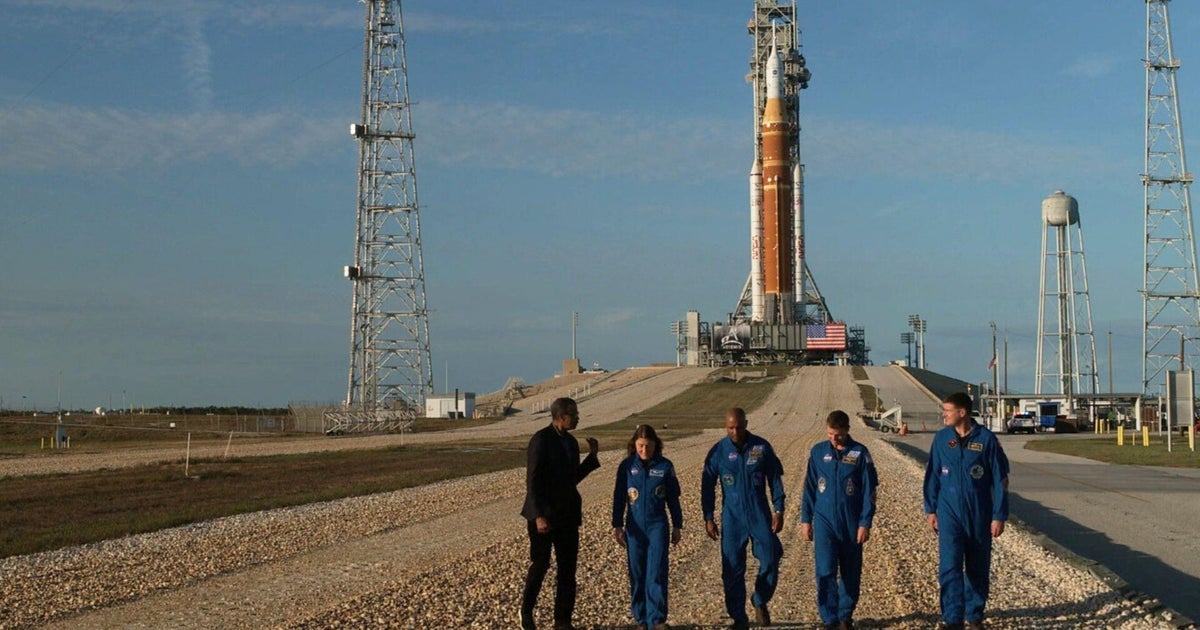
Artemis II will launch four astronauts on a 10-day crewed test flight around the far side of the moon atop NASA's 3.5-million-pound SLS rocket and Orion capsule, validating life‑support, crew controls and reentry profiles after Artemis I identified heat‑shield damage. NASA awarded a nearly $3 billion lunar lander contract to SpaceX in 2021, but Starship's earlier failures, complex in‑space refueling requirements (ten+ tanker launches) and program delays have pushed a targeted surface return to 2028; NASA is pressing contractors and seeking backup lander approaches while private competitors like Blue Origin pivot resources toward lunar landers and pause other commercial flights.
Market structure: Artemis II reinforces a bifurcated space market — legacy prime contractors (Lockheed Martin, Northrop Grumman, Boeing) capture near-term NASA cash for Orion/SLS work while reusable players (SpaceX, Blue Origin paradigms) threaten long-term pricing power. SLS at >$2bn/launch is structurally uncompetitive vs. reusable marginal-cost targets (orders of magnitude lower), implying downward pressure on per-launch pricing and upward pressure on commercial launch volumes over 3–7 years. Expect suppliers of cryogenic propellant, avionics and rendezvous technologies to see rising demand; launch manifest growth boosts satellite and materials demand modestly but not enough to move commodities globally.
Risk assessment: Immediate tail risks include a catastrophic Artemis II failure (days) that would trigger program pauses, insurance cost spikes and a short-term selloff in contractor stocks (~-10–25%). Short-term (weeks–months) risks center on SpaceX Starship refueling tests and Congressional funding decisions; long-term (years) risks are geopolitical (China lunar first-mover) prompting accelerated defense budgets or procurement shifts. Hidden dependencies: NASA’s timeline hinges on multi-launch in-orbit refueling (10+ tanker missions) and appropriations; schedule slippage is the baseline.
Trade implications: Event-driven trades: asymmetric long exposure to established primes and optionality on commercial launch specialists. Tactical options play: buy 3–6 month call spreads on LMT/NOC to capture positive mission headlines; hedge execution risk with 6–12 month put spreads on BA. Rotate into RKLB as a 1–2% option-like growth stake if reusable logistics demonstrators show progress in next 6–12 months. Use tight stops (6–10%) around mission dates.
Contrarian angles: Consensus underprices failure probability of orbital refueling; if refueling tests fail, SpaceX equity/private valuation pressure will reallocate multi-year NASA dollars back to primes — a fast reversal trade. Conversely, a flawless Artemis II + successful Starship refuel within 6–12 months could compress incumbent multiples by 10–20% as markets re-rate durability of reusable advantage. Watch two binary triggers: Artemis II mission outcome (days) and an in-orbit refueling demo (≤12 months).
AI-powered research, real-time alerts, and portfolio analytics for institutional investors.
Request DemoOverall Sentiment
neutral
Sentiment Score
0.05
