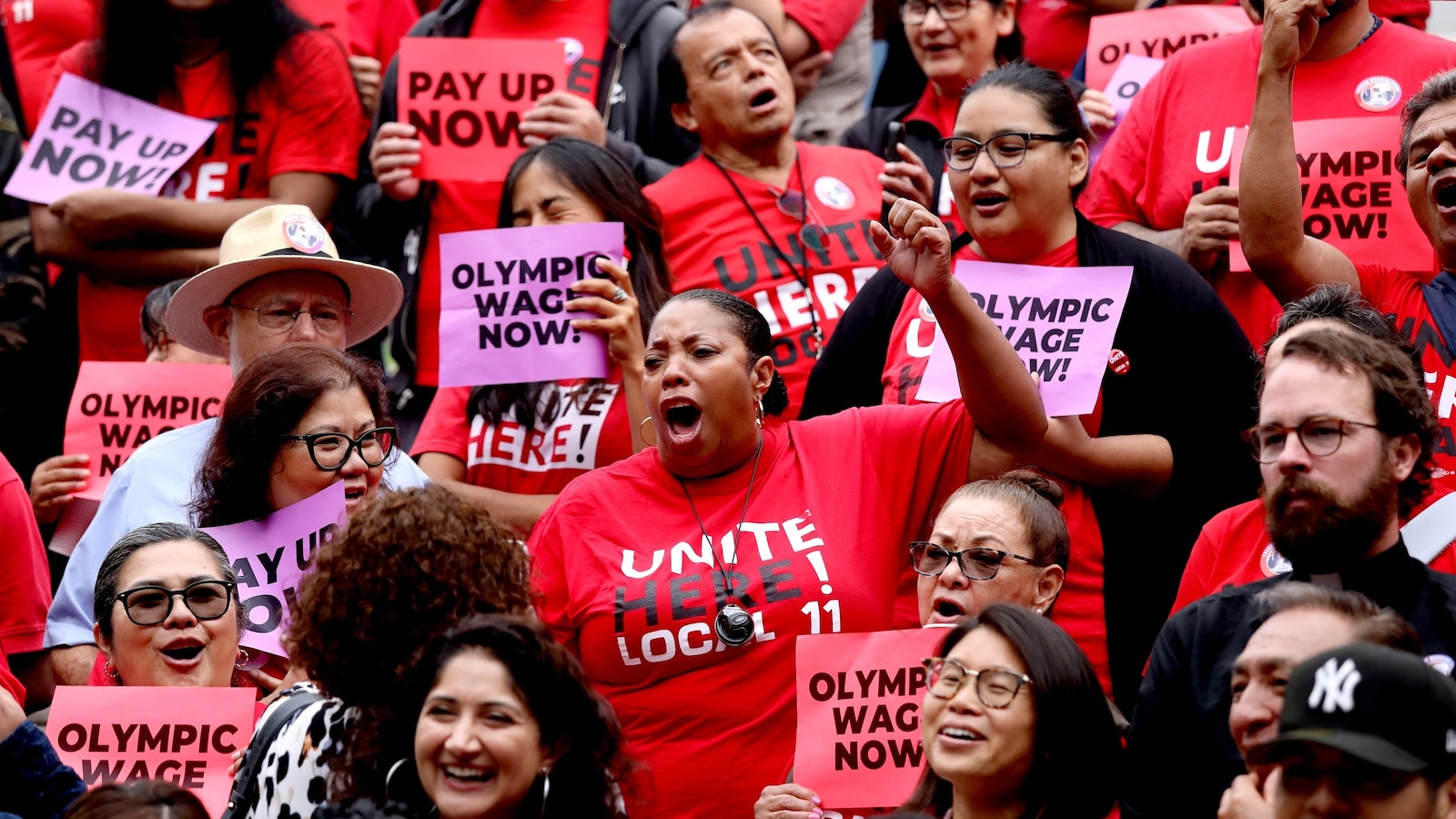
Nearly 20 U.S. states will raise their minimum wage on Jan. 1, 2026, affecting about 8.3 million workers who are expected to receive a combined $5 billion in additional pay during 2026, according to the Economic Policy Institute. Washington will have the highest state wage at $17.13, New York will implement $17 in NYC/Long Island/Westchester and $16 elsewhere, and some localities (e.g., West Hollywood $20.25, Tukwila $21.65) will set even higher floors; the hikes reflect inflation-adjusted increases and scheduled escalators. The changes imply modest upward pressure on labor costs for affected employers and a potential small boost to consumer spending, but are unlikely to be broadly market-moving.
Market structure: The 2026 state wage hikes (affecting ~8.3M workers, ~$5bn incremental pay) compress margins most for labor-heavy, low-ticket-margin businesses — quick-service restaurants, casual dining, convenience stores, and regional retail. Large national grocers and dollar chains (higher scale, pricing power) can absorb or pass through ~50–150 bps margin pressure by price increases and SKUs rationalization; small franchisees and independent operators face >200–500 bps margin risk and higher default probability on leases.
Risk assessment: Near-term (days–months) the shock is idiosyncratic to state/local exposures and earnings calls (Q1 2026), while medium-term (3–12 months) expect modest upward pressure on services CPI and potential Fed vigilance that keeps real rates ~25–75 bps higher than otherwise. Tail risks include accelerated automation capex (driving one-time capex spikes), concentrated franchise bankruptcies impacting CMBS/retail REITs in impacted metros, or a synchronized federal hike which would magnify effects across sectors.
Trade/contrarian implications: Favor scaled, income-stable operators and inflation-hedges: grocery chains and discount retailers can gain share; small/independent restaurant operators are vulnerable. Market may underprice the credit stress on small-franchise borrowers and regional retail landlords — opportunity to short exposed equities and buy credit protection selectively while going long practical inflation hedges (TIPS) and large-cap grocers with margin pass-through history.
AI-powered research, real-time alerts, and portfolio analytics for institutional investors.
Request DemoOverall Sentiment
neutral
Sentiment Score
0.05
