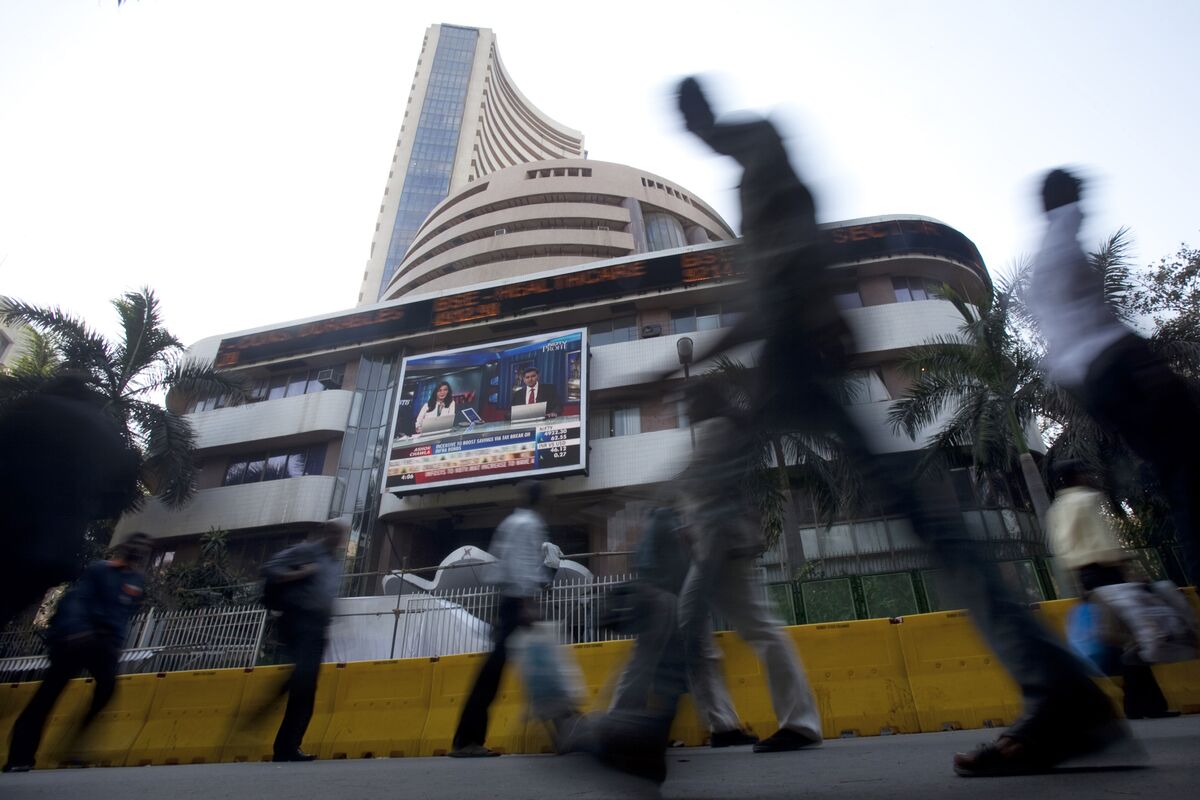
India’s Nifty rose 7.5% in April, its strongest month in more than two years, while small caps outperformed and the article suggests the rally may have further room to run. Headwinds remain from elevated oil prices, a weak rupee, and persistent foreign outflows, while state election results and a busy earnings week could drive near-term volatility. Key Indian heavyweights including Bharat Heavy Electricals, Larsen & Toubro, Mahindra, Hero MotoCorp, and Bajaj Auto are set to report.
The better signal here is not “India is strong,” but that the market is re-pricing domestic cyclicals as a relative safe haven while global macro remains noisy. In that setup, the next leg of small-cap outperformance is usually driven by breadth expansion into second-tier industrials, capital-goods suppliers, and domestic-facing financials rather than the obvious beta names that already moved. The key mechanism is passive and retail flow reinforcement: once small-cap indices hold recent highs for a few sessions, systematic inflows can mechanically extend the move for weeks even if foreign participation stays weak.
The main vulnerability is that small caps are carrying more duration and more leverage to input costs than the benchmark, so they are effectively short oil and short the rupee. If crude stays elevated for another 4-8 weeks, margin downgrades will hit the market’s weakest balance sheets first, and the rally will narrow fast. The earnings slate is the immediate catalyst window: guidance from autos and capex names will decide whether this is a durable domestic recovery or just a liquidity squeeze into illiquid names.
A more interesting contrarian read is that the market may be underestimating how quickly this broad rally can become self-defeating if state-election optimism and index momentum pull money into lower-quality small caps at stretched multiples. In prior episodes, the last 15-20% of small-cap upside came from dispersion, not index beta; that favors long/short selection over outright index exposure. If foreign outflows continue while oil remains firm, the benchmark can lag even as a narrow domestic basket keeps grinding higher — which is exactly the kind of backdrop where relative-value trades outperform.
Geopolitically, any further escalation in the Gulf would likely hit India through inflation expectations before it shows up in earnings, so the real time horizon to watch is 2-6 weeks, not 12 months. That makes this a tradeable tactical setup rather than a clean structural call. The asymmetric risk is to own domestic defensives or low-oil-beta franchises against small-cap cyclicals until the oil/rupee combination stabilizes.
AI-powered research, real-time alerts, and portfolio analytics for institutional investors.
Request DemoOverall Sentiment
neutral
Sentiment Score
0.15
