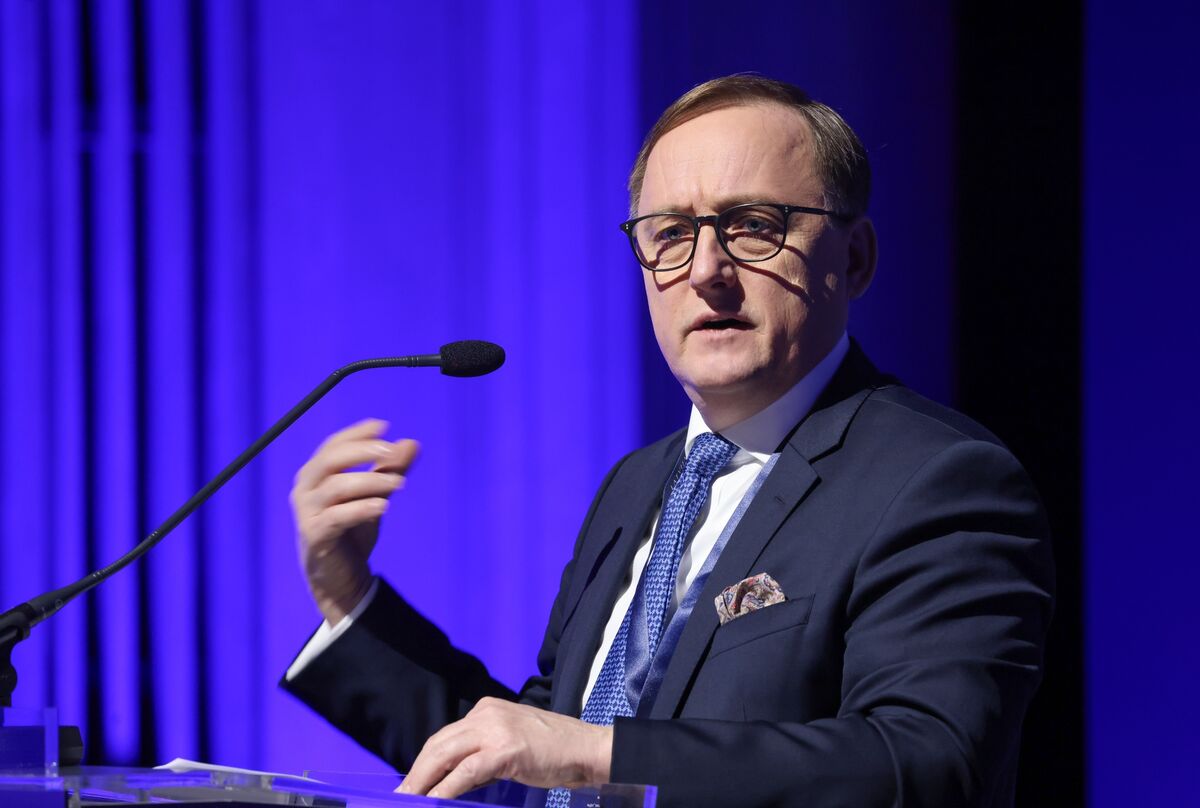
ECB Governing Council member Martins Kazaks stated that the central bank's key interest rate could remain at its current 2% level, provided the economy does not experience further significant shocks. Kazaks views the present 2% rate as "very appropriate" from today's perspective, while acknowledging the prevailing high uncertainty in the economic outlook.
European Central Bank (ECB) Governing Council member Martins Kazaks has signaled a potential pause in the current rate-hiking cycle, stating that the key interest rate could remain at its 2% level. This policy hold is explicitly conditional on the absence of further significant economic shocks, a critical caveat that highlights the prevailing high uncertainty in the macroeconomic environment. Kazaks's description of the 2% rate as "very appropriate" from the current vantage point suggests a shift towards a more data-dependent, wait-and-see approach, moving away from a predetermined path of tightening. While these comments are from a single member and not an official policy announcement, they provide insight into the ECB's internal thinking, leaning towards a period of stability. The market's mildly positive but cautious reaction reflects this balance: the prospect of a rate plateau is welcome, but the explicit mention of uncertainty underscores that the policy path remains fluid and highly sensitive to incoming data.
AI-powered research, real-time alerts, and portfolio analytics for institutional investors.
Request DemoOverall Sentiment
mildly positive
Sentiment Score
0.15
