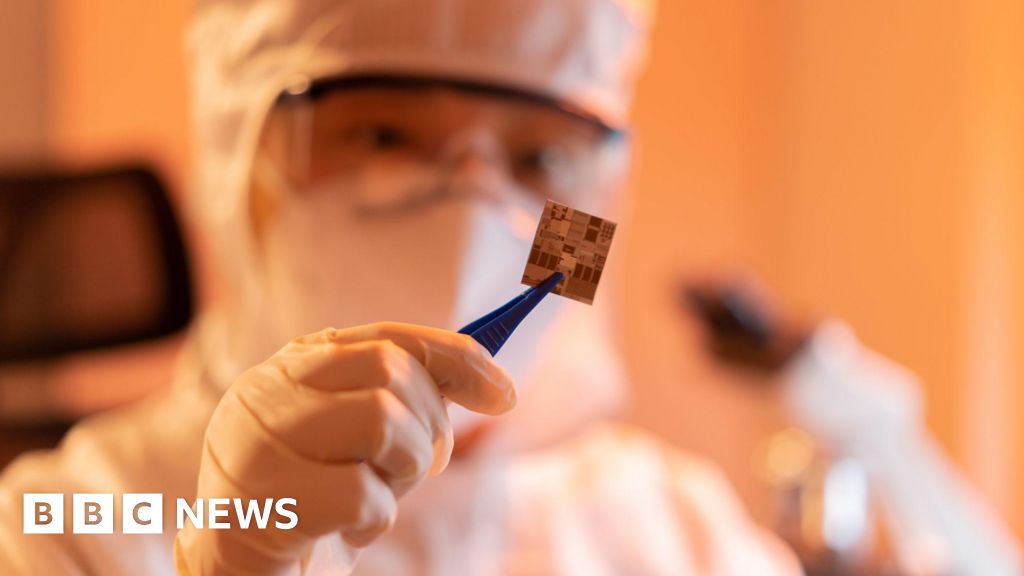
Former President Donald Trump proposes a 100% tariff on semiconductor imports, aiming to compel foreign chipmakers to establish manufacturing in the U.S. for economic and national security reasons. While this could raise electronics prices, companies like TSMC and Samsung are exempt if they commit to substantial U.S. investments, a policy that has already seen TSMC's shares rise and aligns with existing U.S. CHIPS Act incentives, despite potential skilled labor challenges.
A proposed 100% tariff on foreign-made semiconductors by former President Trump is designed to compel manufacturers to onshore production, framed as a matter of economic and national security. The policy contains a significant caveat: companies can avoid the levy by committing to substantial investment in the United States. This dynamic has created clear winners among major industry players, with Apple securing an exemption following a $100 billion US investment commitment, which in turn prompted a 5% share price increase for its key supplier, Taiwan Semiconductor Manufacturing Company (TSMC). Similarly, South Korean firms Samsung and SK Hynix are expected to be exempt due to their investments in new US chip fabrication plants. This policy aligns with the existing US CHIPS Act, which has already committed $6.6 billion to TSMC for its Arizona factory. However, a critical execution risk looms over this onshoring push, as highlighted by production delays at TSMC's Arizona site due to a shortage of skilled labor, a challenge that may present a systemic bottleneck for increasing domestic semiconductor manufacturing capacity.
AI-powered research, real-time alerts, and portfolio analytics for institutional investors.
Request DemoOverall Sentiment
mixed
Sentiment Score
-0.10
Ticker Sentiment
