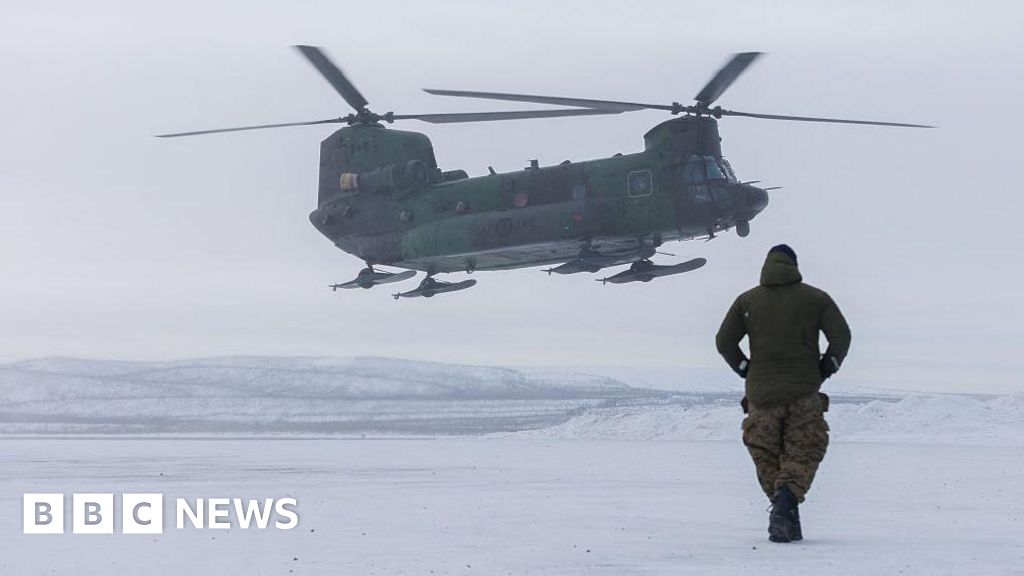
Canada is under mounting Arctic security pressure from the US, Russia and an increasingly active China and is committing to 'unprecedented' investments — including over-the-horizon radars, submarines, aircraft and more boots on the ground — with defence spending signalled to rise from roughly 2% to 5% of GDP by 2035. The move is driven by new threats such as operational Russian hypersonic weapons and persistent sensor coverage gaps, while US initiatives (eg. the proposed 'Golden Dome' missile-defence) and trade/tariff pressure (including a $61bn cost claim floated by former US President Trump) are forcing Ottawa to accelerate procurement and bilateral cooperation, a development with limited near-term market impact but potential longer-term implications for defence contractors and Canada–US trade dynamics.
Market structure: The near-term winners are large defense primes (Lockheed Martin LMT, Northrop Grumman NOC, RTX) and specialist space/sensor firms (Maxar MAXR, L3Harris LHX) that supply over‑the‑horizon radars, satellites and hypersonic-tracking tech. Demand shock for ships, radar and sensors will raise pricing power and order lead times (12–36 months), buoying industrial metals (steel/aluminum) and select shipbuilders. Canadian sovereigns and smaller regional contractors face financing strain and execution risk as Ottawa ramps capex.
Risk assessment: Tail risks include a kinetic incident in the Arctic, a US‑Canada split on Golden Dome participation, or major cyber/launch failures—low‑probability but multi‑quarter market shocks. Immediate (days) = headline volatility; short (weeks–months) = contract announcements and budget votes; long (3–5 years) = network buildouts and recurring maintenance spend. Hidden dependencies: semiconductor and launch cadence, indigenous land/port logistics and NATO bargaining leverage.
Trade implications: Tactical long positions in large primes and sensor/satellite names with 9–24 month horizons; use call spreads to limit premium. FX and rates are transmission channels—expect CAD weakness and higher Canadian yields as spending/deficits rise; short duration or buy CDS protection selectively. Commodities (NUE, CLF or XME) are cyclical plays for 6–18 months as ship/infra steel demand ramps.
Contrarian angles: Consensus underprices small-cap Canadian systems integrators (e.g., CAE.TO for training/ISR support) and niche hypersonic detection vendors that can re-rate on a single contract. Conversely, big primes may already price-in a multi-year procurement boom—use defined-risk options instead of cash longs. Historical parallel: post‑2014 defence rerating delivered concentrated 20–40% outperformance over 24 months, not broad market gains.
AI-powered research, real-time alerts, and portfolio analytics for institutional investors.
Request DemoOverall Sentiment
mildly negative
Sentiment Score
-0.25
