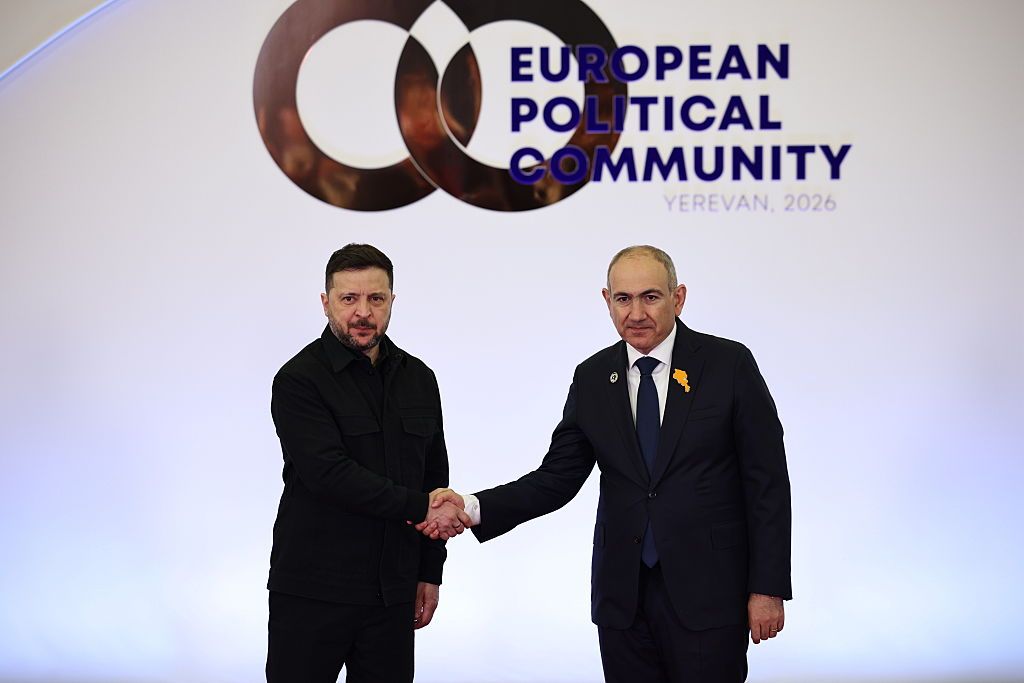
Armenian PM Nikol Pashinyan said Armenia is "not an ally" of Russia in the war against Ukraine and confirmed he will skip Moscow's May 9 Victory Day parade. Russia responded by summoning Armenia's ambassador after Zelensky's first visit to Yerevan in 24 years, underscoring a further deterioration in Armenia-Russia ties. The article signals a continued geopolitical realignment toward the EU, but the immediate market impact is limited.
The market-relevant signal is not Armenia itself; it is the incremental erosion of Russia’s ability to enforce loyalty on its periphery. That matters because the Kremlin’s deterrence premium in the region has historically rested less on formal alliances than on the assumption that neighbors would avoid visible political drift. When that assumption weakens, the risk is a slow repricing of Russian influence across the South Caucasus and, by extension, a modest but persistent increase in geopolitical risk premia for Russian assets and any local counterparties with Moscow exposure.
Second-order effect: the more Armenia leans toward Europe and away from Russia, the more it incentivizes other post-Soviet states to test the boundaries of Moscow’s red lines. That does not create immediate kinetic escalation, but it does raise the probability of diplomatic retaliation, trade frictions, migration pressure, and coercive leverage through energy, remittances, and transport corridors over the next 3-12 months. The near-term risk is symbolic; the medium-term risk is that symbolic defiance becomes institutional realignment, which is harder for Moscow to reverse without paying an obvious cost.
For EM investors, the bigger question is who inherits the spillover if Armenia continues to decouple. The likely beneficiaries are EU-adjacent infrastructure, logistics, and financial channels tied to regional re-routing, while losers include any Russia-linked payment, shipping, or commodity intermediaries that rely on stable Caucasus transit. The contrarian view is that markets often overestimate how fast political signaling converts into hard economic change; unless there is a concrete break in defense cooperation or sanctions alignment, the tradeable impact may remain limited to sentiment and headline risk rather than cash flows.
AI-powered research, real-time alerts, and portfolio analytics for institutional investors.
Request DemoOverall Sentiment
mildly negative
Sentiment Score
-0.15
